
Burnham raises Argentina’s Falklands measures with Trump as Sea Lion dispute surfaces
Andy Burnham raised Argentina’s measures concerning the Falkland Islands with U.S. President Donald Trump during a phone call on Friday. Downing Street said they discussed the Sea Lion project, and Burnham raised the economic consequences of Argentina’s measures for the United Kingdom and the United States.
AI-assisted synthesis · Based on 5 outlets' reporting · Article text read from 4 of 5 outletsHow it's made
View timeline · 9 entries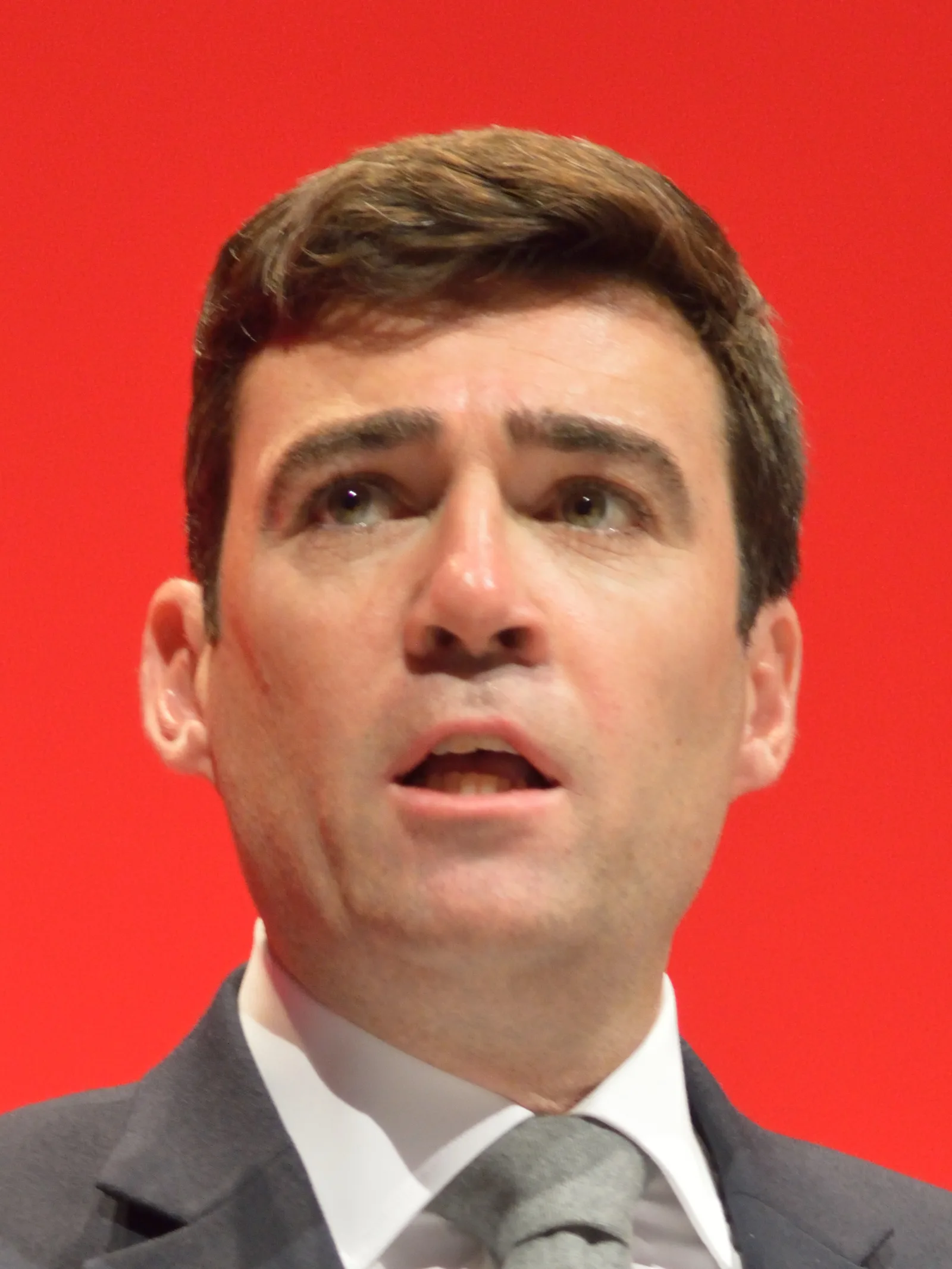 File photo
What happened
Key facts
- Downing Street said Burnham raised the economic consequences of Argentina’s measures for the United Kingdom and the United States (per mercopress.com, dailystar.co.uk, batimes.com.ar).
- Downing Street said Burnham emphasized the Falkland Islanders’ right to develop their natural resources (per dailystar.co.uk, mercopress.com, batimes.com.ar).
- Downing Street said the leaders discussed the Sea Lion project, an oil project near the Falkland Islands (per dailystar.co.uk, batimes.com.ar, mercopress.com).
- Argentina said it sought to prevent activities it described as authorised unilaterally and illegally by the United Kingdom (per mercopress.com).
The brief
Andy Burnham raised Argentina’s measures concerning the Falkland Islands with U.S. President Donald Trump during a phone call on Friday, and Downing Street said the leaders discussed the Sea Lion oil project. Burnham also raised what Downing Street called the economic consequences of Argentina’s measures for the United Kingdom and the United States.
Downing Street said Burnham reiterated the importance of respecting the islanders’ right to develop natural resources. Its statement, as quoted by the outlets, characterized Argentina’s measures as “coercive”; that is the British government’s description, not an independently established legal finding. The sources do not report Trump’s position on the project or the measures.
Argentina’s action at the International Tribunal for the Law of the Sea provides the immediate context for the call. GB News and Buenos Aires Times reported that Argentina filed a provisional measure seeking to stop the British-Israeli drilling project.
GB News also quoted Argentina’s stated aim as preventing activities it called “authorised unilaterally and illegally by the UK.” Those terms express Argentina’s position; the excerpts do not report a tribunal ruling on the merits. The tribunal’s hearing was scheduled for November 10 and 11 in Hamburg, according to Mercopress.
The filing is therefore before an international legal body while the United Kingdom and Argentina maintain competing positions over the project and the islands’ resources. Mercopress also reported that the United Kingdom had announced measures to protect its companies from Argentine sanctions. The dispute involves the status of the islands as well as the proposed development.
The 2013 referendum recorded 99.8% support for remaining British, according to Mercopress, while Buenos Aires Times described the vote as overwhelming. Buenos Aires Times said Argentina rejects that result, arguing that self-determination does not apply to a population it considers implanted by Britain after 1833.
The British government, in turn, maintains that the islanders should be able to develop their natural resources. The outlets emphasize different aspects of the same call. Daily Star and GB News foreground Burnham’s warning about economic consequences and the islanders’ resource rights; Mercopress links the conversation to the Sea Lion project and the scheduled tribunal hearing.
Buenos Aires Times places the dispute in the context of Argentina’s bid to block the project and competing claims over the islands. The excerpts do not establish how the tribunal will rule or what practical effects the filing will have on drilling.
Why it matters
- The specific economic stakes identified by Downing Street are potential consequences of Argentina’s measures for the United Kingdom and the United States; the sources do not quantify those costs.
- The proposed Sea Lion project is a British-Israeli oil project near the Falkland Islands, while Argentina has sought a tribunal measure to stop it.
- Falkland Islanders’ resource rights are central to the British government’s stated position; Argentina disputes the referendum’s relevance to self-determination.
- Mercopress reports that the 2013 referendum recorded 99.8% support for remaining British, a concrete figure cited in the dispute over the islands’ status.
What to watch next
- Whether the International Tribunal for the Law of the Sea grants Argentina’s provisional measure seeking to stop the drilling project.
- The tribunal hearing scheduled for November 10 and 11 in Hamburg.
- Whether the United Kingdom’s announced measures to protect its companies from Argentine sanctions affect the dispute over the Sea Lion project.
- Whether Trump states a position on Argentina’s measures or the Sea Lion project.
How it's being covered
Coverage analysisShow details5 source articles · 5 unique outletsOutlet political mix: Mostly Right· 1 Center · 3 Right · 1 unratedWhere the outlets are based: Europe 40% · Latin America 40% · Other 20%
- Coverage is currently concentrated among Right-rated outlets (3 of 4 rated sources); comparatively few Left-rated outlets have published on the event.
How outlets' accounts compare
3 framing differences · 2 uncorroborated claims · 3 information gaps- Daily Star and GB News present the call chiefly as Burnham warning Trump about economic consequences and affirming the islanders’ resource rights; Mercopress and Buenos Aires Times give greater prominence to the Sea Lion project and Argentina’s effort to block it.
- Daily Star and GB News use Downing Street’s characterization of Argentina’s measures as “coercive”; GB News also includes Argentina’s description of the UK-authorised activities as unilateral and illegal.
- Downing Street describes Argentina’s measures as coercive; Argentina describes the activities it seeks to stop as authorised unilaterally and illegally by the UK.
- Argentina said its provisional measure sought to prevent activities it described as “authorised unilaterally and illegally by the UK.”
- Downing Street said Burnham raised the economic consequences of Argentina’s measures for the UK and US and emphasized the islanders’ right to develop natural resources.
- The excerpts do not state the monetary value of the project, the economic effects of Argentina’s measures, or how many companies or jobs could be affected.
- The excerpts do not report the tribunal’s legal assessment or any ruling on the provisional measure.
- Argentina’s legal characterization of the UK-authorised activities and the UK government’s characterization of Argentina’s measures are competing positions; the excerpts give no tribunal decision on the merits.
Timeline
Developments from this story's sources, dated background we compiled and fact-checked, and our earlier coverage. Each row says which.- Britain took control of the Falklands in 1833, an episode Argentina regards as an unlawful occupation; the United Kingdom has maintained its sovereignty claim.Background · from our historical context
- On 2 April 1982, Argentine forces landed on the islands and took control; the United Kingdom dispatched forces to retake them.Background · from our historical context
- British forces regained control on 14 June 1982.Background · from our historical context
- The United Kingdom and Argentina issued a joint declaration on cooperation over offshore activities around the Falkland Islands.Background · compiled and fact-checked by Updat3
- Argentina withdrew from the joint arrangement with the United Kingdom on offshore activities around the Falkland Islands.Background · compiled and fact-checked by Updat3
- The Sea Lion dispute grew out of offshore oil exploration near the Falkland Islands, where Rockhopper Exploration announced an oil discovery in 2010.Background · from our historical context
- Argentina enacted Law 26,659, penalising hydrocarbon exploration or extraction in the Falklands area without Argentine authorisation.Background · compiled and fact-checked by Updat3
- In a referendum on 10–11 March 2013, 99.8% of participating Falkland Islanders voted to remain a British Overseas Territory.Background · from our historical context
- Argentina announced it had initiated arbitration against the United Kingdom under the UN Convention on the Law of the Sea.Background · compiled and fact-checked by Updat3
How we got here
The Sea Lion dispute grew out of offshore oil exploration near the Falkland Islands, where Rockhopper Exploration announced an oil discovery in 2010. Argentina’s 2011 Hydrocarbons Law No. 26,659 required authorization from Argentina for hydrocarbon activity it considered unauthorized; a 2013 amendment, Law No. 26,915, added penalties.
Britain took control of the Falklands in 1833, an episode Argentina regards as an unlawful occupation; the United Kingdom has maintained its sovereignty claim.
Original sources
2 of 5 articles · Latin America · Show allEvery story links to the reporting it was built from. How we choose sources
Spotted a factual error, a broken link or a misleading summary? Tell us.