
North Korea and China open long-delayed New Yalu River Bridge with trucks crossing
China and North Korea opened the New Yalu River Bridge and trucks crossed in both directions during an official ceremony. Chinese state media published footage of the crossing and social posts showed the bridge lined with Chinese and North Korean flags and crowds on the Dandong side.
AI-assisted synthesis · Based on 4 outlets' reporting · Article text read from 2 of 4 outletsHow it's made
View timeline · 8 entries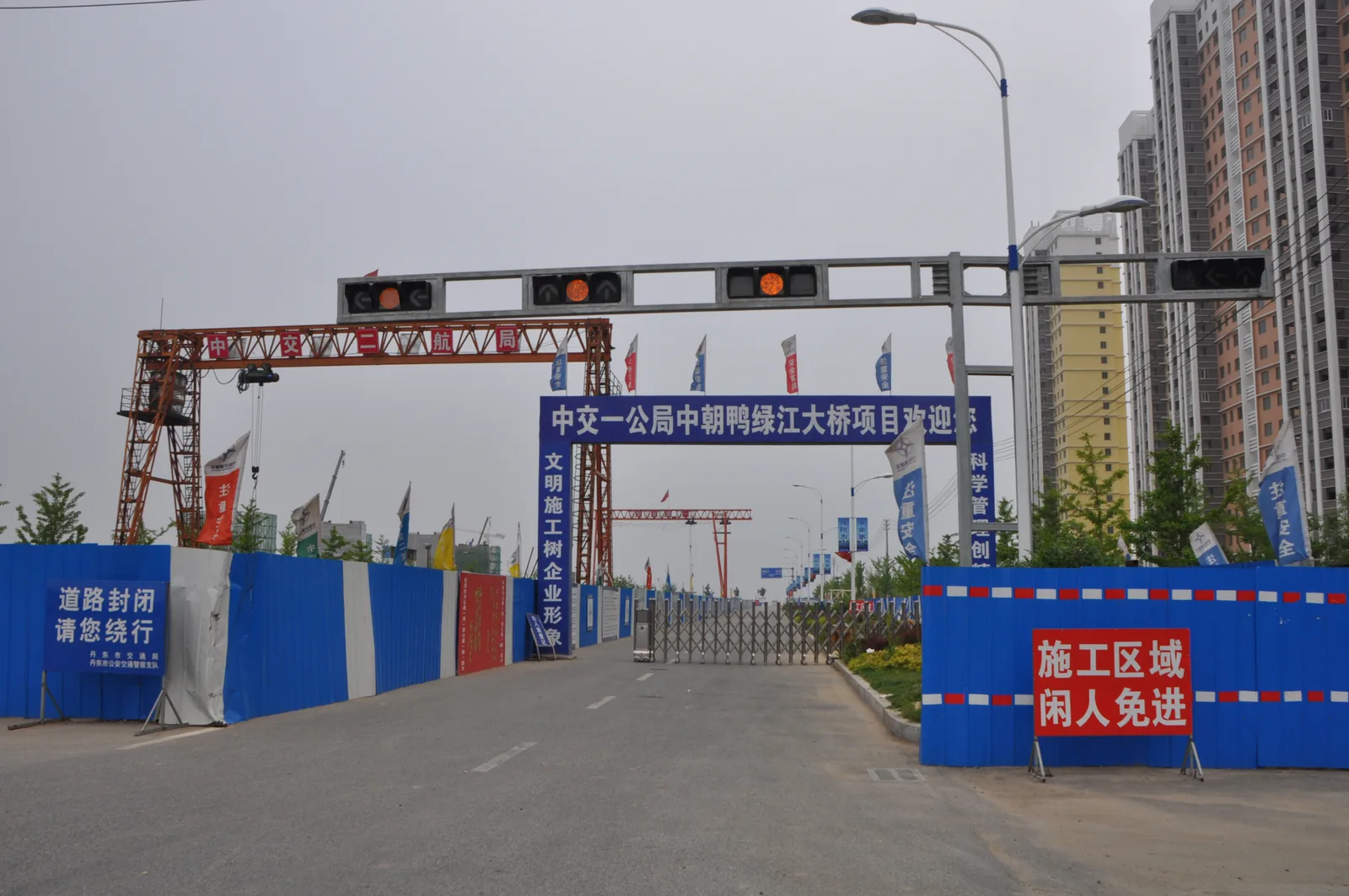 File photo
What happened
Key facts
- Photos and videos posted on Chinese social media showed the bridge lined with Chinese and North Korean flags (per nknews.org, Breitbart).
- Chinese state media quoted a Chinese speaker saying the bridge will become a landmark symbolizing friendship and facilitate economic, trade and people-to-people exchanges between China and the DPRK (per Breitbart, nknews.org).
The brief
China and North Korea officially opened the long-delayed New Yalu River Bridge in an on-bridge ceremony that Chinese state media said included trucks crossing in both directions.
Xinhua reported the ceremony began at 10 a.m. local time and published footage showing vehicles moving across the span; videos and photos posted on Chinese social platforms showed the bridge decorated with both Chinese and North Korean flags and spectators gathered on the Dandong bank.
Reporting assembled in this package states Beijing completed construction of the bridge more than a decade ago, but the structure was not officially opened until 2026.
Chinese state outlets framed the opening as a symbol of close ties, with a quoted Chinese speaker saying the bridge will become a landmark representing friendship and will facilitate economic, trade and people-to-people exchanges between China and the DPRK.
NK News published images attributed to social media users and noted the timing and visual record of trucks crossing; Breitbart repeated Xinhua’s account and the quotation about the bridge’s role for bilateral connectivity.
Available reporting does not provide independent verification of cross-border commercial traffic beyond the trucks shown in official footage and social posts, nor does any source in this set report customs, border-control arrangements or the identity of the truck operators.
The coverage also does not specify which North Korean or Chinese officials attended in person; Xinhua’s account included video addresses but the supplied texts here do not list speaker names.
One outlet in this package notes that the bridge’s construction was believed to have been completed in 2014 and that delays were attributed in that outlet’s text to the Wuhan coronavirus pandemic and its diplomatic effects, but no source in this collection supplies a detailed timeline of why official opening was postponed.
Photographs in the reporting show visible flag displays and assembled crowds on the Chinese side, and state media footage documents vehicles moving both directions across the bridge during the ceremony.
Why it matters
- Chinese traders and North Korean importers/exporters bear direct commercial consequences because the bridge creates a physical route for trucks to move goods between Dandong and Sinuiju, as shown by trucks crossing during the ceremony.
- Residents of Dandong who gathered on the riverbank and participants in cross-border exchanges stand to experience immediate increases in person-to-person crossings if border and customs arrangements follow the opening, since social media footage showed crowds and the bridge displayed both countries’ flags.
- China’s government has a documented interest in expanding bilateral connectivity with the DPRK via infrastructure projects, evidenced by Beijing having completed the bridge more than a decade earlier and state media statements framing the bridge as facilitating economic and trade exchanges.
- North Korea’s government has an interest in restoring a visible transport link with China for trade and symbolic purposes, reflected in the joint opening ceremony and the display of DPRK flags on the bridge.
What to watch next
- Whether China’s Xinhua News Agency or other state outlets publish names and attendance details of officials who delivered video addresses during the ceremony.
- Whether Chinese or North Korean authorities announce customs and border-control procedures for commercial crossings over the New Yalu River Bridge.
- Whether Chinese or DPRK authorities release official statistics on trade volumes using the New Yalu River Bridge following the opening.
- Whether additional media publish footage confirming the continued flow of commercial trucks in both directions beyond the ceremony day.
How it's being covered
Coverage analysisShow details4 source articles · 4 unique outletsOutlet political mix: Too few rated· 1 Center · 1 Right · 2 unratedWhere the outlets are based: US/Canada 25% · Middle East 25% · Other 50%
One source is from a wire service (AP, Reuters, AFP or Bloomberg), whose reporting other outlets often republish.
How outlets' accounts compare
3 framing differences · 1 uncorroborated claim · 5 information gaps- NK News emphasizes visual social-media evidence and timing of the crossing and notes the bridge was completed by Beijing over a decade earlier; Breitbart repeats Xinhua’s celebratory framing and quotes a Chinese speaker describing the bridge as a symbol of friendship and an economic conduit.
- Sources do not present competing accounts of what triggered the opening; one outlet mentions pandemic-related diplomatic strain as a factor in earlier stalling, but there is no direct dispute over cause-and-effect among the sources provided.
- Xinhua is the named source for the ceremony time and published footage; NK News supplied social-media screenshots and reporting based on that footage; Breitbart cited Xinhua and quoted a Chinese speaker.
- "The bridge is bound to become a new landmark symbolizing the traditional friendship between China and the DPRK," a Chinese speaker said, quoted in Breitbart from Xinhua.
- No source in this set names which North Korean or Chinese officials attended in person or lists their official titles.
- No source provides verified data on cross-border trade volumes that would quantify the bridge’s economic impact.
- No source supplies detailed information on customs, immigration or border-control measures that will govern truck crossings.
- No source in this collection provides an authoritative timeline explaining the decade-long delay beyond brief attributions to the pandemic in one outlet.
- No report Updat3 read provides independent verification of ongoing commercial traffic or detailed operational arrangements for the bridge after the ceremony.
Timeline
Developments from this story's sources, dated background we compiled and fact-checked, and our earlier coverage. Each row says which.- China and North Korea signed a Treaty of Friendship, Cooperation and Mutual Assistance.Background · compiled and fact-checked by Updat3
- China and North Korea signed agreements during Premier Wen Jiabao’s visit, including one on building a new bridge over the Yalu River.Background · compiled and fact-checked by Updat3
- China and North Korea held a groundbreaking ceremony for the New Yalu River Bridge.Background · compiled and fact-checked by Updat3
- China completed construction of the New Yalu River Bridge, but the crossing remained unusable for cross-border traffic.Background · compiled and fact-checked by Updat3
- The UN Security Council adopted Resolution 2270, imposing sanctions on North Korea after its nuclear test and satellite launch.Background · compiled and fact-checked by Updat3
- The UN Security Council adopted Resolution 2375, imposing additional sanctions on North Korea.Background · compiled and fact-checked by Updat3
- North Korea closed its border to most cross-border traffic during the COVID-19 pandemic.Background · compiled and fact-checked by Updat3
- China and North Korea resumed freight train services between Dandong and Sinuiju after a pandemic-related suspension.Background · compiled and fact-checked by Updat3
How we got here
The immediate backdrop was that the concrete-and-steel span China built across the Yalu River was completed and largely ready for use by Beijing in 2014, but remained unusable for cross-border traffic because the DPRK did not finish its connecting approach roads, a fact reported in 2014–2015 trade and infrastructure accounts.
In the bilateral diplomatic timeline, Chinese state investment in cross-border infrastructure followed renewed high-level engagement after the 2000s, including infrastructure talks between Beijing and Pyongyang during meetings in 2009–2011 when planners formalized the New Yalu River Bridge project.
Original sources
1 of 4 articles · Middle East · Show allEvery story links to the reporting it was built from. How we choose sources
Spotted a factual error, a broken link or a misleading summary? Tell us.