
Iran threatens legal action against Sinokor vessels in Hormuz
Iran’s Persian Gulf Strait Authority said Sinokor vessels would face legal action in the Strait of Hormuz starting Nov. 1. The authority alleged the vessels had the highest number of crossing violations over the previous three months and said it had taken action against at least seven.
AI-assisted synthesis · Based on 5 outlets' reporting · Article text read from 1 of 5 outletsHow it's made
View timeline · 9 entries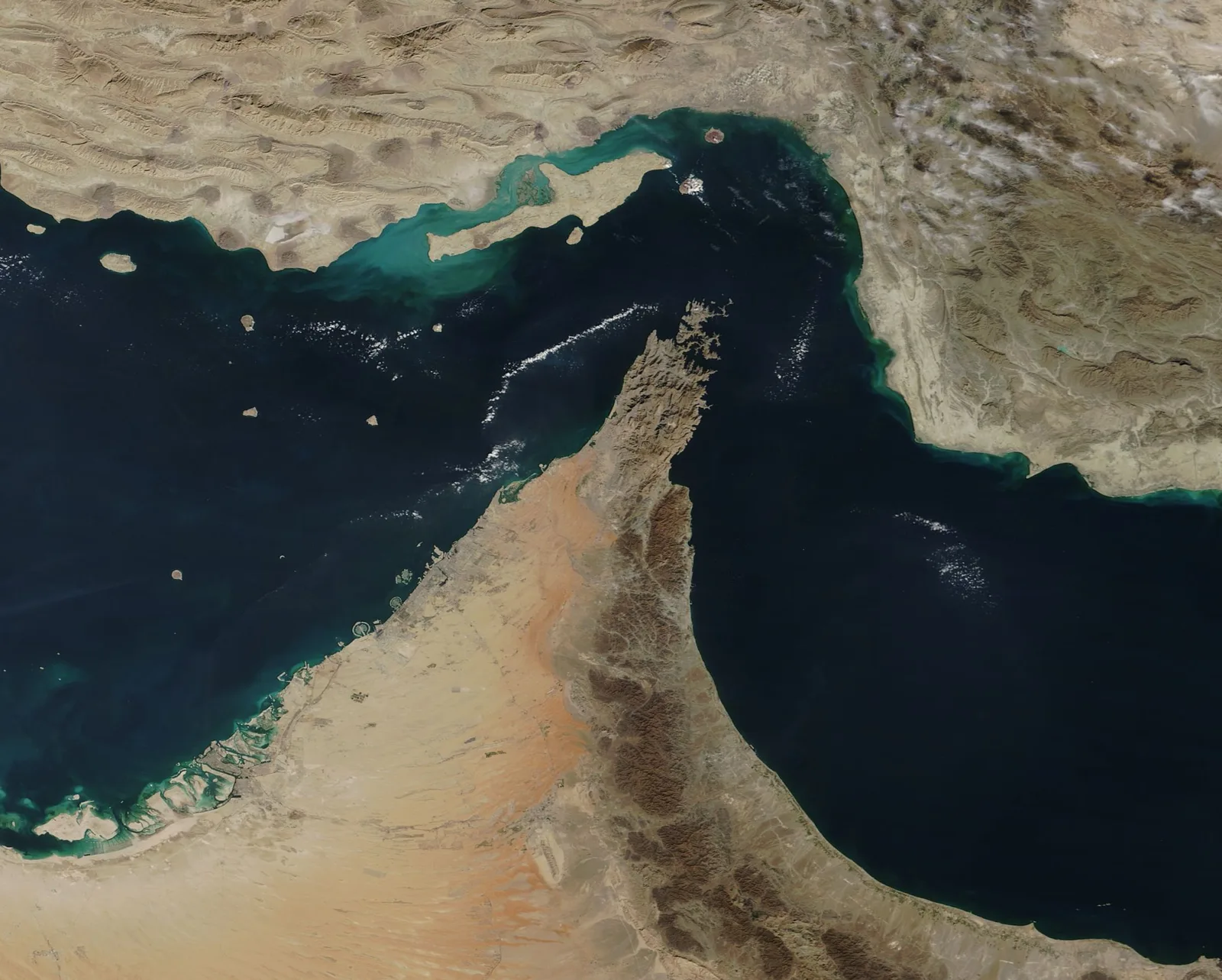 File photo
What happened
Key facts
- Iran’s Persian Gulf Strait Authority threatened legal action against Sinokor vessels in the Strait of Hormuz (per The Straits Times, rivieramm.com).
- The authority said legal action would begin on Nov. 1 (per The Straits Times, gulfnews.com).
- The authority alleged Sinokor vessels had committed the highest number of crossing violations in the strait over the previous three months (per The Straits Times).
- The authority said it had taken “appropriate actions” against at least seven vessels (per The Straits Times).
- The Korea Shipowners’ Association said the vessels were sub-chartered to an overseas oil company, were not owned by Sinokor, and carried only foreign seafarers (per The Straits Times).
- The Korea Shipowners’ Association said Sinokor was unaware of the separate legal-action warning and was checking its details (per The Straits Times).
- Ships owned by Sinokor appeared on an Iranian list issued in August of 45 tankers Iran said had broken its Strait of Hormuz crossing rules (per The Straits Times).
The brief
Iran’s Persian Gulf Strait Authority said Sinokor vessels would face legal action in the Strait of Hormuz starting Nov. 1, according to The Straits Times. The authority said the vessels had recorded the highest number of crossing violations in the waterway over the previous three months. It also said it had taken “appropriate actions” against at least seven vessels.
The authority made its warning on X, The Straits Times reported. The notice concerned vessels it described as belonging to South Korean shipping company Sinokor. The authority’s allegation about violations and its announced legal action are its own claims; the report provides no separate finding adjudicating those allegations.
The Korea Shipowners’ Association disputed the ownership link. It said the vessels were not owned by Sinokor but had been sub-chartered to an overseas oil company, and that only foreign seafarers were aboard. The association said it had confirmed those details through a Sinokor official.
The association also said Sinokor did not know about the authority’s separate legal-action warning and was checking the details. Its statement addressed both the vessels’ relationship to the company and the company’s awareness of the announced action. The Straits Times reported that ships owned by Sinokor had previously appeared on an Iranian list issued in August.
Iran said the list contained 45 tankers that had broken its rules for crossing the Strait of Hormuz. That earlier listing is distinct from the current warning: the authority’s present statement refers to Sinokor vessels and alleges violations during the previous three months.
The Riviera Maritime Media headline also describes Iran’s threat as concerning “crossing violations,” while headlines from Chosun.com and The Jerusalem Post identify the target as a South Korean shipping company. Gulf News’ headline likewise says Iran warned South Korean shipper Sinokor and gives Nov. 1 as the start date.
Those headlines corroborate the warning and, where stated, the deadline; they provide no additional details about the vessels or the association’s account. The next stated step is the authority’s announced start of legal action on Nov. 1. The association said Sinokor was checking the warning’s details.
The available account does not report what action the authority will take against particular vessels or the outcome of Sinokor’s review.
Why it matters
- The threatened legal action concerns vessels in the Strait of Hormuz, while the Korea Shipowners’ Association says the vessels are sub-chartered to an overseas oil company rather than owned by Sinokor.
- The authority’s stated enforcement record is at least seven vessels facing “appropriate actions,” alongside its allegation of the highest crossing-violation count over the previous three months.
- Iran’s August list named 45 tankers it said had broken its crossing rules; ships owned by Sinokor appeared on that list.
What to watch next
- Whether the Persian Gulf Strait Authority begins the announced legal action on Nov. 1.
- Whether Sinokor completes its review of the warning’s details, which the Korea Shipowners’ Association said the company was checking.
- Whether the authority identifies actions concerning particular vessels beyond its statement that it had acted against at least seven.
How it's being covered
Coverage analysisShow details5 source articles · 5 unique outletsOutlet political mix: Mixed· 2 Center · 2 Right · 1 unratedWhere the outlets are based: Asia 40% · Unknown 40% · Other 20%
How outlets' accounts compare
Timeline
Developments from this story's sources, dated background we compiled and fact-checked, and our earlier coverage. Each row says which.- The 1982 United Nations Convention on the Law of the Sea (UNCLOS) established the right of transit passage through international straits; Iran signed the convention in 1982 but has not ratified it.Background · from our historical context
- From 1984, Iran and Iraq attacked commercial shipping and oil facilities in what became known as the Tanker War.Background · from our historical context
- In 1987, the United States began Operation Earnest Will, escorting reflagged Kuwaiti tankers through the Gulf.Background · from our historical context
- Iran’s Islamic Revolutionary Guard Corps seized the British-flagged tanker Stena Impero in the Strait of Hormuz.Background · compiled and fact-checked by Updat3
- Iran seized the South Korean-flagged tanker Hankuk Chemi in the Persian Gulf.Background · compiled and fact-checked by Updat3
- On April 13, 2024, Iran seized the container ship MSC Aries near the Strait of Hormuz, saying it was linked to Israel.Background · from our historical context
- The United States and Israel launched coordinated strikes on Iran on February 28, 2026, beginning an ongoing war with regional security and shipping implications.Background · from our historical context
- Iran announced that vessels passing through the Strait of Hormuz would need prior authorization from the IRGC Navy.Background · compiled and fact-checked by Updat3
- In August 2026, Iran issued a list of 45 tankers it said had violated its Strait of Hormuz crossing rules; Sinokor-owned ships appeared on that list.Background · from our historical context
How we got here
In August 2026, Iran issued a list of 45 tankers it said had violated its Strait of Hormuz crossing rules; Sinokor-owned ships appeared on that list. The list preceded the Persian Gulf Strait Authority’s later warning concerning Sinokor vessels and provided an immediate backdrop to the dispute over which ships had crossed the strait improperly.
The 1982 United Nations Convention on the Law of the Sea (UNCLOS) established the right of transit passage through international straits; Iran signed the convention in 1982 but has not ratified it. Shipping in the Gulf became a direct arena of conflict during the Iran-Iraq War (1980–1988).
Original sources
1 of 5 articles · Middle East · Show allEvery story links to the reporting it was built from. How we choose sources
Spotted a factual error, a broken link or a misleading summary? Tell us.