
Iran’s Guards say a mine triggered an oil tanker explosion in Hormuz
Iran’s Revolutionary Guard Navy said a supertanker struck a naval mine in the Strait of Hormuz, causing an explosion and fire. The outlet reported that the vessel carried more than 2 million barrels of crude and that the Guards described it as travelling with its navigation and radar systems switched off.
AI-assisted synthesis · Based on 5 outlets' reporting · Article text read from 1 of 5 outletsHow it's made
View timeline · 11 entries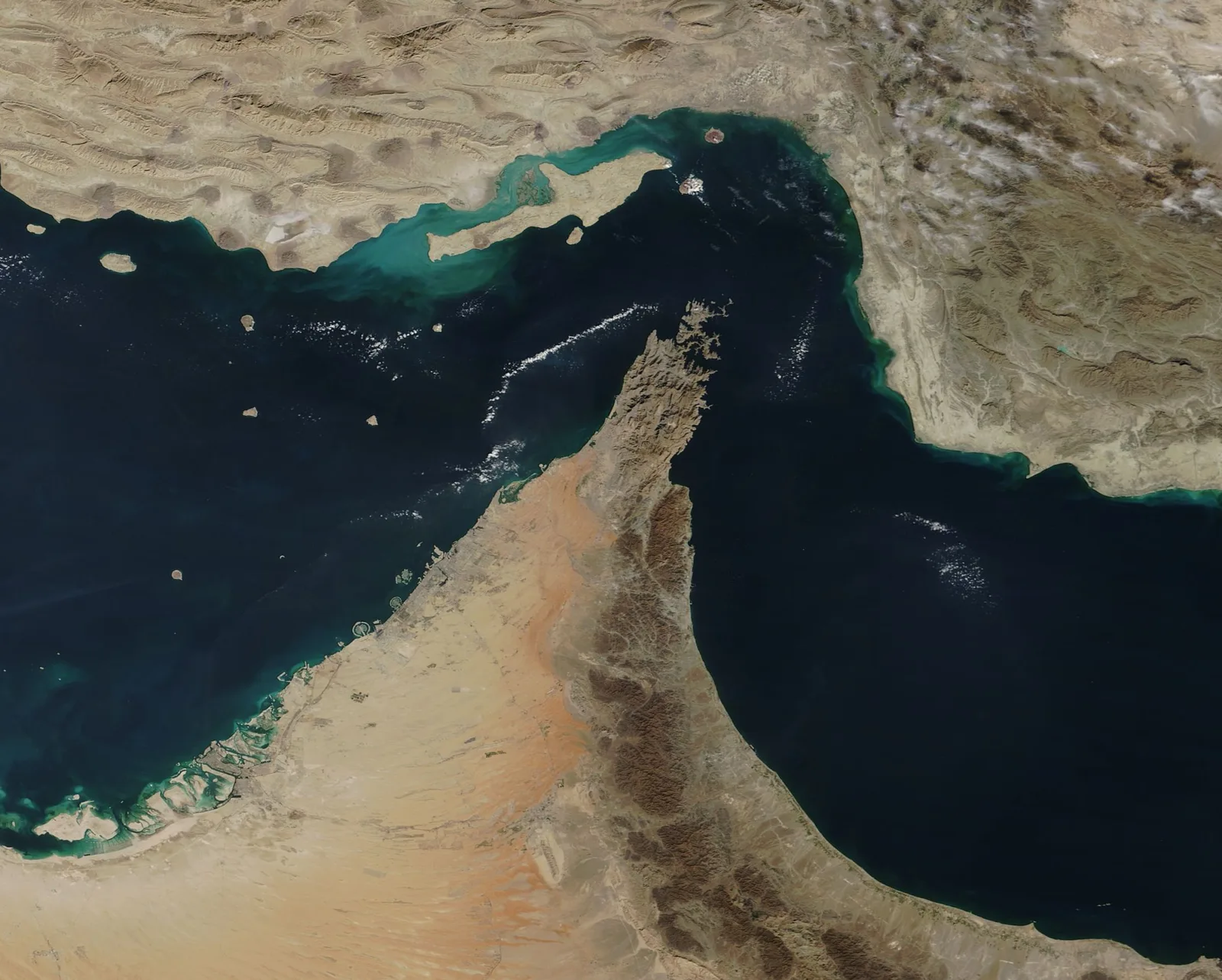 File photo
What happened
Key facts
- Iran’s Revolutionary Guard Navy said an oil tanker or tankers struck naval mines in the Strait of Hormuz (per anews.com.tr, yaffaps.com, Reuters).
- The Guards said the mine strike caused an explosion and fire (per yaffaps.com).
- The Guards said the supertanker carried more than 2 million barrels of crude oil.
- The Guards described the vessel as a “rogue” tanker that had disabled its navigation and radar systems.
- The Guards said the tanker tried to use U.S. military support to transport goods through the strait.
The brief
Iran’s Revolutionary Guard Navy said an oil supertanker struck a naval mine in the Strait of Hormuz, causing a major explosion and fire. Anews.com.tr reported the Guards’ account, which said the ship was carrying more than 2 million barrels of crude oil as it attempted to pass through the waterway. The account did not identify the vessel, its owner or its flag.
The Guards described the tanker as “rogue” and said its navigation and radar systems were switched off. It also claimed the vessel tried to use U.S. military support to move goods through the strait. The Guards characterized its route as unauthorized, according to the account carried by Anews.com.tr.
These details are claims attributed to the Guards, rather than independently established facts in the article. The Guards’ statement said the mine strike triggered the explosion and fire. Anews.com.tr reported that the statement did not give casualty figures or describe the extent of the damage.
It also did not identify the mine’s origin or provide further information about the circumstances of the incident. The headlines from Reuters and yaffaps.com describe two tankers being hit by mines in the Strait of Hormuz; yaffaps.com also mentions fires.
The Times of Israel headline instead refers to an oil tanker exploding after hitting a mine on what it calls an “unauthorized” route. Those headlines do not provide further details about the vessels, the damage or casualties. Anews.com.tr said the Guards’ statement was carried by Tasnim News Agency, which it described as semi-official.
The article also said maritime traffic through the strait had been severely disrupted since the United States and Israel launched attacks against Iran on Feb. 28. It did not connect that account of disrupted traffic to the specific tanker’s passage beyond reporting the Guards’ claim about the route and U.S. military support.
Separately, Al Jazeera’s headline reported that Israeli settlers attacked EU diplomats and that drones targeted Riyadh. The headline supplies no further details about those events, and they are distinct from the tanker incident described in the Guards’ statement.
The available account of the mine strike leaves the number of vessels involved unclear: the article describes one supertanker, while Reuters and yaffaps.com headlines refer to two tankers.
Why it matters
- The reported fire followed a mine strike on a tanker carrying more than 2 million barrels of crude, according to the Guards’ account; the source provides no casualty or damage figures.
- The Guards’ description of disabled navigation and radar systems and an unauthorized route is central to its account of the incident.
- The Guards claimed the vessel sought to use U.S. military support to move goods through the Strait of Hormuz, a specific allegation about the tanker’s passage.
What to watch next
- Whether the Guards or Tasnim News Agency identify the vessel, its owner or its flag.
- Whether the Guards provide casualty figures or an assessment of damage.
- Whether the Guards clarify whether one supertanker or two tankers struck mines.
How it's being covered
Coverage analysisShow details6 source articles · 5 unique outletsOutlet political mix: Mostly Center· 1 Left · 2 Center · 2 unratedWhere the outlets are based: Middle East 80% · Global 20%
- Coverage is currently concentrated among outlets based in Middle East (4 of 5 geographically-identified sources).
2 sources are from a wire service (AP, Reuters, AFP or Bloomberg), whose reporting other outlets often republish.
How outlets' accounts compare
Timeline
Developments from this story's sources, dated background we compiled and fact-checked, and our earlier coverage. Each row says which.- The United Nations adopted the Convention on the Law of the Sea, which sets rules for passage through international straits.Background · compiled and fact-checked by Updat3
- In 1987, the United States began Operation Earnest Will, escorting reflagged Kuwaiti tankers through the Gulf.Background · from our historical context
- On April 14, 1988, the USS *Samuel B. Roberts* struck an Iranian mine in the Persian Gulf; four days later, the United States launched Operation Praying Mantis, striking Iranian naval vessels and oil platforms.Background · from our historical context
- The U.S. Navy launched Operation Praying Mantis, striking Iranian naval forces and installations after a U.S. ship hit an Iranian mine.Background · compiled and fact-checked by Updat3
- Two tankers were damaged in the Gulf of Oman; the United States blamed Iran, which denied involvement.Background · compiled and fact-checked by Updat3
- Iran’s Islamic Revolutionary Guard Corps seized the British-flagged tanker Stena Impero in the Strait of Hormuz.Background · compiled and fact-checked by Updat3
- In 2021, Iran seized the South Korean-flagged tanker *Hankuk Chemi* in the Persian Gulf; Iranian authorities cited an alleged environmental violation, while South Korea called for the vessel’s release.Background · from our historical context
- The United States and Israel launched coordinated strikes across Iran.Background · compiled and fact-checked by Updat3
- Iran announced that vessels passing through the Strait of Hormuz would need prior authorization from the IRGC Navy.Background · compiled and fact-checked by Updat3
- Maritime security sources recorded at least 12 attacks on oil tankers and cargo ships.Background · compiled and fact-checked by Updat3
- Maritime security sources recorded at least 10 vessels targeted, including oil and liquefied natural gas tankers off Fujairah and Sohar.Background · compiled and fact-checked by Updat3
How we got here
On February 28, 2026, the United States and Israel launched coordinated strikes on Iranian power plants, air defenses and military infrastructure; the war that began with those strikes was ongoing by October 2026.
The Strait of Hormuz has been a strategic passage for oil shipping for decades: during the 1980–88 Iran-Iraq War, both countries attacked commercial vessels in what became known as the “Tanker War.” In 1987, the United States began Operation Earnest Will, escorting reflagged Kuwaiti tankers through the Gulf. On April 14, 1988, the USS *Samuel B.
Original sources
5 of 6 articles · Middle East · Show allEvery story links to the reporting it was built from. How we choose sources
Spotted a factual error, a broken link or a misleading summary? Tell us.