
Netanyahu says Iran’s government must be removed to address what he calls a threat
Israeli Prime Minister Benjamin Netanyahu argued that changing Iran’s government is necessary to address a danger he attributes to it, though the source does not detail the alleged threat.
AI-assisted synthesis · Based on 5 outlets' reporting · Article text read from 1 of 5 outletsHow it's made
View timeline · 11 entries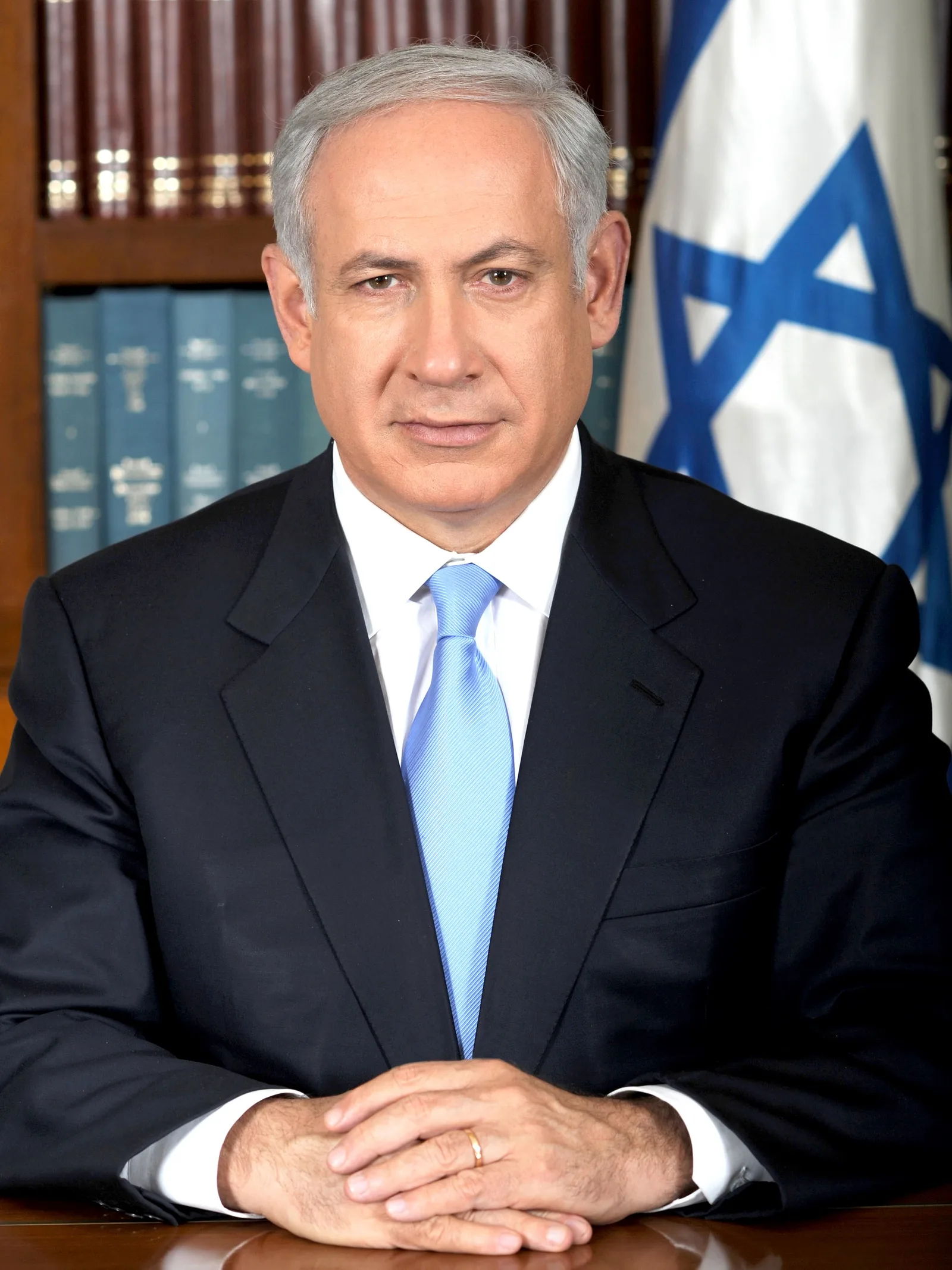 File photo
What happened
Key facts
- Benjamin Netanyahu said Iran’s nuclear program threatens Israel, the United States and Europe (per israelnationalnews.com).
- Netanyahu praised U.S. President Donald Trump’s determination to confront the Iranian government (per israelnationalnews.com).
- Netanyahu said the way to deal with what he called a “toxic octopus” was to remove Iran’s government (per israelnationalnews.com).
- Netanyahu said he was concentrating on securing another term as prime minister (per israelnationalnews.com).
- The headlines say Tehran accused Netanyahu of seeking more war (per ozarab.media, Al Jazeera, israelnationalnews.com).
- The headline says Tehran dared Netanyahu to try again as he vowed to eliminate what he called the Iranian threat (per news18.com, israelnationalnews.com).
- The headline says Trump and Netanyahu threatened renewed strikes on Iran and Tehran warned of a response (per iranintl.com, israelnationalnews.com, news18.com).
The brief
Benjamin Netanyahu said Iran’s nuclear program threatens Israel, the United States and Europe, and praised U.S. President Donald Trump’s determination to confront Iran’s government. Israel National News reported the comments in an interview with Mark Levin on Fox News’ “Life, Liberty & Levin,” which aired Saturday night.
Netanyahu also connected his argument about Iran to armed groups in the region, describing Hamas, Hezbollah and the Houthis in Yemen as arms of Iran’s government. Netanyahu used the phrase “toxic octopus” for Iran’s leadership and said the way to deal with it was to remove that government.
The characterization and proposed action were Netanyahu’s; the account presents them as his statements, not as an independently established description of the groups’ relationship or an announced policy decision. The interview also covered Netanyahu’s relationship with Trump and Israel’s military operations in Gaza, according to Israel National News.
The outlet’s excerpt does not provide further detail about those operations. It says Netanyahu was concentrating on securing another term as prime minister and identifies October 27 as the date of Israel’s upcoming election. Other headlines describe Tehran’s position in sharper terms. Oz Arab Media and Al Jazeera say Tehran accused Netanyahu of seeking more war.
News18’s headline says Tehran dared Netanyahu to try again after he vowed to eliminate the Iranian threat. Iran International’s headline says Trump and Netanyahu threatened renewed strikes on Iran and that Tehran warned of a response.
Those headlines establish the stated positions they report, but do not supply the underlying statements or additional details about any proposed or threatened action. The available account of Netanyahu’s interview does not include a direct Iranian government response.
The headlines attribute warnings and accusations to Tehran, but do not establish who made those statements, when they were made, or the specific actions they referred to.
The documented focus of the interview account is Netanyahu’s presentation of Iran as a threat and his call to remove its government, alongside his praise for Trump and his attention to Israel’s approaching election.
Why it matters
- Netanyahu’s remarks explicitly frame Iran’s nuclear program as a threat to Israel, the United States and Europe, and call for removing Iran’s government.
- Netanyahu links Hamas, Hezbollah and the Houthis in Yemen to Iran’s government; that characterization is his stated position.
- The election provides a documented domestic political stake: Netanyahu said he was concentrating on securing another term, with the vote scheduled for October 27.
What to watch next
- Whether Netanyahu elaborates on his stated call to remove Iran’s government.
- Whether Tehran provides a direct response to Netanyahu’s interview remarks.
- Whether Netanyahu’s comments on Iran feature in the upcoming Israeli election scheduled for October 27.
How it's being covered
Coverage analysisShow details5 source articles · 5 unique outletsOutlet political mix: Mostly Right· 1 Center · 3 Right · 1 unratedWhere the outlets are based: Middle East 80% · Asia 20%
- Coverage is currently concentrated among Right-rated outlets (3 of 4 rated sources); comparatively few Left-rated outlets have published on the event.
- Coverage is currently concentrated among outlets based in Middle East (4 of 5 geographically-identified sources).
How outlets' accounts compare
Timeline
Developments from this story's sources, dated background we compiled and fact-checked, and our earlier coverage. Each row says which.- On August 19, 1953, a CIA- and MI6-backed coup overthrew Iranian Prime Minister Mohammad Mosaddegh and restored the Shah’s authority.Background · from our historical context
- The Iranian Revolution ended the monarchy and established the Islamic Republic.Background · compiled and fact-checked by Updat3
- Hezbollah’s founding in 1982 became part of Iran’s effort to build regional deterrence.Background · from our historical context
- Iranian opposition groups disclosed the existence of undeclared nuclear facilities in Iran.Background · compiled and fact-checked by Updat3
- Iran and six world powers signed the Joint Comprehensive Plan of Action (JCPOA) on July 14, 2015.Background · from our historical context
- President Donald Trump announced that the United States was withdrawing from the nuclear agreement and reimposing sanctions.Background · compiled and fact-checked by Updat3
- On April 1, 2024, a strike destroyed a building at Iran’s diplomatic compound in Damascus; Iran and other officials attributed it to Israel.Background · from our historical context
- Iran launched drones and missiles at Israel, describing the attack as retaliation for an Israeli strike on an Iranian diplomatic compound in Damascus.Background · compiled and fact-checked by Updat3
- Iran fired missiles at Israel, saying it was responding to Israeli actions, including killings of senior figures in Iran-aligned groups.Background · compiled and fact-checked by Updat3
- Israel struck targets in Iran, describing its operation as a response to Iran’s October 1 attack.Background · compiled and fact-checked by Updat3
- The United States and Israel launched coordinated strikes across Iran.Background · compiled and fact-checked by Updat3
How we got here
The immediate backdrop to the present dispute was the direct exchange of strikes between Israel and Iran in 2024, followed by the United States–Israel war against Iran that began on February 28, 2026. On April 1, 2024, a strike destroyed a building at Iran’s diplomatic compound in Damascus; Iran and other officials attributed it to Israel.
On April 13–14, Iran launched drones and missiles at Israel, describing the attack as retaliation for the Damascus strike. On October 1, Iran fired missiles at Israel, saying it was responding to Israeli actions, including the killings of senior figures in Iran-aligned groups.
Original sources
4 of 5 articles · Middle East · Show allEvery story links to the reporting it was built from. How we choose sources
Spotted a factual error, a broken link or a misleading summary? Tell us.