
Moraes orders Flavio Bolsonaro to surrender passports after runoff defeat
After Flavio Bolsonaro lost Brazil’s presidential runoff to Luiz Inacio Lula da Silva, Supreme Court Justice Alexandre de Moraes ordered him to surrender his passports. The order followed concerns that he might leave the country while criminal investigations were under way.
AI-assisted synthesis · Based on 5 outlets' reporting · Article text read from 2 of 5 outletsHow it's made
View timeline · 10 entries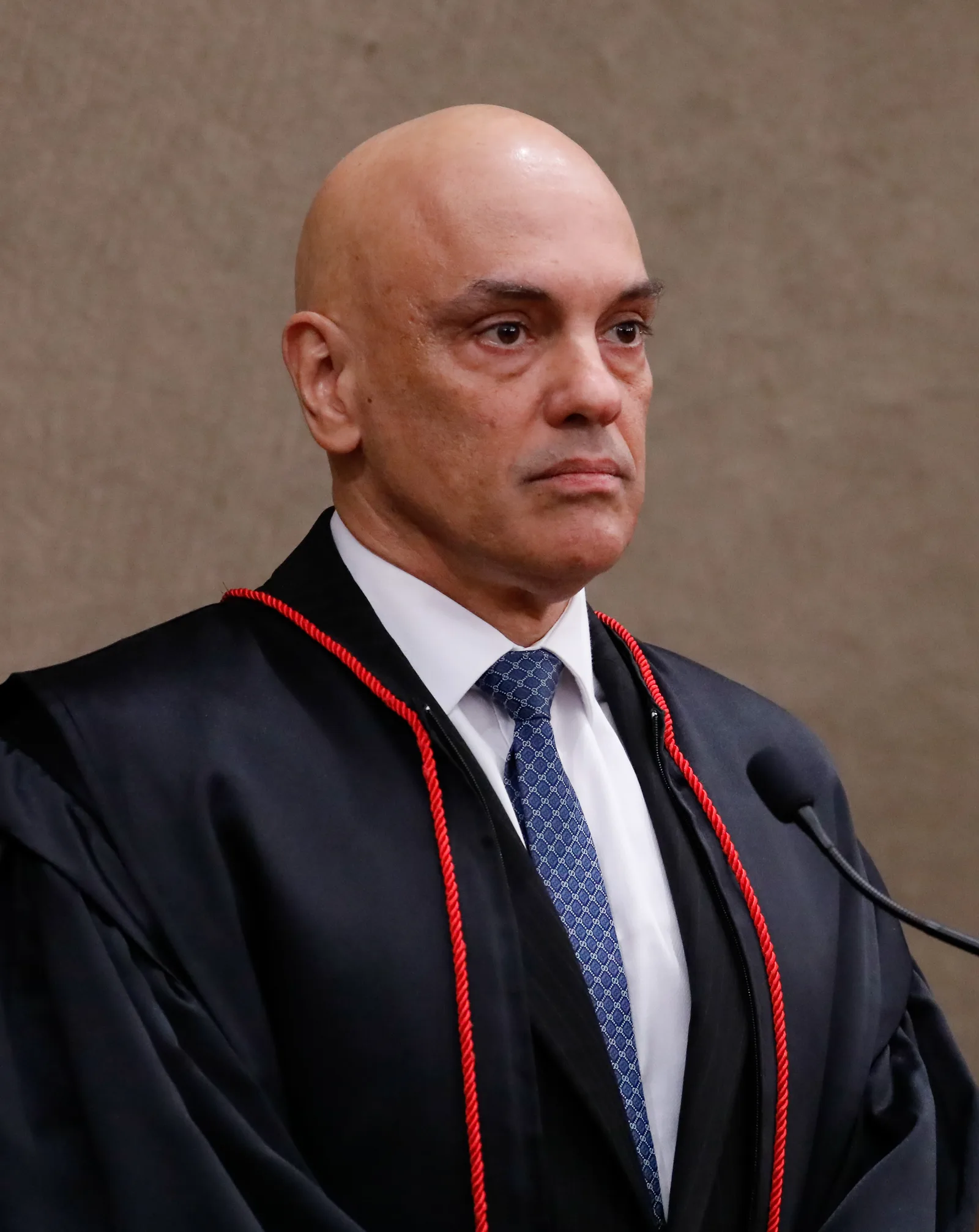 File photo
What happened
Key facts
- Flavio Bolsonaro lost the presidential runoff to Luiz Inacio Lula da Silva (per deccanherald.com, The Japan Times).
- Supreme Court Justice Alexandre de Moraes ordered Flavio Bolsonaro to surrender his passports after the runoff (per deccanherald.com, The Japan Times).
- Moraes cited concern that Flavio Bolsonaro might flee Brazil (per The Japan Times, deccanherald.com, Al Jazeera).
- Multiple criminal investigations involving Flavio Bolsonaro were under way (per The Japan Times, deccanherald.com, Al Jazeera).
- Moraes ordered the passport surrender amid investigations into alleged financial wrongdoing (per deccanherald.com).
- Flavio Bolsonaro refused to concede the election and alleged electoral irregularities (per deccanherald.com, The Japan Times).
The brief
Supreme Court Justice Alexandre de Moraes ordered Flavio Bolsonaro to surrender his passports after Flavio lost Brazil’s presidential runoff to Luiz Inacio Lula da Silva. Moraes cited concern that the losing candidate might leave the country as criminal investigations involving him continued, including inquiries into alleged financial wrongdoing.
Flavio Bolsonaro refused to concede the result and alleged electoral irregularities, according to Deccan Herald. The outlet does not provide evidence for that allegation. The Japan Times places the order only hours after Lula defeated Flavio, while Deccan Herald describes the order as coming amid investigations into alleged financial wrongdoing.
The reports emphasize different aspects of Moraes’s decision. The Japan Times presents the order as a move prompted by concern that Flavio could flee while multiple criminal investigations closed in on him. Deccan Herald links it to alleged financial wrongdoing and recounts the travel that followed. Neither account describes a court finding of guilt in those investigations.
Deccan Herald reports that Flavio left Brazil for Miami by way of Argentina and Ecuador. It says he crossed into Argentina overland using an Italian passport, then flew through Ecuador before arriving in Miami.
The outlet also says the U.S. administration facilitated his entry and that Argentina faced scrutiny; it does not identify the officials or agencies involved in either matter. The election defeat and passport order therefore sit alongside two distinct issues: Flavio’s refusal to concede and his travel out of Brazil while investigations continued.
Deccan Herald says questions remained about his legal position and the investigations. The Japan Times instead focuses on the political cost to Lula, describing Moraes as a liability for the reelected president as Lula prepared to take office promising to heal Brazil’s divisions. Al Jazeera’s headline asks what comes next for Flavio after the defeat.
DW’s headline reports that he fled to the United States amid corruption probes, while France 24’s headline says he declared himself Brazil’s “true” leader after arriving in Miami. Those headlines add distinct descriptions of the aftermath, but do not provide further details about the passport order or the investigations.
The immediate legal question is how the passport order relates to Flavio’s reported departure and the ongoing investigations. The accounts describe the order, alleged financial wrongdoing and his travel, but do not state whether authorities later recovered his Brazilian passports or what formal legal action followed.
Why it matters
- Flavio Bolsonaro’s reported departure through Argentina and Ecuador to Miami puts the passport order and the investigations into alleged financial wrongdoing in direct focus.
- The U.S. administration’s reported facilitation of his entry and Argentina’s reported scrutiny make those governments’ roles concrete parts of the account, though the outlet does not identify the officials or agencies involved.
- Lula faces a political complication: The Japan Times describes Moraes, the justice who issued the order, as a liability for the reelected president as he prepared to take office.
What to watch next
- Whether Flavio Bolsonaro surrenders his Brazilian passports, as ordered by Alexandre de Moraes.
- What formal legal action, if any, follows the investigations into alleged financial wrongdoing involving Flavio Bolsonaro.
- Whether Argentina’s reported scrutiny produces a stated action concerning Flavio’s reported route through the country.
- Whether the U.S. administration provides further detail about its reported facilitation of Flavio’s entry.
How it's being covered
Coverage analysisShow details5 source articles · 5 unique outletsOutlet political mix: Center Only· 4 Center · 1 unratedWhere the outlets are based: Europe 40% · Asia 40% · Other 20%
- Coverage is currently concentrated among Center-rated outlets (4 of 4 rated sources); comparatively few Left or Right-rated outlets have published on the event.
One source is from a wire service (AP, Reuters, AFP or Bloomberg), whose reporting other outlets often republish.
How outlets' accounts compare
2 framing differences · 4 uncorroborated claims · 2 information gaps- The Japan Times foregrounds Moraes’s political standing and the risk he said Flavio might flee; Deccan Herald emphasizes alleged financial wrongdoing and Flavio’s route to Miami.
- The Japan Times describes Moraes as a liability for Lula, while Deccan Herald focuses on the passport order, travel and ongoing investigations.
- Deccan Herald reports Flavio’s allegation of electoral irregularities; the Japan Times does not mention that claim.
- Deccan Herald reports that Flavio refused to concede and alleged electoral irregularities, but the report does not establish the allegation.
- Deccan Herald says Flavio alleged electoral irregularities after refusing to concede.
- France 24’s headline says Flavio declared himself Brazil’s “true” leader after arriving in Miami.
- The sources do not provide the text or legal basis of Moraes’s passport order.
- The sources do not identify the officials or agencies involved in the U.S. administration’s reported facilitation of Flavio’s entry or Argentina’s reported scrutiny.
Timeline
Developments from this story's sources, dated background we compiled and fact-checked, and our earlier coverage. Each row says which.- Brazil’s Superior Electoral Court, created in 1932, oversees national elections; its authority includes administering voting and deciding electoral disputes.Background · from our historical context
- Brazil promulgated a constitution requiring a presidential runoff if no candidate wins more than half of valid votes; it set the criminal-responsibility age at 18.Background · compiled and fact-checked by Updat3
- Alexandre de Moraes joined Brazil’s Supreme Federal Court after President Michel Temer appointed him.Background · compiled and fact-checked by Updat3
- Brazil’s financial intelligence agency identified unusual transactions involving Flávio Bolsonaro’s former aide Fabrício Queiroz.Background · compiled and fact-checked by Updat3
- Jair Bolsonaro defeated Workers’ Party candidate Fernando Haddad in Brazil’s presidential runoff.Background · compiled and fact-checked by Updat3
- In July 2019, Brazil’s Supreme Federal Court temporarily suspended criminal investigations that relied on financial intelligence reports shared without prior judicial authorization.Background · from our historical context
- In November 2019, the court ruled that tax and financial intelligence agencies could share such reports with prosecutors without a court order, provided they followed formal procedures and preserved confidentiality.Background · from our historical context
- In 2021, the Superior Court of Justice annulled evidence gathered in the Rio case, a decision that affected the prosecution’s ability to proceed.Background · from our historical context
- Luiz Inácio Lula da Silva defeated Jair Bolsonaro in Brazil’s presidential election.Background · compiled and fact-checked by Updat3
- Flávio Bolsonaro led Lula in Brazil’s presidential first round, 47 percent to 45 percent.Background · compiled and fact-checked by Updat3
How we got here
In 2018, while serving as a state deputy in Rio de Janeiro, Flávio Bolsonaro became the subject of scrutiny after Brazil’s financial intelligence agency identified unusual transactions involving his former aide Fabrício Queiroz.
In July 2019, Brazil’s Supreme Federal Court temporarily suspended criminal investigations that relied on financial intelligence reports shared without prior judicial authorization.
Original sources
1 of 5 articles · Middle East · Show allEvery story links to the reporting it was built from. How we choose sources
Spotted a factual error, a broken link or a misleading summary? Tell us.