
Pentagon asks Baltic NATO members to moderate public remarks on Russia, sources say
Pentagon officials privately asked Lithuania, Latvia and Estonia, along with other NATO countries, to moderate public statements about the threat from Russia, according to people familiar with the discussions. The requests were delivered in bilateral meetings, as the Trump administration renewed efforts to press for a negotiated end to the war in Ukraine.
AI-assisted synthesis · Based on 4 independent reports from 6 outlets · Article text read from 2 of 4 reports · short excerpt from 1 moreHow it's made
View timeline · 13 entries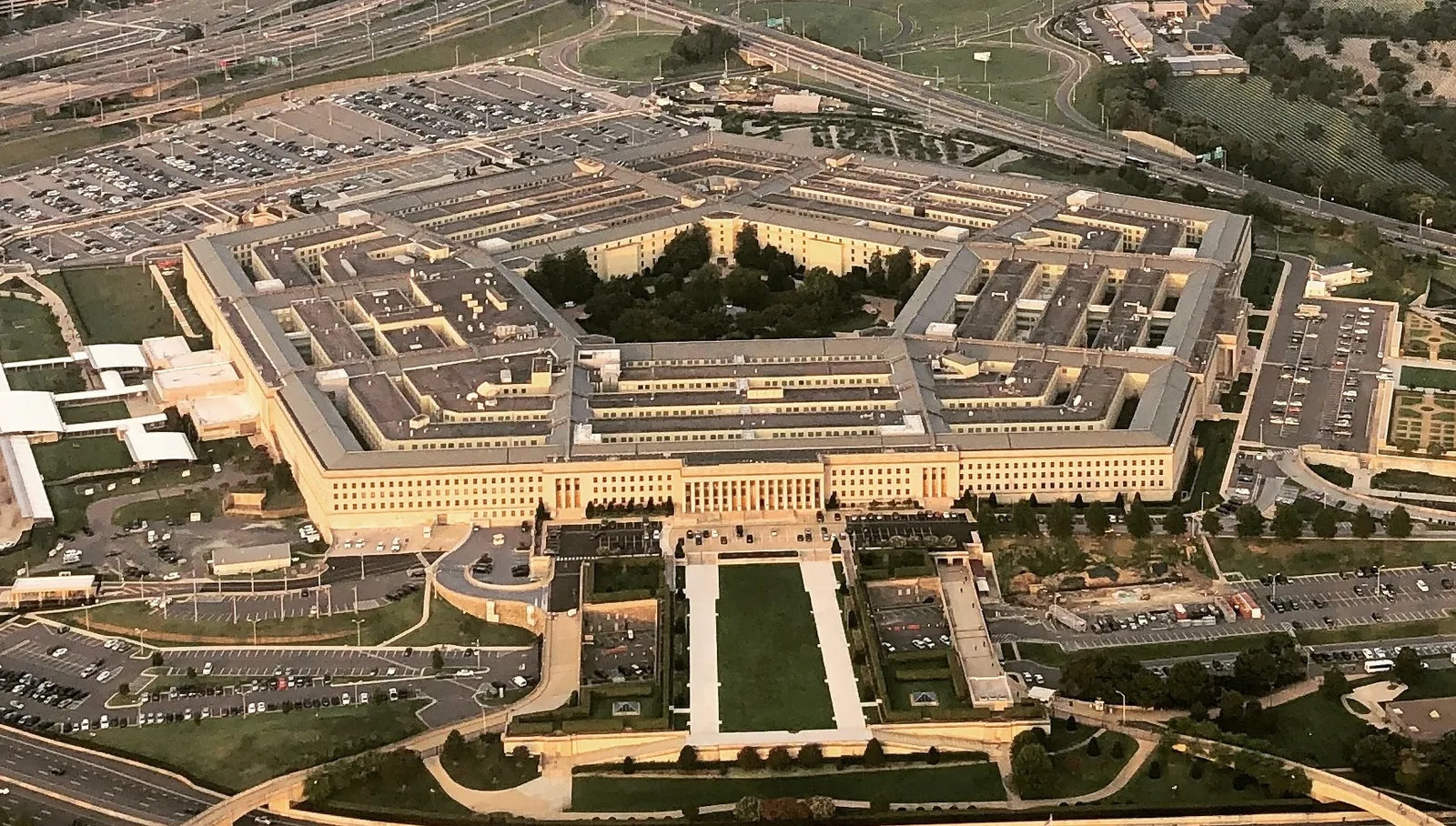 File photo
What happened
Key facts
- Pentagon officials privately asked several NATO countries to moderate public statements about the threat posed by Russia (per lbcgroup.tv, turkiyetoday.com, The Japan Times).
- The people familiar with the matter said Pentagon officials argued that some statements by European leaders and officials undermined continental security (per lbcgroup.tv, The Japan Times, internazionale.it).
- The Pentagon official said: "Private conversations among allies are just that, so we will not comment on these allegations." (per lbcgroup.tv, turkiyetoday.com, The Japan Times).
The brief
Pentagon officials have privately asked several NATO countries to moderate public statements about the threat posed by Russia, four people familiar with the matter said. Lithuania, Latvia and Estonia were among the countries contacted, and the requests were made in bilateral meetings, according to the accounts reported by LBC Group and The Japan Times.
The requests concern public rhetoric; the reported exchanges took place privately. The people familiar with the matter said the officials argued that some statements by European leaders and officials undermined continental security. Türkiye Today described the concern more broadly as rhetoric that could undermine security efforts.
These are accounts of the rationale attributed to Pentagon officials, not an independently established assessment of the effect of the statements. The effort is taking place as the Trump administration has restarted a push to press for a negotiated end to the full-scale war in Ukraine. The Japan Times also linked the private requests to that renewed diplomatic effort.
The reporting does not establish that the meetings produced a policy change or agreement by the countries contacted. LBC Group reported that four people familiar with the matter described the requests and spoke anonymously.
A Pentagon official declined to discuss the allegations, saying: "Private conversations among allies are just that, so we will not comment on these allegations." The official did not publicly confirm the meetings or the account of what Pentagon officials said in them.
The three Baltic states are the named NATO members in the reporting, but the requests were not described as limited to them. The accounts say several NATO countries received messages; they do not establish whether additional European governments were approached. Nor do they identify a particular public statement that prompted the discussions.
The reporting presents the requests as part of the administration's current effort to pursue negotiations over Ukraine, while the stated Pentagon concern is that some European rhetoric could undermine security. It does not document a response from Lithuania, Latvia or Estonia, or a concrete next step arising from the bilateral meetings.
The immediate documented development is the administration's renewed negotiating push alongside private appeals for more measured public language about Russia.
Why it matters
- Lithuania, Latvia and Estonia are specifically named among the NATO members whose public statements about Russia were the subject of private Pentagon requests.
- The mechanism described is bilateral meetings and messages aimed at moderating public remarks; the accounts do not document a resulting policy change by the three Baltic governments.
- The Trump administration's renewed push for a negotiated end to the Ukraine war is the stated diplomatic context for the requests.
- Pentagon officials' reported concern is that some European leaders' statements undermine continental security, while the accounts do not identify which statements they meant.
What to watch next
- Whether Lithuania, Latvia or Estonia publicly address the reported requests or alter their statements about Russia.
- Whether Pentagon officials contact additional NATO or European governments, since the accounts say it is unclear whether other European governments received messages.
- Whether the Trump administration's renewed effort to press for a negotiated end to the Ukraine war produces a documented negotiating step.
- Whether the Pentagon publicly clarifies its reported concern about European leaders' statements.
How it's being covered
Coverage analysisShow details6 source articles · 6 unique outlets · 4 distinct reportsOutlet political mix: Center Only· 4 Center · 2 unratedWhere the outlets are based: Asia 33% · Europe 17% · Other 50%
- Coverage is currently concentrated among Center-rated outlets (4 of 4 rated sources); comparatively few Left or Right-rated outlets have published on the event.
2 sources are from a wire service (AP, Reuters, AFP or Bloomberg), whose reporting other outlets often republish.
How outlets' accounts compare
3 framing differences · 1 uncorroborated claim · 4 information gaps- LBC Group reports that Pentagon officials argued some European leaders' statements had undermined continental security; Türkiye Today describes the concern as rhetoric that could undermine security efforts.
- The Japan Times and Türkiye Today foreground the renewed push for negotiations over Ukraine; LBC Group additionally reports the Pentagon official's refusal to comment on the allegations.
- The security concern is presented as Pentagon officials' argument, relayed by people familiar with the matter; the Pentagon official quoted by LBC Group declined to comment on the allegations.
- A Pentagon official told LBC Group: "Private conversations among allies are just that, so we will not comment on these allegations."
- The accounts do not identify the specific public statements that prompted the private requests.
- The accounts do not report a public response from Lithuania, Latvia or Estonia or a documented outcome from the meetings.
- The accounts do not establish whether European statements actually undermined security or identify which statements Pentagon officials considered problematic.
- It remains unclear whether governments beyond the named Baltic states received the requests.
Timeline
Developments from this story's sources, dated background we compiled and fact-checked, and our earlier coverage. Each row says which.- Twelve countries signed the North Atlantic Treaty, establishing NATO and its collective-defence commitment.Background · compiled and fact-checked by Updat3
- U.S. Secretary of State James Baker discussed NATO's eastward expansion with Soviet leader Mikhail Gorbachev during German reunification talks.Background · compiled and fact-checked by Updat3
- Ukraine, Russia, the United States and the United Kingdom signed the Budapest Memorandum on security assurances.Background · compiled and fact-checked by Updat3
- NATO admitted Poland, Hungary and the Czech Republic to the alliance.Background · compiled and fact-checked by Updat3
- NATO’s Baltic members—Estonia, Latvia and Lithuania—joined the alliance on March 29, 2004, and are covered by its Article 5 collective-defence commitment.Background · from our historical context
- At its April 3, 2008, Bucharest summit, the alliance declared that Ukraine and Georgia “will become members,” without setting an accession timetable.Background · from our historical context
- Russia and Georgia fought a five-day war in August 2008; Russia later recognized the independence of Abkhazia and South Ossetia, which Georgia and most countries regard as Georgian territory.Background · from our historical context
- In Ukraine, mass protests began in Kyiv in November 2013 after President Viktor Yanukovych suspended preparations for an agreement with the European Union.Background · from our historical context
- Yanukovych left office in February 2014; Russia annexed Crimea the following month, a move rejected by Ukraine and condemned by the UN General Assembly.Background · from our historical context
- Russia annexed Crimea from Ukraine.Background · compiled and fact-checked by Updat3
- Ukraine, Russia, France and Germany agreed to the Minsk II package of measures on the conflict in eastern Ukraine.Background · compiled and fact-checked by Updat3
- Russia launched its full-scale invasion of Ukraine.Background · compiled and fact-checked by Updat3
- Vladimir Putin set conditions for a ceasefire and negotiations, including Ukraine withdrawing from four regions Russia claimed to have annexed; Ukraine rejected the terms.Background · compiled and fact-checked by Updat3
How we got here
On February 24, 2022, Russia launched its full-scale invasion of Ukraine, widening a war that had begun in eastern Ukraine in 2014 and placing NATO’s eastern members’ security concerns at the center of European debate.
Russia’s government has cited NATO enlargement and Ukraine’s ties with the alliance among its stated security concerns; NATO has said its enlargement is voluntary and defensive. NATO’s Baltic members—Estonia, Latvia and Lithuania—joined the alliance on March 29, 2004, and are covered by its Article 5 collective-defence commitment.
Original sources
1 of 6 articles · Middle East · Show allEvery story links to the reporting it was built from. How we choose sources
Spotted a factual error, a broken link or a misleading summary? Tell us.