
Qatar and Iran leaders discuss war and Hormuz in Moscow
Qatar’s emir and Iran’s president discussed the Strait of Hormuz and negotiations during a meeting in Moscow, according to the emir’s office. The statement also said they reviewed regional developments and energy supplies.
AI-assisted synthesis · Based on 5 outlets' reporting · Article text read from 3 of 5 outletsHow it's made
View timeline · 9 entries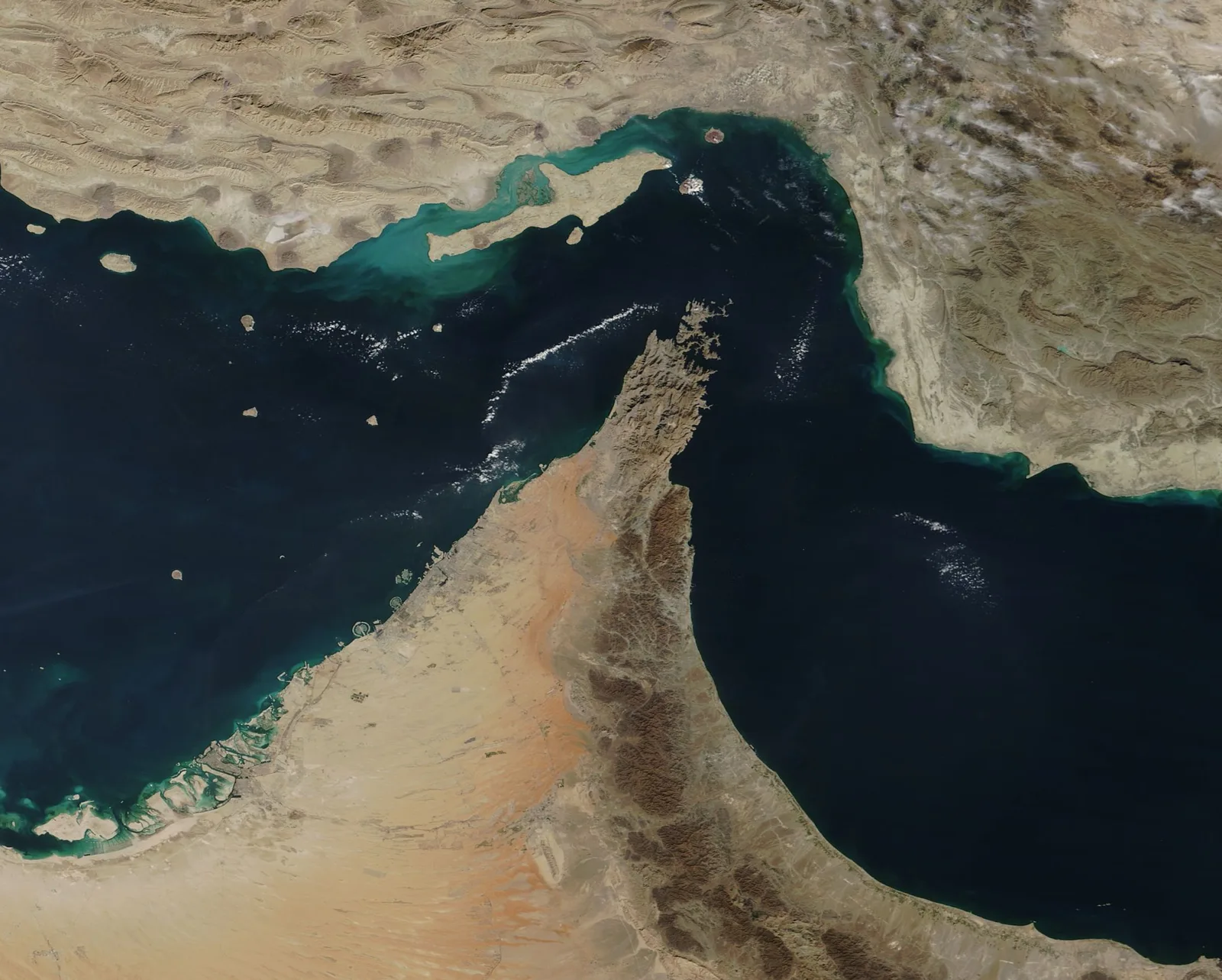 File photo
What happened
Key facts
- The office said the leaders discussed the blockaded Strait of Hormuz.
- The emir’s office said the meeting covered the Middle East war.
- The office said they reviewed the latest negotiations.
- Energy supplies were also discussed, the office said.
The brief
Qatar’s emir and Iran’s president met in Moscow and discussed the Strait of Hormuz and negotiations, according to the emir’s office. The meeting also covered the Middle East war, regional developments and energy supplies, the office said.
The Times of Israel separately reported that another ship had been struck in the Strait, placing maritime security alongside the leaders’ discussion of the waterway. The emir’s office said the leaders reviewed developments in the regional situation, with negotiations, Hormuz and energy supplies among the subjects.
Voice of Emirates, citing Agence France-Presse, likewise reported that Sheikh Tamim bin Hamad Al Thani and Masoud Pezeshkian discussed negotiations and the Strait. These accounts identify the topics but provide no positions from either leader on the negotiations or the waterway. The reports describe the meeting in different terms of emphasis.
LBC Group foregrounded the Middle East war and the “blockaded Strait of Hormuz,” while Voice of Emirates focused on negotiations and the waterway. Naharnet’s headline also characterized the meeting as a discussion of war and Hormuz.
The Times of Israel headline adds the reported strike on another ship, a detail not included in the meeting accounts from LBC Group and Voice of Emirates. The ship-strike report is significant to the Hormuz discussion because it concerns maritime activity in the same strait.
The Times of Israel headline does not identify who struck the ship or provide details about the incident. None of the meeting reports attributes the strike to Qatar, Iran, or either leader, so the reports do not establish a connection between the meeting and the ship incident. Energy supplies were among the subjects the emir’s office said the leaders reviewed.
The reports do not describe specific measures, proposals or outcomes concerning energy, and they do not state how the discussions might affect supplies or shipping. They also do not provide an account from the Iranian president or a separate statement from Qatar’s emir beyond the office’s summary.
The documented account is therefore limited to the subjects named by the emir’s office and the reported ship strike. The available reporting does not establish what either leader proposed, whether they reached an agreement, or who was responsible for the ship incident.
Further details about the positions each government takes on negotiations, maritime security and energy supplies would clarify what the Moscow discussions produced.
Why it matters
- The Strait of Hormuz is a direct subject of the meeting, and The Times of Israel reported another ship was struck there; the report does not identify the responsible actor or describe harm to people.
- The emir’s office included energy supplies among the issues reviewed, tying the discussion to a concrete supply concern, though it named no specific disruption or outcome.
- Negotiations were discussed, but the accounts provide no terms or positions from Qatar’s emir or Iran’s president, leaving the substance of that agenda unclear.
What to watch next
- Whether Qatar’s emir or Iran’s president publicly provides further details about their positions on negotiations or Hormuz.
- Whether The Times of Israel identifies who struck the ship in the Strait or reports further details about the incident.
- Whether Qatar’s emir’s office or Iran’s government announces any specific outcome concerning energy supplies.
How it's being covered
Coverage analysisShow details5 source articles · 5 unique outletsOutlet political mix: Too few rated· 2 Center · 3 unratedWhere the outlets are based: Middle East 60% · Unknown 40%
How outlets' accounts compare
3 framing differences · 1 uncorroborated claim · 2 information gaps- LBC Group emphasized the Middle East war and described the Strait as blockaded; Voice of Emirates foregrounded negotiations and the Strait.
- The Times of Israel headline added a report that another ship was struck in the Strait, a detail absent from the meeting accounts in LBC Group and Voice of Emirates.
- The Times of Israel headline reports a ship strike but does not identify who carried it out or give further incident details.
- The emir’s office said the leaders reviewed regional developments, including negotiations, the Strait of Hormuz and energy supplies.
- The sources do not give details of the negotiations or state the positions of either leader.
- The sources do not identify the actor responsible for the reported ship strike or describe any civilian impact.
Timeline
Developments from this story's sources, dated background we compiled and fact-checked, and our earlier coverage. Each row says which.- Iran and Iraq began attacking commercial shipping in the Persian Gulf during the Tanker War.Background · compiled and fact-checked by Updat3
- The United States began escorting reflagged Kuwaiti tankers in the Persian Gulf under Operation Earnest Will.Background · compiled and fact-checked by Updat3
- Qatar has also hosted the U.S. military’s Al Udeid Air Base since 1996, a security relationship that has coexisted with Doha’s diplomatic ties to Tehran.Background · from our historical context
- President Donald Trump withdrew the United States from the agreement on May 8, 2018.Background · from our historical context
- Iran began exceeding some JCPOA enrichment limits in 2019, saying its steps followed the U.S. withdrawal.Background · from our historical context
- On February 28, 2026, U.S. and Israeli forces began the coordinated strikes that marked the start of the current war.Background · from our historical context
- Iran announced that vessels passing through the Strait of Hormuz would need prior authorization from the IRGC Navy.Background · compiled and fact-checked by Updat3
- The United States and Iran signed a memorandum of understanding concerning freedom of navigation in the Strait of Hormuz; implementation later stalled over security disagreements.Background · compiled and fact-checked by Updat3
- Iran presented a proposal to reopen the Strait of Hormuz after an interim ceasefire collapsed.Background · compiled and fact-checked by Updat3
How we got here
On February 28, 2026, the United States and Israel launched coordinated strikes on Iranian power plants, air defenses and military infrastructure; the war that began with those strikes was still ongoing by October 28.
During the 1980–88 Iran-Iraq War, attacks on commercial shipping in the Persian Gulf became known as the Tanker War, and the United States began escorting Kuwaiti tankers in 1987 under Operation Earnest Will. Qatar and Iran hold adjacent portions of the North Field/South Pars gas field, discovered in 1971 and 1990, respectively.
Original sources
3 of 5 articles · Middle East · Show allEvery story links to the reporting it was built from. How we choose sources
Spotted a factual error, a broken link or a misleading summary? Tell us.