
Trump and Netanyahu warn Iran of possible renewed strikes
Donald Trump endorsed Benjamin Netanyahu for re-election and warned that the United States could soon “finish the job” against Iran unless Tehran changes course. The remarks link Trump’s endorsement to Netanyahu’s re-election bid and to Trump’s stated warning about Iran.
AI-assisted synthesis · Based on 4 outlets' reporting · Article text read from 1 of 4 outletsHow it's made
View timeline · 12 entries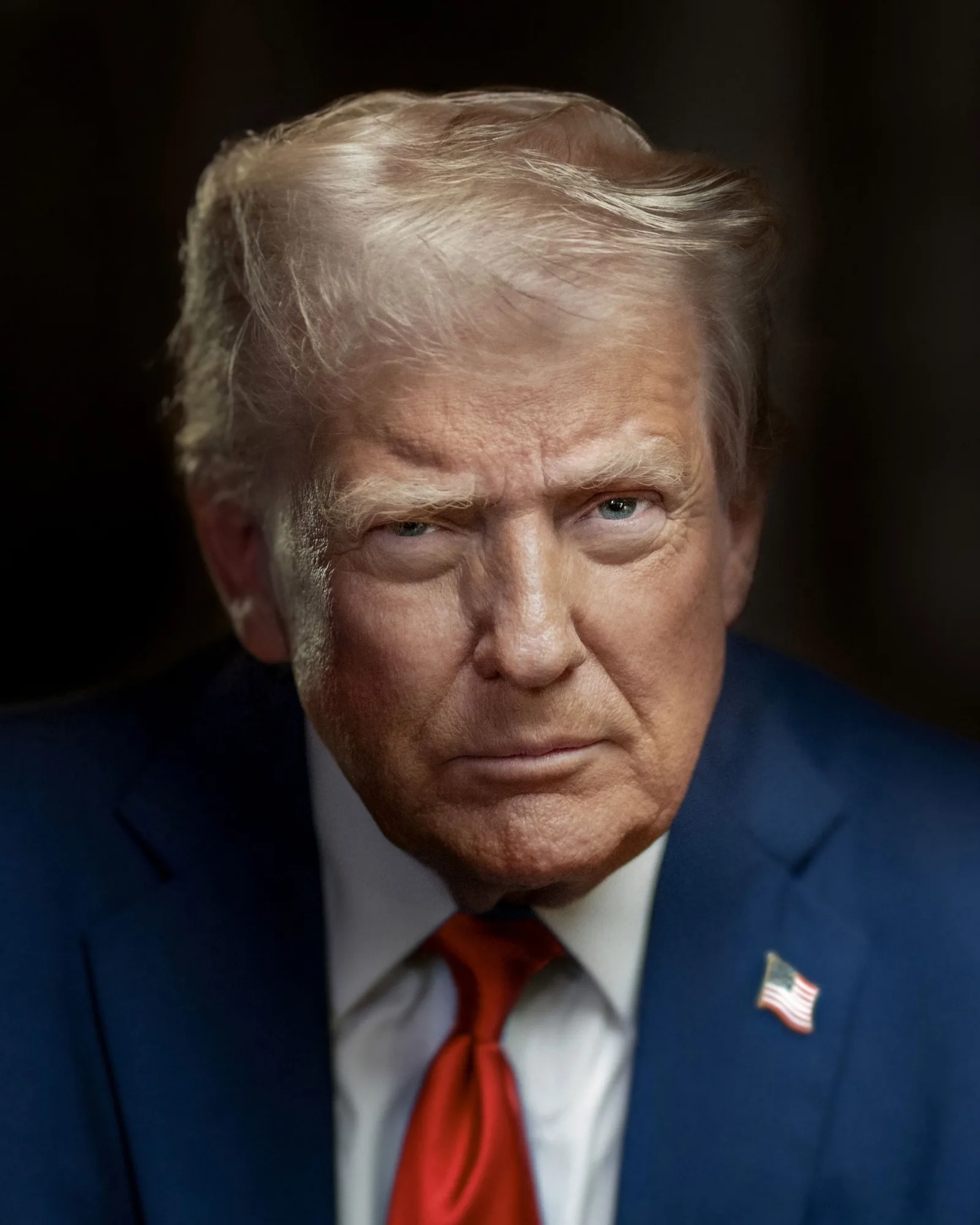 File photo
What happened
Key facts
- Trump warned that the United States could soon resume military action against Iran unless Tehran changed course.
- Trump said the United States could act against Iran itself if Netanyahu did not remain in power.
- Netanyahu said Israel was prepared to act independently of Washington if necessary.
- Diplomatic efforts continued over the Strait of Hormuz and the wider conflict.
The brief
Donald Trump endorsed Israeli Prime Minister Benjamin Netanyahu for re-election and warned that the United States could soon “finish the job” against Iran unless Tehran changes course, Iran International reported.
The outlet’s excerpt does not identify when Trump made those remarks; its caption separately places Trump and Netanyahu together at a press conference at Mar-a-Lago club in Palm Beach, Florida, on December 29, 2025. The Times of Israel’s headline says Netanyahu urged voters to listen to Trump and quoted him as saying Trump would finish the job against Iran only with Netanyahu.
Fox News’s headline describes Trump as saying Netanyahu needs to win re-election or the United States would have to act against Iran alone. Haaretz’s headline connects Trump’s endorsement to the war in Iran.
These headlines describe the electoral link in different terms, while the Iran International excerpt reports Trump’s endorsement and warning without specifying an election date. Trump’s warning, as presented by Iran International, was conditional: he said the United States could soon finish the job against Iran unless Tehran changed course.
The excerpt does not give further detail about what “the job” refers to or identify a specific action Trump said the United States would take. It also does not report a response from Netanyahu or the Iranian government to these remarks. The excerpt includes two other Iran-related statements.
Iranian lawmaker Ahmad Naderi said Mojtaba Khamenei might take a different position on nuclear weapons from his late father, Ali Khamenei. Naderi said his view was based on Mojtaba Khamenei’s conduct and that he understood the younger Khamenei’s religious ruling would differ. The excerpt does not say that Mojtaba Khamenei had issued such a ruling.
Foreign Minister Abbas Araghchi said Tehran was reviewing Washington’s comments on Iran’s seven-day proposal to reopen the Strait of Hormuz. Under the proposal as Araghchi described it, the strait would reopen on the sixth day if Washington accepted Iran’s conditions, and negotiations would resume on the seventh.
Those Hormuz and nuclear-policy remarks appear alongside the account of Trump’s endorsement, but Iran International does not connect them to his warning or to Netanyahu’s re-election. The excerpt provides no further update on Tehran’s review of Washington’s comments or on the proposed sequence for reopening the strait and resuming negotiations.
Why it matters
- The endorsement directly names Netanyahu’s re-election as relevant to Trump’s stated willingness to have the United States act against Iran alone.
- Trump’s warning puts Tehran’s course at the center of his stated condition, but the excerpt does not specify what change he seeks.
- Araghchi’s proposal sets out a concrete sequence: conditional reopening of the Strait of Hormuz on day six, followed by negotiations on day seven.
What to watch next
- Whether Netanyahu repeats or elaborates on the claim that Trump would finish the job against Iran only with him.
- Whether Tehran accepts Washington’s comments on the seven-day Strait of Hormuz proposal.
- Whether Washington meets Iran’s conditions for reopening the strait on the proposal’s sixth day.
- Whether negotiations resume on the seventh day under the proposal Araghchi described.
How it's being covered
Coverage analysisShow details6 source articles · 4 unique outletsOutlet political mix: Mixed· 1 Left · 1 Center · 2 RightWhere the outlets are based: Middle East 50% · US/Canada 25% · Other 25%
How outlets' accounts compare
Timeline
Developments from this story's sources, dated background we compiled and fact-checked, and our earlier coverage. Each row says which.- On August 19, 1953, a CIA- and MI6-backed coup overthrew Prime Minister Mohammad Mosaddegh and strengthened Shah Mohammad Reza Pahlavi’s rule.Background · from our historical context
- Iran’s revolution ended the monarchy and established the Islamic Republic.Background · compiled and fact-checked by Updat3
- Iran subsequently developed regional partners and proxy forces as part of its deterrence strategy; Hezbollah was founded in Lebanon in 1982.Background · from our historical context
- Benjamin Netanyahu first became Israel’s prime minister.Background · compiled and fact-checked by Updat3
- Later, IAEA findings about undeclared nuclear activity and violations, followed by Western sanctions from 2002 onward, brought the nuclear file to the center of international diplomacy.Background · from our historical context
- Iran, the United States, and five other powers agreed to the Joint Comprehensive Plan of Action (JCPOA) on July 14, 2015.Background · from our historical context
- On May 8, 2018, Trump announced that the United States would withdraw from the accord and restore sanctions.Background · from our historical context
- Beginning in 2019, Iran exceeded some of the agreement’s nuclear limits, saying its steps were a response to the US withdrawal.Background · from our historical context
- Donald Trump publicly backed Benjamin Netanyahu’s re-election campaign.Background · compiled and fact-checked by Updat3
- An Israeli strike hit an Iranian diplomatic compound in Damascus, killing senior Iranian military officers.Background · compiled and fact-checked by Updat3
- Israel struck targets in Iran after Iran’s October 1 missile attack.Background · compiled and fact-checked by Updat3
- Donald Trump said the United States should stay out of Israel’s election, while leaving open the possibility of endorsing a candidate.Background · compiled and fact-checked by Updat3
How we got here
The warnings came amid diplomatic efforts over the Strait of Hormuz and the wider conflict. Donald Trump tied his support for Benjamin Netanyahu’s re-election to a threat that Washington could act against Iran if Tehran did not change course—and said the United States could act even if Netanyahu were no longer in power.
Netanyahu, in turn, said Israel was prepared to act without Washington if necessary. The remarks therefore linked the Israeli election to two questions: whether the United States might renew military action and whether Israel would do so independently. The immediate precedent for direct Iran-Israel exchanges was 2024.
Original sources
2 of 6 articles · Middle East · Show allEvery story links to the reporting it was built from. How we choose sources
Spotted a factual error, a broken link or a misleading summary? Tell us.