
US calls for ending UN decolonisation committee’s mandate
The United States called at the UN for an end to the Special Committee on Decolonisation’s mandate. The committee reviews 17 non-self-governing territories annually, including the South Atlantic archipelago claimed by Argentina, and Washington has not formally proposed dissolving it.
AI-assisted synthesis · Based on 3 outlets' reporting · Article text read from 1 of 3 outletsHow it's made
View timeline · 5 entries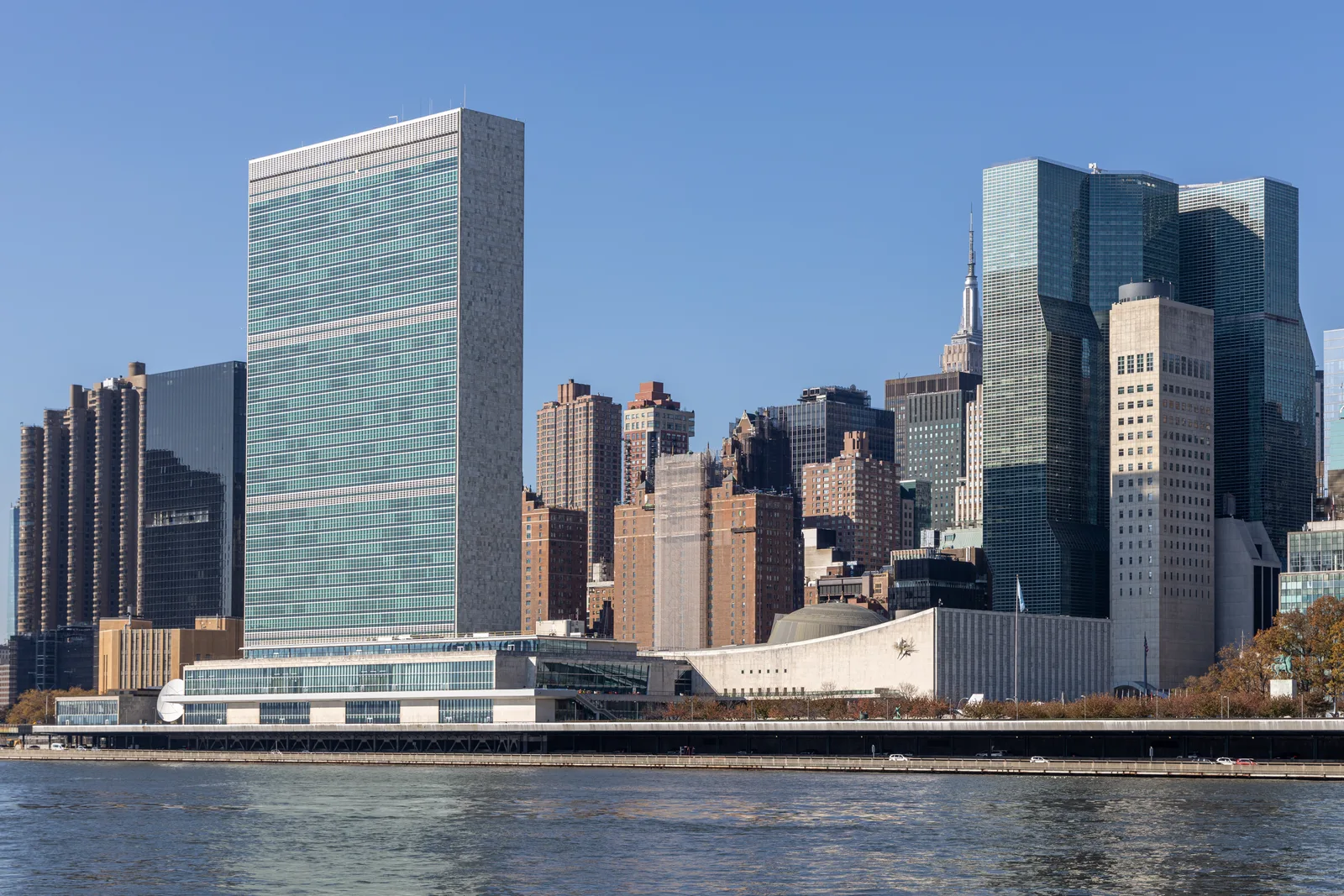 File photo
What happened
Key facts
- The United States called for an end to the Special Committee on Decolonisation’s mandate during a General Assembly Fourth Committee session (per mercopress.com).
- The United States has not submitted a formal proposal to dissolve the committee (per mercopress.com).
- The committee reviews 17 non-self-governing territories each year, including the South Atlantic archipelago claimed by Argentina (per mercopress.com).
The brief
The United States called at the United Nations for an end to the mandate of the Special Committee on Decolonisation, the body before which Argentina presents its sovereignty claim over the Falklands each year. The call came during a General Assembly Fourth Committee session, according to Mercopress, which cited the official summary of the session.
Washington has not formally proposed dissolving the committee. The committee considers 17 non-self-governing territories annually, among them the South Atlantic archipelago claimed by Argentina. Its continued existence is not for the committee itself to decide: only the General Assembly can approve dissolution.
Mercopress reported that the committee has support from a broad majority of states. The United States representative also described some of the committee’s activities as “a waste of resources,” according to the United Nations summary cited by Mercopress.
The Fourth Committee approved more than 20 draft resolutions during the session; many had been recommended by the Special Committee. The summary placed the US call alongside that committee work. The territorial dispute remains central to Argentina’s engagement with the body.
Successive foreign ministers under President Javier Milei have attended its June sessions to seek the resumption of sovereignty negotiations. Pablo Quirno, Argentina’s current foreign minister, made that appeal on June 25, Mercopress reported.
The United Kingdom’s position differs: it says the islanders are entitled to self-determination and chose in a 2013 referendum to keep their status as a British overseas territory.
At the General Assembly in September, Milei called the islands question “a national cause” and urged consequences for Resolution 31/49, which calls on the parties to avoid unilateral changes while the dispute remains unresolved. The Argentine government has not commented on Washington’s call, according to Mercopress.
The outlet noted that the US position contrasts with the close alliance between Milei and President Donald Trump. The next institutional decision, if a dissolution proposal is formally advanced, would rest with the General Assembly; no such proposal has been submitted.
Why it matters
- The committee reviews 17 territories each year, including the archipelago at the centre of Argentina’s sovereignty claim.
- Argentina’s government has used the committee’s June sessions to call for renewed sovereignty negotiations; Pablo Quirno did so on June 25.
- The United Kingdom’s stated position rests on the islanders’ self-determination and their 2013 vote to retain British overseas territory status.
- Any decision to dissolve the committee belongs to the General Assembly, while the committee has support from a broad majority of states.
What to watch next
- Whether the United States submits a formal proposal to dissolve the Special Committee on Decolonisation.
- Whether the General Assembly considers or approves a dissolution proposal; it has authority to decide the committee’s status.
- Whether the Argentine government comments on the United States’ call.
- Whether Argentina’s representatives continue seeking resumed sovereignty negotiations through the committee’s June sessions.
How it's being covered
Coverage analysisShow details3 source articles · 3 unique outletsOutlet political mix: Too few rated· 1 Right · 2 unratedWhere the outlets are based: Unknown 67% · Latin America 33%
How outlets' accounts compare
Timeline
Developments from this story's sources, dated background we compiled and fact-checked, and our earlier coverage. Each row says which.- Britain took control of the Falkland Islands.Background · compiled and fact-checked by Updat3
- Argentine forces landed in the Falkland Islands.Background · compiled and fact-checked by Updat3
- Argentine forces surrendered in the Falkland Islands, ending hostilities with the United Kingdom.Background · compiled and fact-checked by Updat3
- Argentina and the United Kingdom restored diplomatic relations in 1990, while each maintained its position on sovereignty.Background · from our historical context
- In 2013, islanders voted in a referendum to remain a British overseas territory; Argentina rejected the vote as irrelevant to its claim.Background · from our historical context
How we got here
The United Nations’ annual review of the Falkland Islands (Malvinas) dispute rests on a framework established before the current debate: in 1965, General Assembly Resolution 2065 recognized a sovereignty dispute between Argentina and the United Kingdom and invited the two governments to negotiate, taking account of the islanders’ interests.
The committee’s examination of the territory therefore predates the current call to end its mandate and sits within a longer UN decolonisation process. The General Assembly created that process on 14 December 1960, when it adopted Resolution 1514, the Declaration on the Granting of Independence to Colonial Countries and Peoples.
Original sources
1 of 3 articles · Latin America · Show allEvery story links to the reporting it was built from. How we choose sources
Spotted a factual error, a broken link or a misleading summary? Tell us.