
Midterm ad spending tops $10 billion as parties contest Congress
AdImpact reported that advertising for the 2026 midterms had exceeded $10 billion, setting a record for midterm elections. Republicans outspent Democrats on broadcast television ads in nine closely contested Senate races, while a separate comparison found a Republican lead across 21 toss-up contests.
AI-assisted synthesis · Based on 4 outlets' reporting · Article text read from 3 of 4 outletsHow it's made
View timeline · 7 entries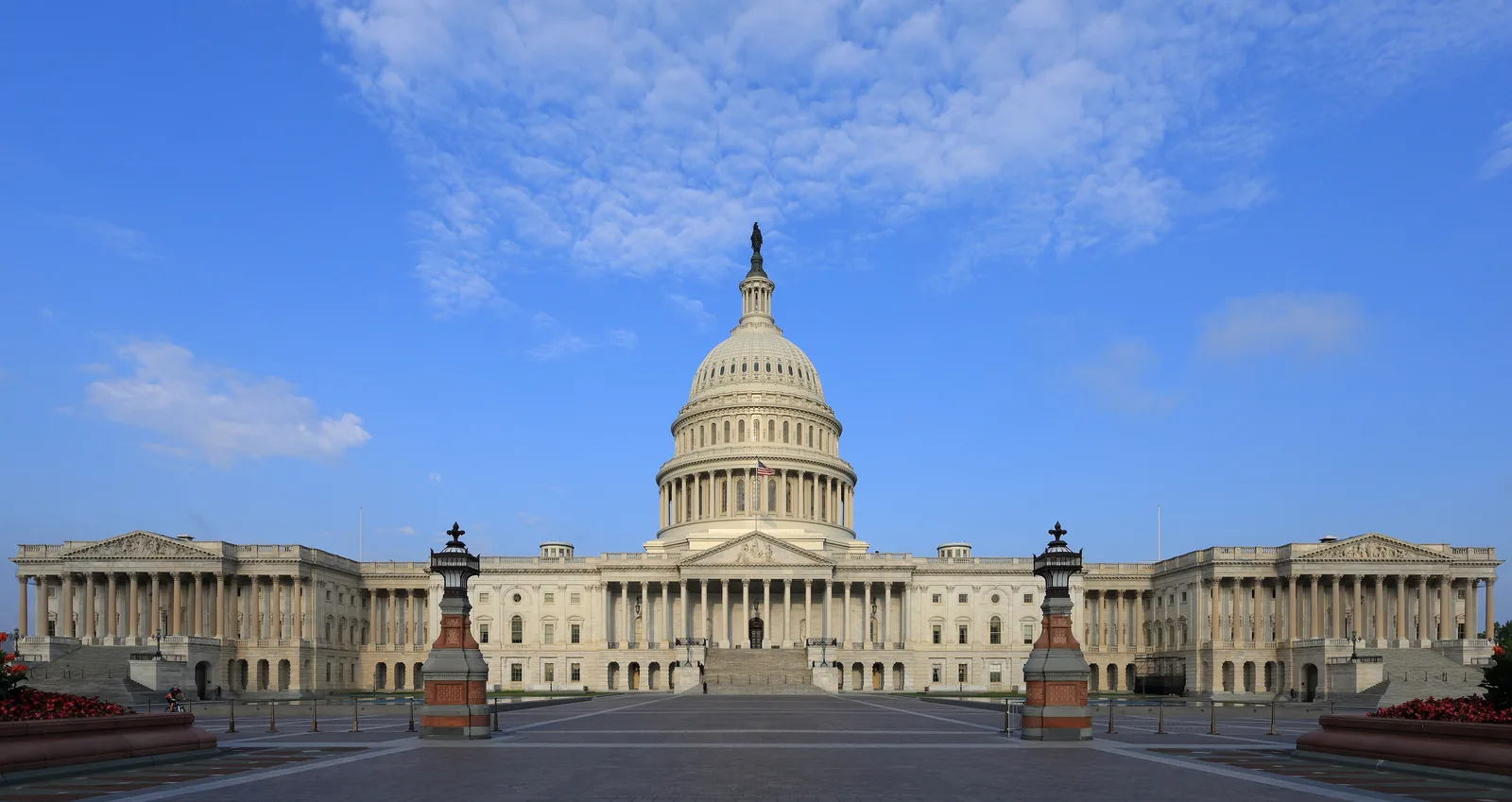 File photo
What happened
Key facts
- AdImpact said political advertising spending for the 2026 midterms passed $10 billion in October, a record for midterm elections.
- The previous midterm advertising spending record was $8.9 billion in 2022.
- Republicans are often raising less than Democratic rivals, while Republican campaigns benefit from outside spending by super PACs and other entities, the article reported.
- Brendan Glavin, director of insights at OpenSecrets, said spending the most does not guarantee a win.
The brief
Political advertising for the 2026 U.S. midterm elections has exceeded $10 billion, setting a record for midterm cycles, according to AdImpact. The figure marks a sharp rise from the previous midterm high of $8.9 billion in 2022. AdImpact projects that total spending could reach $11.6 billion by Election Day.
The totals include a mix of campaign advertising and spending by outside groups. The Washington Examiner reports that Republican campaigns often raise less than Democratic rivals, while super PACs and other outside entities provide additional spending on the Republican side.
That distinction matters: campaign fundraising totals alone do not capture all the money entering a race through advertising. Spending is especially large in several competitive contests. AdImpact data cited by the Washington Examiner show record ad spending in Ohio, Texas and Maine.
In Ohio, the campaigns of Republican Vivek Ramaswamy and Democrat Amy Acton have together accounted for $248.2 million in ad buys. The same outlet reports that spending in the Ohio race topped $61 million, $11 million more than the next most expensive House race.
A separate breakdown reported by TIME and summarized by Livemint shows Republicans spent $233 million on broadcast television advertising across nine of the tightest Senate contests in the previous month, compared with $121 million for Democrats. Republicans also spent $14 million more than Democrats across 21 toss-up contests.
These figures describe particular races and categories of ads, rather than the full national total. The outlets emphasize different dimensions of the record. The Washington Examiner focuses on Republican spending in battleground races and the role of outside groups, while Livemint highlights the party comparison in Senate and toss-up contests.
Bombay Samachar adds a projected Election Day total and notes that the 2024 presidential cycle saw about $11.2 billion in ad spending, a comparison that places the forecast for this midterm cycle near that presidential-cycle figure.
The competition is for control of Congress, and the advertising totals show how much money is being directed toward persuading voters in closely watched races. The Washington Examiner reports that Democrats have spent $1.1 billion and independents $136 million, citing AdImpact data published by Newsweek.
It also reports Brendan Glavin of OpenSecrets cautioning that the campaigns that spend the most do not necessarily win. The record total is a spending measure, not an indication of which party will prevail. The next benchmark in the reporting is Election Day, when AdImpact’s projection of $11.6 billion can be compared with the final total.
Why it matters
- Voters in closely contested races are the audience for an advertising market that has already passed $10 billion; AdImpact’s projected $11.6 billion total indicates the scale of campaign messaging they may encounter by Election Day.
- Republican and Democratic campaigns compete for control of Congress, but the reported spending channels differ: the Washington Examiner says super PACs and other outside entities supplement Republican campaigns that often raise less than Democratic rivals.
- In nine closely contested Senate races, Republicans spent $233 million on broadcast television ads compared with Democrats’ $121 million, a measurable imbalance in that specific advertising category.
- The $248.2 million in combined ad buys by the Ramaswamy and Acton campaigns illustrates the cost concentrated in one Ohio contest.
What to watch next
- Whether AdImpact’s projection of $11.6 billion in total advertising spending is reached by Election Day.
- How the Ohio campaigns’ combined $248.2 million in ad buys compares with their final reported advertising totals.
- Whether the reported Republican spending lead across nine close Senate races and 21 toss-up contests persists in subsequent totals.
How it's being covered
Coverage analysisShow details4 source articles · 4 unique outletsOutlet political mix: Mostly Center· 2 Center · 1 Right · 1 unratedWhere the outlets are based: Asia 50% · US/Canada 25% · Other 25%
How outlets' accounts compare
2 framing differences · 1 uncorroborated claim · 2 information gaps- The Washington Examiner emphasizes Republican spending in battleground races and the role of super PACs and other outside entities; Livemint emphasizes Republican-Democratic spending comparisons across Senate and toss-up contests.
- Bombay Samachar compares the projected midterm total with roughly $11.2 billion spent on advertising during the 2024 presidential cycle; the other supplied article excerpts do not make that comparison.
- OpenSecrets director of insights Brendan Glavin said spending the most does not guarantee a win.
- The supplied coverage does not quantify how much of the overall $10 billion-plus total came from candidates, party committees, super PACs, or other outside organizations.
- The $11.6 billion figure is an AdImpact projection, not a final spending total.
Timeline
Developments from this story's sources, dated background we compiled and fact-checked, and our earlier coverage. Each row says which.- Congress amended the Federal Election Campaign Act, creating the Federal Election Commission and setting contribution limits.Background · compiled and fact-checked by Updat3
- The Supreme Court ruled in Buckley v. Valeo, upholding contribution limits and disclosure rules while striking down limits on independent expenditures.Background · compiled and fact-checked by Updat3
- Congress passed the Bipartisan Campaign Reform Act, restricting national party committees’ use of certain unregulated donations and regulating some election-related broadcast ads.Background · compiled and fact-checked by Updat3
- On January 21, 2010, the Supreme Court’s *Citizens United v. Federal Election Commission* ruling held that the government could not bar corporations and unions from making independent expenditures.Background · from our historical context
- The D.C. Circuit ruled in SpeechNow.org v. FEC that groups making only independent expenditures could accept unlimited contributions.Background · compiled and fact-checked by Updat3
- Brendan Glavin of OpenSecrets noted in 2022 that greater spending did not guarantee an election victory, a caution consistent with the separate legal and electoral roles of candidates and independent spenders.Background · from our historical context
- AdImpact reported that political advertising spending for the midterms reached a record $8.9 billion.Background · compiled and fact-checked by Updat3
How we got here
The immediate benchmark was the 2022 midterm election, when political advertising spending reached a then-record $8.9 billion, according to AdImpact. That cycle included contests for all 435 House seats and 35 Senate seats, and its spending showed how costly campaigns for control of Congress had become.
The 2024 election then provided another point of comparison: it was a presidential election year, when advertising spending also covers the race for the White House.
Original sources
4 articles from 4 outletsEvery story links to the reporting it was built from. How we choose sources
Spotted a factual error, a broken link or a misleading summary? Tell us.