
Amit Shah offers Parliament debate on vote-theft claims in Lucknow
Amit Shah offered a special Parliament session for debate on Opposition vote-theft allegations and challenged Rahul Gandhi and Akhilesh Yadav to present their claims there. He called claims against the Election Commission baseless as the Opposition prepared to intensify its campaign against the poll body.
AI-assisted synthesis · Based on 5 outlets' reporting · Article text read from 3 of 5 outlets · 1 article captured only in partHow it's made
View timeline · 10 entries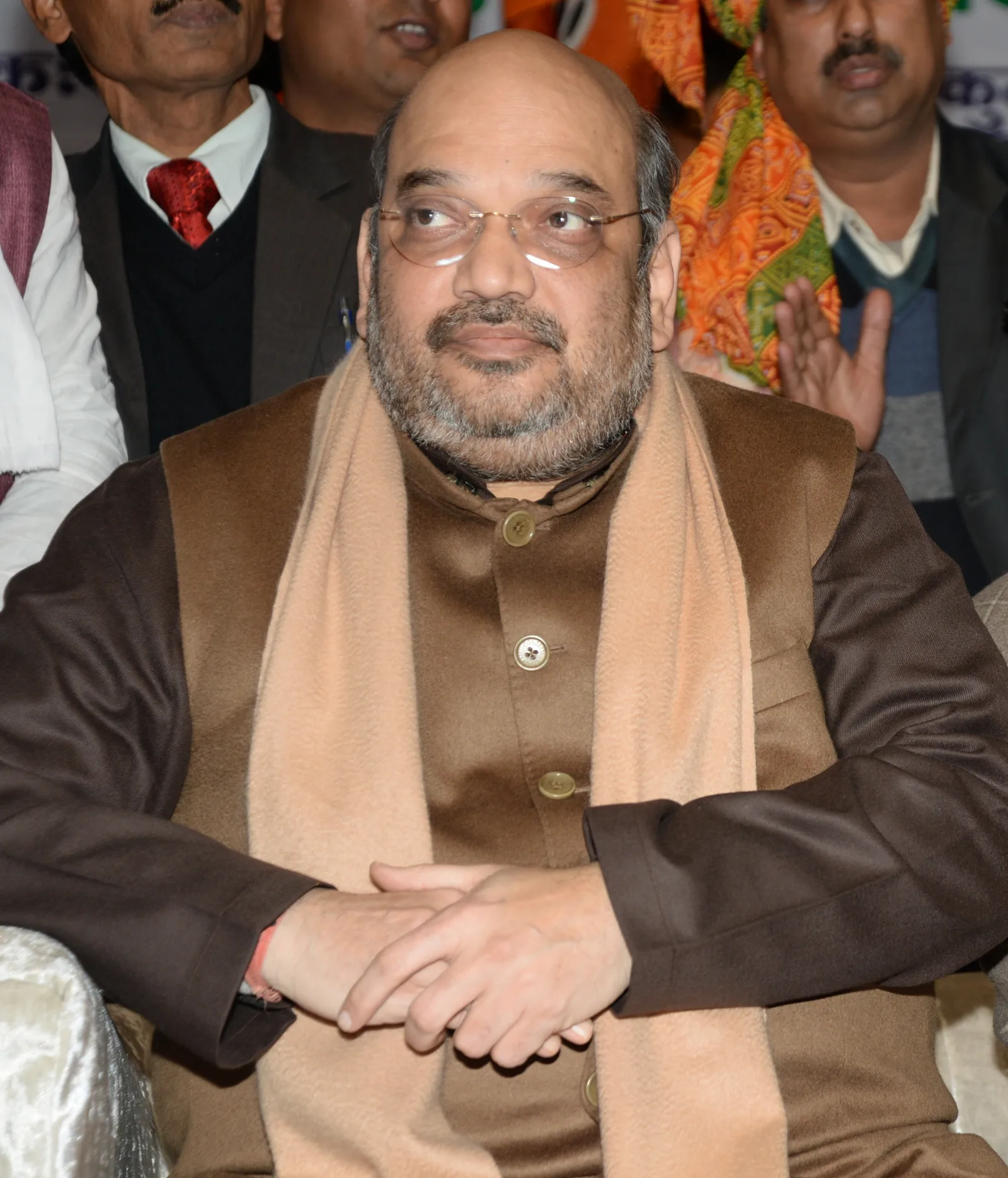 File photo
What happened
Key facts
- Shah said the Central government was willing to convene the session to discuss alleged electoral irregularities and the Special Intensive Revision of electoral rolls.
- Shah called the allegations against the Election Commission baseless.
- Shah said the Bharatiya Janata Party was ready for a detailed debate.
- Shah called the allegations against the Election Commission baseless and accused the two leaders of seeking street protests instead of parliamentary debate.
- The Opposition was preparing to intensify its campaign against the Election Commission.
The brief
Amit Shah said the Central government was willing to convene a special session of Parliament to debate Opposition allegations of vote theft, and challenged Rahul Gandhi and Akhilesh Yadav to take the claims to the legislature. Shah spoke in Lucknow while addressing the newly constituted Uttar Pradesh BJP Executive Committee, according to SocialNews.XYZ. Shah said the proposed session could cover alleged electoral irregularities and the Special Intensive Revision of electoral rolls. ANI’s headline likewise described his challenge as a call to debate the Special Intensive Revision in Parliament, while Telegraph India’s headline highlighted his offer of a special session on “vote chori.”
Shah characterised allegations against the Election Commission as baseless. SocialNews.XYZ and News9Live report that he accused Opposition leaders of preferring street protests to parliamentary discussion. He said they would not discuss the issue in Parliament and instead make a nuisance on the street; News9Live also reports his assertion that they wanted “drama on the streets.” These are Shah’s criticisms, not independently established descriptions of the Opposition’s intentions. The outlets describe the political dispute through Shah’s challenge and the Opposition’s planned public actions. SocialNews.XYZ says the INDIA bloc had announced protests, including a public impeachment-style event targeting Chief Election Commissioner Gyanesh Kumar and a rally at Delhi’s Ramlila Ground. News9Live gives more detail on the schedule: it says the bloc planned the public impeachment for Saturday, with a Friday gathering at Congress president Mallikarjun Kharge’s residence, and a protest at Delhi’s Ramlila Ground on Sunday. The Times of India instead describes an INDIA bloc march at Delhi’s Ramlila Maidan on November 1 and reports Rahul Gandhi saying the group would hold the same programme the following day because it wanted to avoid seniors sitting in the rain. Shah framed the vote-theft allegations as an effort to blame an umpire after losing an election. The Times of India reports that he also cited BJP results in Assam and Bengal, saying the party won 100 seats in Assam and describing its Bengal result as a complete wipeout of Mamata Didi. SocialNews.XYZ carries the same umpire comparison, while News9Live reports his criticism of street demonstrations. Those accounts present Shah’s argument; they do not independently verify or resolve the underlying allegations about electoral irregularities. The immediate next step Shah proposed is a parliamentary debate, but the sources do not report that the government has set a session date. The reported disagreement is therefore over whether the claims should be addressed in Parliament or through public demonstrations, alongside the substantive allegations concerning voting and the revision of electoral rolls.
Why it matters
- Rahul Gandhi, Akhilesh Yadav and the Central government are at the centre of a dispute over whether vote-theft allegations and electoral-roll revision should be examined in a special Parliament session.
- The Election Commission faces allegations that Shah called baseless; the proposed debate would provide a parliamentary forum for discussing those claims and the Special Intensive Revision.
- The INDIA bloc’s reported public actions include a public impeachment-style event concerning Chief Election Commissioner Gyanesh Kumar and demonstrations at Delhi’s Ramlila Ground or Maidan, making the choice of forum a concrete point of political contention.
What to watch next
- Whether the Central government convenes the special Parliament session Shah offered.
- Whether Rahul Gandhi and Akhilesh Yadav take part in a parliamentary debate, as Shah challenged them to do.
- Whether the INDIA bloc holds the public impeachment-style event concerning Chief Election Commissioner Gyanesh Kumar.
- Whether the INDIA bloc proceeds with its reported demonstration at Delhi’s Ramlila Ground or Maidan.
How it's being covered
Coverage analysisShow details5 source articles · 5 unique outletsOutlet political mix: Mostly Center· 4 Center · 1 RightWhere the outlets are based: Asia 100%
- Coverage is currently concentrated among Center-rated outlets (4 of 5 rated sources); comparatively few Left-rated outlets have published on the event.
- Coverage is currently concentrated among outlets based in Asia (5 of 5 geographically-identified sources).
One source is from a wire service (AP, Reuters, AFP or Bloomberg), whose reporting other outlets often republish.
How outlets' accounts compare
3 framing differences · 3 uncorroborated claims · 2 information gaps- SocialNews.XYZ foregrounds Shah’s willingness to discuss both alleged electoral irregularities and the Special Intensive Revision; ANI’s headline specifically identifies the Special Intensive Revision, while Telegraph India’s headline stresses the vote-theft allegations.
- The Times of India adds Shah’s claims about BJP election results in Assam and Bengal; SocialNews.XYZ and News9Live focus more on his criticism of Opposition protests and his offer of parliamentary debate.
- The sources report allegations of vote theft and electoral irregularities but do not provide evidence resolving their accuracy; Shah called the allegations against the Election Commission baseless.
- Shah attributes the Opposition’s street activity to avoidance of parliamentary debate; that characterisation is his claim, not an independently verified account of the bloc’s motives.
- Shah said the allegations against the Election Commission were “baseless.”
- Shah compared the vote-theft allegations to blaming an umpire after losing a match.
- The sources do not provide evidence or detailed examples supporting the vote-theft allegations.
- The sources do not report a confirmed date for a special Parliament session.
Timeline
Developments from this story's sources, dated background we compiled and fact-checked, and our earlier coverage. Each row says which.- India enacted the Representation of the People Act, 1950, governing electoral rolls and constituency allocation.Background · compiled and fact-checked by Updat3
- The ECI was established on January 25, 1950.Background · from our historical context
- The legal framework dates to the Constitution of India, which came into force on January 26, 1950.Background · from our historical context
- India enacted the Representation of the People Act, 1951, regulating elections and election disputes.Background · compiled and fact-checked by Updat3
- Parliament passed the Chief Election Commissioner and Other Election Commissioners Act, setting out a selection committee for appointments.Background · compiled and fact-checked by Updat3
- On April 26, 2024, the Supreme Court rejected petitions seeking a return to paper ballots and full counting of VVPAT slips, while directing additional safeguards for storing and checking machines.Background · from our historical context
- Rahul Gandhi became Leader of the Opposition in the Lok Sabha after the Congress won 99 seats in the general election.Background · compiled and fact-checked by Updat3
- Rahul Gandhi alleged large-scale voter-list irregularities in Bengaluru’s Mahadevapura constituency.Background · compiled and fact-checked by Updat3
- On June 24, 2025, the ECI had announced a Special Intensive Revision of electoral rolls in Bihar, prompting opposition criticism over how voters could be removed or added.Background · from our historical context
- India’s Election Commission published a draft electoral roll for Bihar after the Special Intensive Revision.Background · compiled and fact-checked by Updat3
How we got here
The immediate backdrop was Rahul Gandhi’s August 7, 2025, press conference alleging large-scale voter-list irregularities in Bengaluru’s Mahadevapura constituency during the 2024 Lok Sabha election. The Election Commission of India (ECI) disputed his claims and asked him to submit a sworn declaration.
On June 24, 2025, the ECI had announced a Special Intensive Revision of electoral rolls in Bihar, prompting opposition criticism over how voters could be removed or added. These disputes placed voter-list accuracy and the Commission’s independence at the centre of political debate before Amit Shah’s offer.
Original sources
5 articles from 5 outlets · Asia · Show allEvery story links to the reporting it was built from. How we choose sources
Spotted a factual error, a broken link or a misleading summary? Tell us.