
Ocasio-Cortez says education rule restricts loans for women-dominated fields
A Knewz headline says an education rule restricts loans for women-dominated fields, but the limited source material does not identify the rule or substantiate the claim.
AI-assisted synthesis · Based on 3 outlets' reporting · Full text read from 2 of 3 outletsHow it's made
View timeline · 5 entries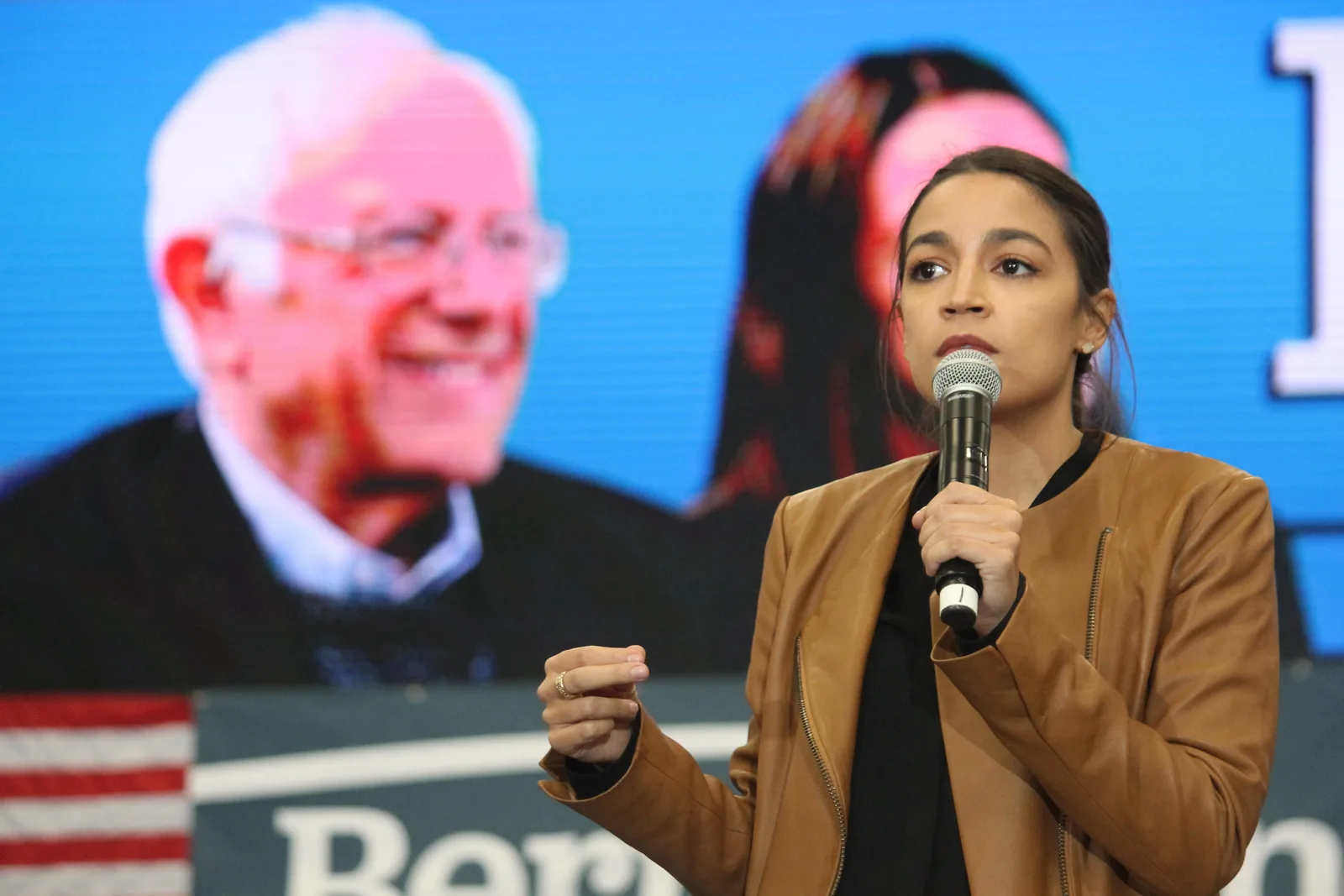 File photo
What happened
Key facts
- The supplied Knewz material consists of a headline attributing a claim about an education rule to Alexandria Ocasio-Cortez.
- The headline says the rule restricts loans.
- The headline describes the affected fields as women-dominated.
- The supplied Knewz material does not identify the education rule.
- The supplied material does not substantiate the claim that the rule restricts loans for women-dominated fields.
The brief
Alexandria Ocasio-Cortez said the Trump administration’s student-loan rule makes it harder to obtain federal loans for nursing, teaching and social work, describing the policy as an attack on women’s ability to pursue education.
The Department of Education rejected her criticism, calling it “fake news.” The coverage records the competing statements but does not independently establish how the rule operates or resolve their disagreement. Ocasio-Cortez made the remarks at an “It Shouldn’t Be This Hard” event in Michigan.
The Washington Examiner identified it as a town hall in Escanaba with Abdul el Sayed, a Michigan Democratic Senate nominee. Whereisthebuzz.com described the gathering as part of el Sayed’s bus tour and reported, citing WMUK, that more than 500 people attended. The central dispute is about the effect of the student-loan rule on the three fields Ocasio-Cortez named.
She said the administration had put those occupations on a list of programs for which obtaining loans would become harder. The Department of Education’s brief “fake news” response rejects her characterization, but the account does not include a department explanation of which elements of her claim it contests.
The Washington Examiner added Department of Labor figures indicating that women represented between 83% and 97.4% of workers in social work, education and nursing occupations in 2024. Those figures describe the workforce, not the rule’s eligibility criteria or its effect on loan access.
They supply context for Ocasio-Cortez’s argument that the occupations she named have a high share of women workers, but do not independently verify her account of the policy. Whereisthebuzz.com also cited NCES figures showing women accounted for 58% of undergraduate students and 61% of graduate and other postbaccalaureate students in 2021.
Ocasio-Cortez connected education access to community needs, saying the Bronx needs doctors and has some of the country’s highest maternal mortality rates. She also argued that treating education as a business leaves communities behind.
The available claims leave two distinct questions: which programs the federal rule covers and whether it changes access to student loans for nursing, teaching and social work. The Department of Education’s response does not set out its reasoning, while Ocasio-Cortez’s remarks state her assessment of the rule.
No decision, implementation detail or additional official explanation is described in the coverage. The next consequential information would be a detailed account of the rule’s program criteria and a fuller explanation from the Department of Education of its response to Ocasio-Cortez.
Those details would help establish whether and how the policy affects access to loans for the occupations she identified, beyond the workforce and student-enrollment figures cited in the coverage.
Why it matters
- For students seeking training in nursing, teaching and social work, the concrete issue raised by Ocasio-Cortez is whether the rule makes federal student loans harder to obtain for those fields.
- The Washington Examiner’s cited Labor Department figures put women’s share of workers in the named occupations at 83% to 97.4% in 2024, connecting the loan-access dispute to fields with high proportions of women workers.
- Whereisthebuzz.com cited NCES figures showing women were 58% of undergraduate students and 61% of graduate and other postbaccalaureate students in 2021; those enrollment shares provide broader context for the education-access issue.
- Ocasio-Cortez tied access to education to community needs, citing the Bronx’s need for doctors and high maternal mortality rates, while arguing that treating education as a business leaves communities behind.
What to watch next
- Whether the Department of Education explains which parts of Ocasio-Cortez’s account it rejected as “fake news.”
- Whether the Department of Education identifies which programs the student-loan rule covers.
- Whether further details establish how the rule affects federal loan access for nursing, teaching and social work.
- Whether Ocasio-Cortez provides additional information about the policy’s effects on the occupations she named.
How it's being covered
Coverage analysisShow details3 source articles · 3 unique outletsCoverage mix: Too few rated· 1 RightWhere the outlets are based: US/Canada 67% · Unknown 33%
How outlets' accounts compare
2 framing differences · 4 uncorroborated claims · 1 information gap- Ocasio-Cortez characterized the rule as an attack on women’s ability to get an education; the Department of Education called that criticism “fake news.”
- Ocasio-Cortez attributed the loan-access restriction to the Trump administration; the Department of Education rejected her claim without providing a detailed explanation in the account.
- Ocasio-Cortez said the rule makes loans harder to obtain for nursing, teaching and social work; the Department of Education rejected her characterization, but the reason for its rejection is not explained.
- Ocasio-Cortez said the policy was “attacking women’s ability to get an education.”
- The Department of Education called the criticism “fake news.”
- Ocasio-Cortez argued that when education becomes a business, communities get left behind.
- The sources do not explain the rule’s program criteria or how it changes loan eligibility.
Timeline
Developments from this story's sources, dated background we compiled and fact-checked, and our earlier coverage. Each row says which.- President Dwight D. Eisenhower signed the National Defense Education Act on September 2, 1958.Background · from our historical context
- The broader statutory framework dates to the Higher Education Act of 1965, signed by President Lyndon B. Johnson on November 8, 1965.Background · from our historical context
- Grad PLUS loans became available.Background · compiled and fact-checked by Updat3
- Alexandria Ocasio-Cortez was elected to represent New York’s 14th Congressional District.Background · compiled and fact-checked by Updat3
- Alexandria Ocasio-Cortez took office as a U.S. representative.Background · compiled and fact-checked by Updat3
How we got here
The available account does not identify the education rule Alexandria Ocasio-Cortez was discussing, when it took effect, or which loan program it changes. It therefore does not establish whether the rule concerns Grad PLUS loans or any other federal lending program, or whether it limits borrowing in fields in which women are a majority.
The history of federal student lending provides background, but it cannot by itself confirm a connection between those programs and the claim. The most recent program specified in the supplied material is Grad PLUS. Congress created it in the Higher Education Reconciliation Act of 2005, and it became available in July 2006.
Original sources
3 articles from 3 outletsEvery story links to the reporting it was built from. How we choose sources
Spotted a factual error, a broken link or a misleading summary? Tell us.