
Araghchi says Iran and Russia are closer than ever after Lavrov talks
Iranian Foreign Minister Abbas Araghchi said Iran and Russia had never worked more closely after meeting Russian Foreign Minister Sergei Lavrov in Tehran. Araghchi said the talks addressed regional conflicts and economic and nuclear cooperation, while Lavrov said Moscow sought to prevent a return to large-scale war.
AI-assisted synthesis · Based on 5 independent reports from 6 outlets · Article text read from 1 of 5 reportsHow it's made
View timeline · 9 entries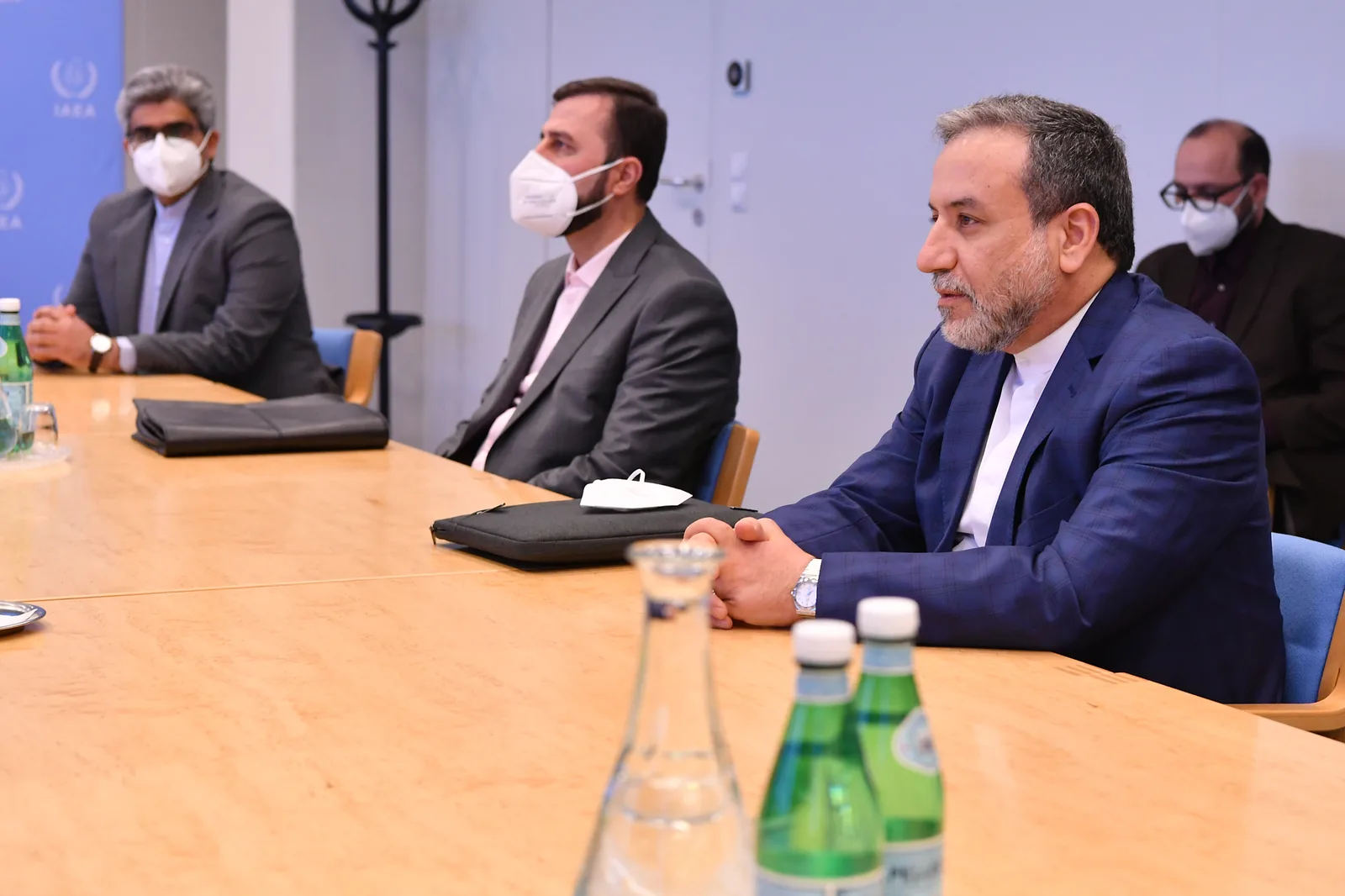 File photo
What happened
Key facts
- Iranian Foreign Minister Abbas Araghchi said Iran and Russia had never worked more closely (per The Straits Times, The Hindu, twaslnews.com).
- Araghchi said on Oct 20 that Iran and Russia had never worked as closely as they do now (per The Straits Times).
- Araghchi said the talks covered Europe, West Asia, Lebanon, Palestine, Ukraine and Yemen (per The Straits Times).
- Araghchi said the talks also covered economic and nuclear cooperation (per The Straits Times).
- Lavrov said Moscow's efforts aimed to prevent a return to large-scale war (per The Straits Times).
- Talks between the United States and Iran were stalled (per The Straits Times).
The brief
Iranian Foreign Minister Abbas Araghchi said Iran and Russia have never worked more closely, following talks with Russian Foreign Minister Sergei Lavrov in Tehran. The Straits Times reported that Araghchi hosted Lavrov in Iran on Oct 19 and made the statement on Oct 20.
The meeting brought together the two countries’ foreign ministers as Moscow said it sought a role in preventing a return to large-scale war. Araghchi said the discussions addressed Europe, West Asia, Lebanon, Palestine, Ukraine and Yemen. He also said the ministers covered economic and nuclear cooperation.
His public description linked the meeting’s agenda to conflicts in several regions as well as bilateral economic and nuclear ties. Lavrov said Moscow’s efforts aimed to prevent a return to large-scale war. The Straits Times reported that diplomacy between the United States and Iran was stalled.
That description places Lavrov’s stated aim alongside an impasse in U.S.-Iran talks, though the account does not attribute a specific proposal or negotiating step to either government. The article also reported that Russian President Vladimir Putin told Iranian President Masoud Pezeshkian in October that Moscow was prepared to contribute to mediation efforts.
This was a separate reported statement by Putin; the account does not say that it was made during the Tehran meeting or specify what form any mediation would take.
The Russian Foreign Ministry said before Lavrov’s visit that the discussions were expected to focus on ways to resolve what it called an acute international crisis, which it attributed to “the unlawful aggression of the US and Israel” against Iran. That characterization belongs to the ministry.
The article’s account also says the Middle East war began with U.S.-Israeli strikes on Iran in February, without presenting a separate account of the strikes or the ministry’s claim. The Straits Times reported that a ceasefire in April and a U.S.-Iran memorandum of understanding in June did not stop fighting around the Strait of Hormuz.
It said Iran claims control over the strait and regularly targets vessels crossing without its authorization, while Washington has maintained a naval counter-blockade of Iranian ports. Those details show the continuing conflict surrounding the diplomatic discussions, but the account does not connect a particular incident at the strait to the Lavrov-Araghchi meeting.
The talks therefore combined Araghchi’s stated agenda of regional, economic and nuclear matters with Lavrov’s stated aim of preventing a renewed large-scale war. The diplomatic context described by The Straits Times includes stalled U.S.-Iran talks, Putin’s stated willingness to contribute to mediation and ongoing fighting around the Strait of Hormuz.
Why it matters
- The Strait of Hormuz is a concrete point of conflict: The Straits Times says Iran regularly targets vessels crossing without its authorization and Washington maintains a naval counter-blockade of Iranian ports.
- The article says an April ceasefire and a June U.S.-Iran memorandum of understanding did not stop fighting around the Strait of Hormuz.
- Araghchi said the meeting covered economic and nuclear cooperation as well as conflicts involving Europe, West Asia, Lebanon, Palestine, Ukraine and Yemen.
What to watch next
- Whether Moscow takes a mediation role, after Putin told Masoud Pezeshkian in October that Russia was prepared to contribute to mediation efforts.
- Whether U.S.-Iran talks move beyond the stalled state described by The Straits Times.
- Whether fighting around the Strait of Hormuz continues despite the April ceasefire and June memorandum of understanding, as described by The Straits Times.
How it's being covered
Coverage analysisShow details7 source articles · 6 unique outlets · 4 distinct reportsOutlet political mix: Center Only· 4 Center · 2 unratedWhere the outlets are based: Asia 33% · US/Canada 17% · Other 50%
- Coverage is currently concentrated among Center-rated outlets (4 of 4 rated sources); comparatively few Left or Right-rated outlets have published on the event.
How outlets' accounts compare
Timeline
Developments from this story's sources, dated background we compiled and fact-checked, and our earlier coverage. Each row says which.- Earlier, on August 12, 1992, Russia and Iran signed an agreement on cooperation in the peaceful use of nuclear energy, laying groundwork for the later Bushehr project.Background · from our historical context
- Russia and Iran had already signed a Treaty on the Basis of Mutual Relations and Principles of Cooperation on March 12, 2001; that agreement provided an earlier framework for bilateral ties.Background · from our historical context
- Russia completed construction of Iran’s Bushehr nuclear power plant, and it began producing electricity in 2011.Background · from our historical context
- Iran and six world powers, including Russia, reached the Joint Comprehensive Plan of Action on Iran’s nuclear program.Background · compiled and fact-checked by Updat3
- Russia began military operations in Syria in September 2015 in support of President Bashar al-Assad’s government, while Iran supported Assad through its forces and allied groups.Background · from our historical context
- President Donald Trump withdrew the United States from the nuclear agreement with Iran and restored sanctions.Background · compiled and fact-checked by Updat3
- Iran began exceeding several limits on its nuclear activities under the nuclear agreement.Background · compiled and fact-checked by Updat3
- On January 17, 2025, Iranian President Masoud Pezeshkian and Russian President Vladimir Putin signed a 20-year Comprehensive Strategic Partnership Treaty in Moscow.Background · from our historical context
- The United States and Israel launched coordinated strikes across Iran.Background · compiled and fact-checked by Updat3
How we got here
On January 17, 2025, Iranian President Masoud Pezeshkian and Russian President Vladimir Putin signed a 20-year Comprehensive Strategic Partnership Treaty in Moscow. Russia and Iran had already signed a Treaty on the Basis of Mutual Relations and Principles of Cooperation on March 12, 2001; that agreement provided an earlier framework for bilateral ties.
Russia completed construction of Iran’s Bushehr nuclear power plant, and it began producing electricity in 2011. Moscow also took part in negotiations over Iran’s nuclear program and joined the 2015 Joint Comprehensive Plan of Action (JCPOA), which restricted Iran’s nuclear activities in exchange for sanctions relief.
Original sources
1 of 7 articles · Africa · Show allEvery story links to the reporting it was built from. How we choose sources
Spotted a factual error, a broken link or a misleading summary? Tell us.