
Iran offers conditional seven-day plan to reopen Strait of Hormuz
Iranian Foreign Minister Seyed Abbas Araghchi said Iran sent the United States a seven-day plan to reopen the Strait of Hormuz through Qatar. Araghchi said Iran was open to dialogue based on mutual respect and credible guarantees, while rejecting threats and coercion.
AI-assisted synthesis · Based on 5 outlets' reporting · Article text read from 2 of 5 outletsHow it's made
View timeline · 13 entries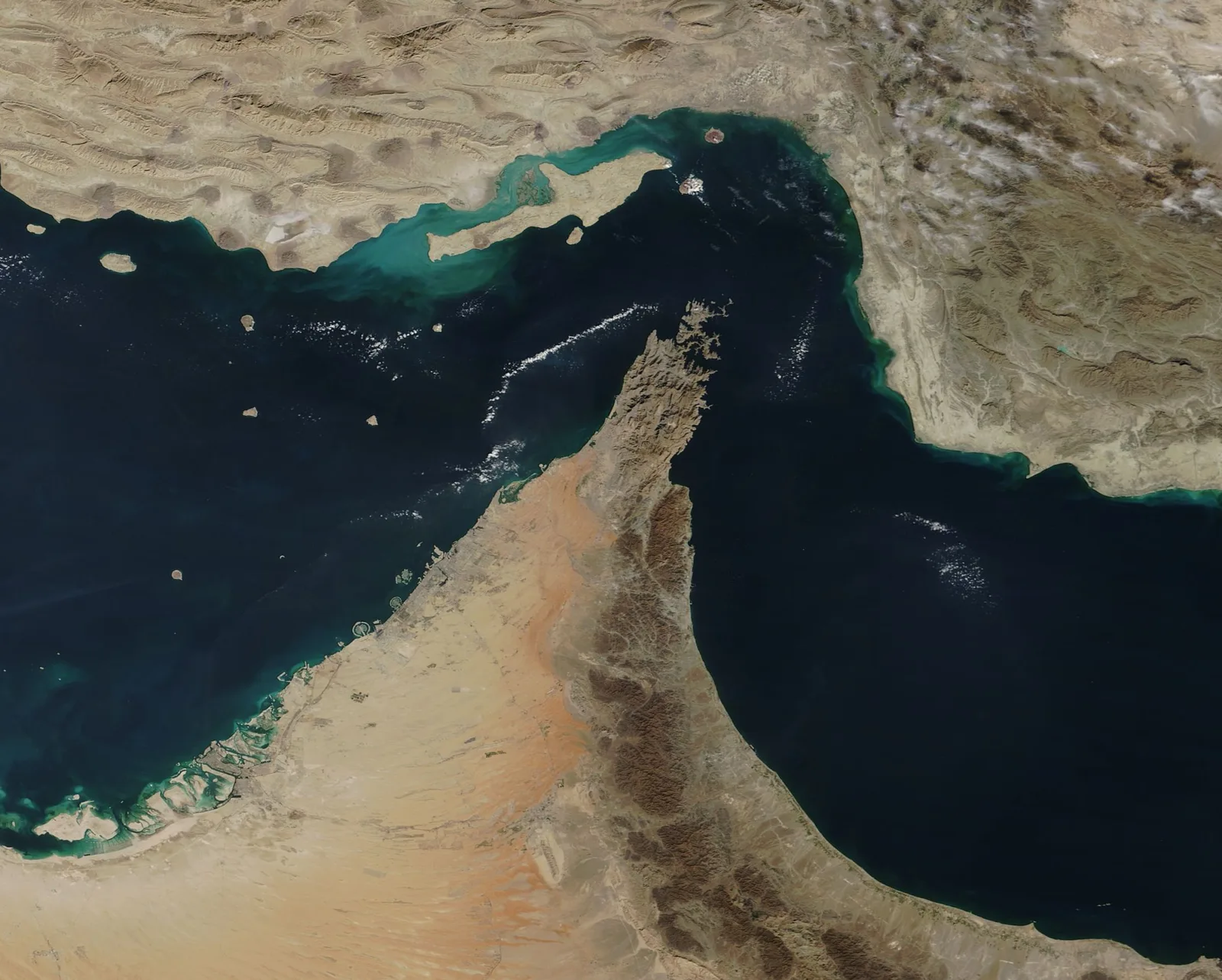 File photo
What happened
Key facts
- Iranian Foreign Minister Seyed Abbas Araghchi said Iran conveyed a plan to reopen the Strait of Hormuz to the United States through Qatar (per freepressjournal.in, theamericanconservative.com).
- Araghchi said Iran was ready for dialogue based on mutual respect and credible guarantees, but would not accept coercion, threats or intimidation (per freepressjournal.in, theamericanconservative.com).
- Araghchi said the Strait of Hormuz had been open before the United States and Israel attacked Iran on February 28 (per freepressjournal.in).
- Araghchi said Iran had never attacked its neighbours and had targeted only U.S. military bases and installations in those states (per freepressjournal.in, theamericanconservative.com).
- The American Conservative reported that four tankers had come under attack in the Strait of Hormuz in the last day and around two dozen vessels had reportedly been hit in the last two weeks (per theamericanconservative.com, freepressjournal.in).
- According to IRNA, the IRGC Navy said the Strait of Hormuz was closed (per theamericanconservative.com).
The brief
Iranian Foreign Minister Seyed Abbas Araghchi said Iran conveyed a seven-day plan to reopen the Strait of Hormuz to the United States through Qatar. He described the proposal as concrete in remarks at a regional forum in Iraq. The plan is an Iranian proposal; the reporting does not establish that the United States accepted it or that the strait has reopened.
Araghchi said Iran remained prepared to negotiate on the basis of mutual respect and credible guarantees, while rejecting coercion, threats and intimidation. The Free Press Journal reported his remarks as a statement of Iran’s negotiating position.
The American Conservative quoted Araghchi describing a “concrete seven-day plan.” Middle East Eye’s headline also characterized the proposal as concrete, while PressTV’s headline framed the choice over whether normal traffic returns as resting with the United States. The reports describe the proposal against a backdrop of disruption to shipping.
The American Conservative said four tankers had come under attack in the Strait in the last day and around two dozen vessels had reportedly been hit over the last two weeks. It attributed the closure claim to IRNA, which said the IRGC Navy had declared the strait closed.
These accounts do not establish who carried out the reported attacks on tankers, and the reported vessel figures are not independently verified in the supplied reporting. Araghchi said the strait had been open before the United States and Israel attacked Iran on February 28.
That statement places his account of the waterway’s status in the context of those attacks, but the reports do not independently establish his broader account of the sequence or the legal and operational circumstances surrounding the strait.
The Free Press Journal also reported that Araghchi said Iran had not attacked neighbouring states and had targeted only U.S. military bases and installations there; that is his claim, not an independently verified finding. The proposal’s central terms, beyond its seven-day duration and stated goal of reopening the waterway, are not described.
The reports do not explain what steps the plan requires from either government, how compliance would be assessed, or whether Qatar would have a role beyond conveying it. No U.S. acceptance or implementation decision is reported. The coverage emphasizes different aspects of the same announcement.
The Free Press Journal foregrounds Araghchi’s conditions for dialogue and his account of Iran’s actions toward neighbouring states. The American Conservative gives greater prominence to reported tanker attacks, the IRGC Navy’s closure statement as relayed by IRNA, and U.S. fuel prices; it reports average prices of $4.31 per gallon for regular gasoline and $6.33 for diesel.
Those prices provide a domestic cost measure but do not, by themselves, demonstrate that the reported maritime disruption caused a price change. The immediate question is whether the United States and Iran take up the proposal and whether any agreed steps restore passage through the Strait.
The reporting records Iran’s offer and Araghchi’s stated terms, alongside a reported closure and shipping attacks; it does not document an agreement or a change in maritime traffic.
Why it matters
- Commercial shipping faces a direct risk: The American Conservative reported four tanker attacks in the last day and around two dozen vessels reportedly hit in two weeks, although it did not independently verify those figures.
- The proposed mechanism is a seven-day plan conveyed through Qatar; whether it produces agreed steps to reopen the Strait would determine whether the proposal changes the reported closure.
- U.S. consumers face a documented fuel-price backdrop: The American Conservative reported average prices of $4.31 per gallon for regular gasoline and $6.33 for diesel, but did not establish that the shipping disruption caused those prices.
What to watch next
- Whether the United States accepts or engages with the seven-day plan Araghchi said Iran conveyed through Qatar.
- Whether Iran and the United States agree on steps to reopen the Strait of Hormuz.
- Whether the IRGC Navy’s closure statement, reported by The American Conservative via IRNA, is followed by a change in maritime passage.
- Whether further reporting confirms the attacks on four tankers in the last day and around two dozen vessels in two weeks.
How it's being covered
Coverage analysisShow details5 source articles · 5 unique outletsOutlet political mix: Mostly Left· 2 Left · 1 Center · 2 unratedWhere the outlets are based: Middle East 40% · Europe 20% · Other 40%
How outlets' accounts compare
2 framing differences · 6 uncorroborated claims · 4 information gaps- The Free Press Journal emphasizes Araghchi’s stated openness to dialogue and rejection of threats; The American Conservative foregrounds reported tanker attacks and the IRGC Navy’s closure declaration.
- PressTV’s headline frames the choice over the return of normal traffic as resting with the United States; the Free Press Journal reports Araghchi’s position without that headline framing.
- The Free Press Journal attributes claims about Iran’s conduct toward neighbouring states and the history of the Strait’s openness to Araghchi; these are not presented as independently verified findings.
- The American Conservative attributes the Strait’s closure statement to the IRGC Navy through IRNA.
- The American Conservative reports four tanker attacks in the last day and around two dozen vessels hit in two weeks, but those figures are not independently verified in the reporting.
- Araghchi said Iran was “ready for dialogue based on mutual respect and credible guarantees.”
- The American Conservative quoted Araghchi describing a “concrete seven-day plan.”
- The American Conservative reported that IRNA said the IRGC Navy declared the Strait “closed.”
- The sources do not report the plan’s full terms, how compliance would be assessed, or what role Qatar might have beyond transmitting it.
- The sources provide no independently verified account of who carried out the reported tanker attacks or a casualty assessment connected to them.
- The sources do not cite a court, UN body or other accountability process relevant to the reported attacks or the Strait’s status.
- The American Conservative attributes the claim that the Strait was closed to IRNA and the IRGC Navy; the reporting does not independently verify the closure.
Timeline
Developments from this story's sources, dated background we compiled and fact-checked, and our earlier coverage. Each row says which.- Hezbollah, founded in Lebanon in 1982 with Iranian support, became part of Iran’s regional deterrence strategy.Background · from our historical context
- The United Nations adopted the Convention on the Law of the Sea, which sets rules for passage through international straits.Background · compiled and fact-checked by Updat3
- The United States began escorting reflagged Kuwaiti tankers in the Persian Gulf under Operation Earnest Will.Background · compiled and fact-checked by Updat3
- The U.S. Navy launched Operation Praying Mantis, striking Iranian naval forces and installations after a U.S. ship hit an Iranian mine.Background · compiled and fact-checked by Updat3
- In May 2018, President Donald Trump announced that the United States would withdraw from the agreement.Background · from our historical context
- Iran began exceeding JCPOA enrichment limits in 2019, saying it was responding to the US withdrawal.Background · from our historical context
- Two tankers were damaged in the Gulf of Oman; the United States blamed Iran, which denied involvement.Background · compiled and fact-checked by Updat3
- Iran’s Islamic Revolutionary Guard Corps seized the British-flagged tanker Stena Impero in the Strait of Hormuz.Background · compiled and fact-checked by Updat3
- In 2024, Iran and Israel exchanged direct attacks, a major departure from years in which their confrontation was largely indirect.Background · from our historical context
- On February 28, 2026, the United States and Israel launched coordinated strikes on Iranian power plants, air defenses and military infrastructure.Background · from our historical context
- Iran announced that vessels passing through the Strait of Hormuz would need prior authorization from the IRGC Navy.Background · compiled and fact-checked by Updat3
- Maritime security sources recorded at least 12 attacks on oil tankers and cargo ships.Background · compiled and fact-checked by Updat3
- Maritime security sources recorded at least 10 vessels targeted, including oil and liquefied natural gas tankers off Fujairah and Sohar.Background · compiled and fact-checked by Updat3
How we got here
The Strait of Hormuz’s vulnerability as a shipping chokepoint was demonstrated during the Iran–Iraq War, when attacks on commercial shipping escalated into the 1984–88 “Tanker War.” In July 1987, the United States began Operation Earnest Will, escorting reflagged Kuwaiti tankers through the Gulf; clashes and mines also damaged ships, including the USS Samuel B.
Roberts in April 1988. In 1953, a CIA- and MI6-backed coup overthrew Iranian Prime Minister Mohammad Mosaddegh and restored Shah Mohammad Reza Pahlavi’s authority; the United States and other Western countries later supported Iran’s nuclear program under the “Atoms for Peace” initiative. The 1979 Iranian Revolution ended the Shah’s rule and Iran’s alignment with Israel.
Original sources
5 articles from 5 outletsEvery story links to the reporting it was built from. How we choose sources
Spotted a factual error, a broken link or a misleading summary? Tell us.