
Araghchi warns Trump against renewed war and accuses Netanyahu of seeking one
Iranian Foreign Minister Abbas Araghchi warned U.S. President Donald Trump against another military campaign against Iran, saying Iran emerged stronger from the previous confrontation. Araghchi accused Israeli Prime Minister Benjamin Netanyahu of trying to draw the United States into another war to avoid legal consequences in Israel.
AI-assisted synthesis · Based on 5 outlets' reporting · Article text read from 1 of 5 outlets · 1 article captured only in partHow it's made
View timeline · 13 entries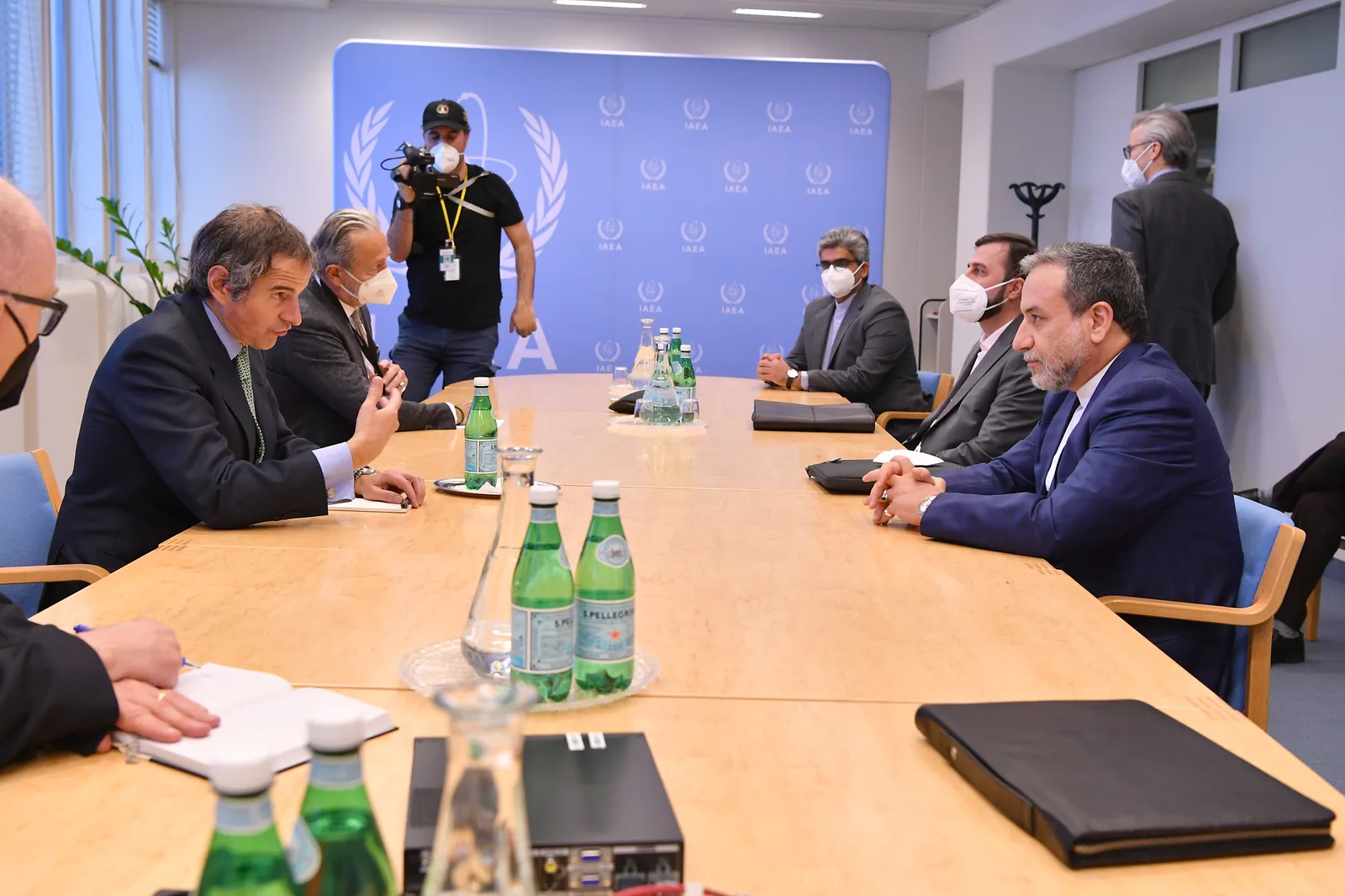 File photo
What happened
Key facts
- Abbas Araghchi warned Donald Trump against trying to “finish the job” against Iran again, saying Iran had emerged stronger from the previous confrontation.
- Araghchi accused Benjamin Netanyahu of trying to draw the United States into another conflict to avoid legal consequences in Israel.
- Araghchi said another conflict could have consequences for Israel and Trump.
- Trump endorsed Netanyahu’s re-election in a Truth Social post addressed to the “Great People of Israel” and warned voters that the United States might have to intervene if they chose the “wrong Leader”.
- Trump said he was not inclined to intervene in Israel’s leadership choice.
The brief
Iranian Foreign Minister Abbas Araghchi warned U.S. President Donald Trump against renewed military action against Iran, saying Tehran had emerged stronger from the previous confrontation. The Times of India reported that Araghchi invoked Trump’s earlier stated aim to “finish the job” and cautioned him against trying again.
The warning was a direct public message to Trump, rather than an announcement of a new Iranian military action. Araghchi also accused Israeli Prime Minister Benjamin Netanyahu of trying to pull the United States into another war to avoid legal consequences in Israel.
That is Araghchi’s allegation; the Times of India’s account does not present independent evidence establishing Netanyahu’s motive. Araghchi added that another conflict could carry consequences for both Israel and Trump. The remarks came as Trump publicly backed Netanyahu’s re-election campaign.
The Times of India reported that Trump made the endorsement in a Truth Social post addressed to the “Great People of Israel,” where he described Netanyahu as a “Great Warrior Prime Minister” and announced his “Complete and Total Endorsement” of the campaign. The outlet said the endorsement preceded Israel’s October 27 parliamentary election.
Trump’s post also warned Israeli voters that the United States might have to intervene if they selected the “wrong Leader.” The Times of India reported that Trump separately said he was not inclined to intervene in Israel’s leadership choice.
The account gives both statements, which place a warning about possible U.S. involvement alongside Trump’s stated reluctance to influence the choice. The Times of India described Araghchi’s comments as a warning about renewed conflict, while Moneycontrol’s headline likewise characterized his remarks as a warning against renewed war.
Moneycontrol’s headline also says Araghchi accused Netanyahu, but does not state further details of that accusation. Benzinga’s headline links Araghchi’s warning with Trump’s backing of Netanyahu; it supplies no additional account of the exchange.
Iran International’s headline characterizes Trump and Netanyahu as threatening renewed strikes on Iran and says Tehran warned of a response. That headline’s framing is more specific about a threat of strikes than the Times of India’s article, which describes Trump’s warning about possible U.S. intervention in Israel’s leadership choice.
The headline does not provide details that establish the circumstances or terms of any threatened strikes. The immediate political stakes described in the Times of India account are the prospect of another conflict, Trump’s public support for Netanyahu, and the Israeli election.
Araghchi’s warning links those issues by alleging Netanyahu seeks U.S. involvement, while Trump’s statements combine an endorsement with a warning to voters and an expression of reluctance to intervene.
Why it matters
- Araghchi warned that another conflict could have consequences for Israel and Trump; his specific stated concern is renewed U.S. military action against Iran.
- Israeli voters face a choice in the October 27 parliamentary election, with Trump publicly endorsing Netanyahu and warning about choosing the “wrong Leader.”
- Araghchi’s allegation that Netanyahu seeks U.S. involvement to avoid legal consequences in Israel is a central, disputed claim about the reason for another possible conflict.
What to watch next
- Whether Trump acts on his stated reluctance to intervene in Israel’s leadership choice.
- Whether Trump makes further statements about possible U.S. intervention if Israeli voters choose a different leader.
- Whether Araghchi or Netanyahu publicly addresses Araghchi’s accusation about the purpose of seeking U.S. involvement.
- The outcome of Israel’s October 27 parliamentary election.
How it's being covered
Coverage analysisShow details5 source articles · 5 unique outletsOutlet political mix: Mostly Center· 4 Center · 1 RightWhere the outlets are based: Asia 40% · Unknown 40% · Other 20%
- Coverage is currently concentrated among Center-rated outlets (4 of 5 rated sources); comparatively few Left-rated outlets have published on the event.
How outlets' accounts compare
Timeline
Developments from this story's sources, dated background we compiled and fact-checked, and our earlier coverage. Each row says which.- The background to that rupture included the August 19, 1953 coup, known as Operation Ajax, in which US and British intelligence helped overthrow Prime Minister Mohammad Mosaddegh and restore the Shah’s authority.Background · from our historical context
- Iran’s revolution overthrew the monarchy of Shah Mohammad Reza Pahlavi.Background · compiled and fact-checked by Updat3
- Hezbollah was founded in Lebanon in 1982, becoming one element of Iran’s regional network of allies and partners.Background · from our historical context
- In 2002, disclosures about Iranian nuclear facilities prompted international scrutiny.Background · from our historical context
- The International Atomic Energy Agency documented failures by Iran to meet its safeguards obligations, and the United Nations Security Council imposed sanctions beginning in 2006.Background · from our historical context
- Iran and six world powers signed the Joint Comprehensive Plan of Action (JCPOA) on July 14, 2015; the agreement limited Iran’s nuclear activities in exchange for sanctions relief.Background · from our historical context
- On May 8, 2018, President Donald Trump withdrew the United States from the JCPOA and restored US sanctions.Background · from our historical context
- From 2019, Iran exceeded nuclear limits set by the agreement; Iranian officials said those steps answered the US withdrawal and sanctions.Background · from our historical context
- Donald Trump publicly backed Benjamin Netanyahu’s re-election campaign.Background · compiled and fact-checked by Updat3
- Iran launched drones and missiles at Israel, describing the attack as retaliation for an Israeli strike on an Iranian diplomatic compound in Damascus.Background · compiled and fact-checked by Updat3
- Israel attacked targets in Iran after Iranian missile attacks on Israel earlier that month.Background · compiled and fact-checked by Updat3
- On February 28, 2026, the United States and Israel launched coordinated strikes on Iranian nuclear and military infrastructure.Background · from our historical context
- Donald Trump said the United States should stay out of Israel’s election, while leaving open the possibility of endorsing a candidate.Background · compiled and fact-checked by Updat3
How we got here
Iran–Israel and Iran–United States relations followed sharply different paths after Iran’s 1979 Revolution ended the monarchy of Shah Mohammad Reza Pahlavi and the close Iran–Israel alignment maintained under his rule.
The background to that rupture included the August 19, 1953 coup, known as Operation Ajax, in which US and British intelligence helped overthrow Prime Minister Mohammad Mosaddegh and restore the Shah’s authority. Opposition to the Shah’s US-backed security service, SAVAK, was among the forces historians identify in the 1979 Revolution.
Original sources
5 articles from 5 outletsEvery story links to the reporting it was built from. How we choose sources
Spotted a factual error, a broken link or a misleading summary? Tell us.