
Bank Negara Malaysia connects tokenized bonds to central-bank payments
Bank Negara Malaysia launched SSDS+, a distributed-ledger platform for issuing and safekeeping tokenized bonds and sukuk. The central bank says the system is designed for wholesale issuance and can also support tokenized government and corporate retail bonds.
AI-assisted synthesis · Based on 4 outlets' reporting · Article text read from 2 of 4 outletsHow it's made
View timeline · 7 entries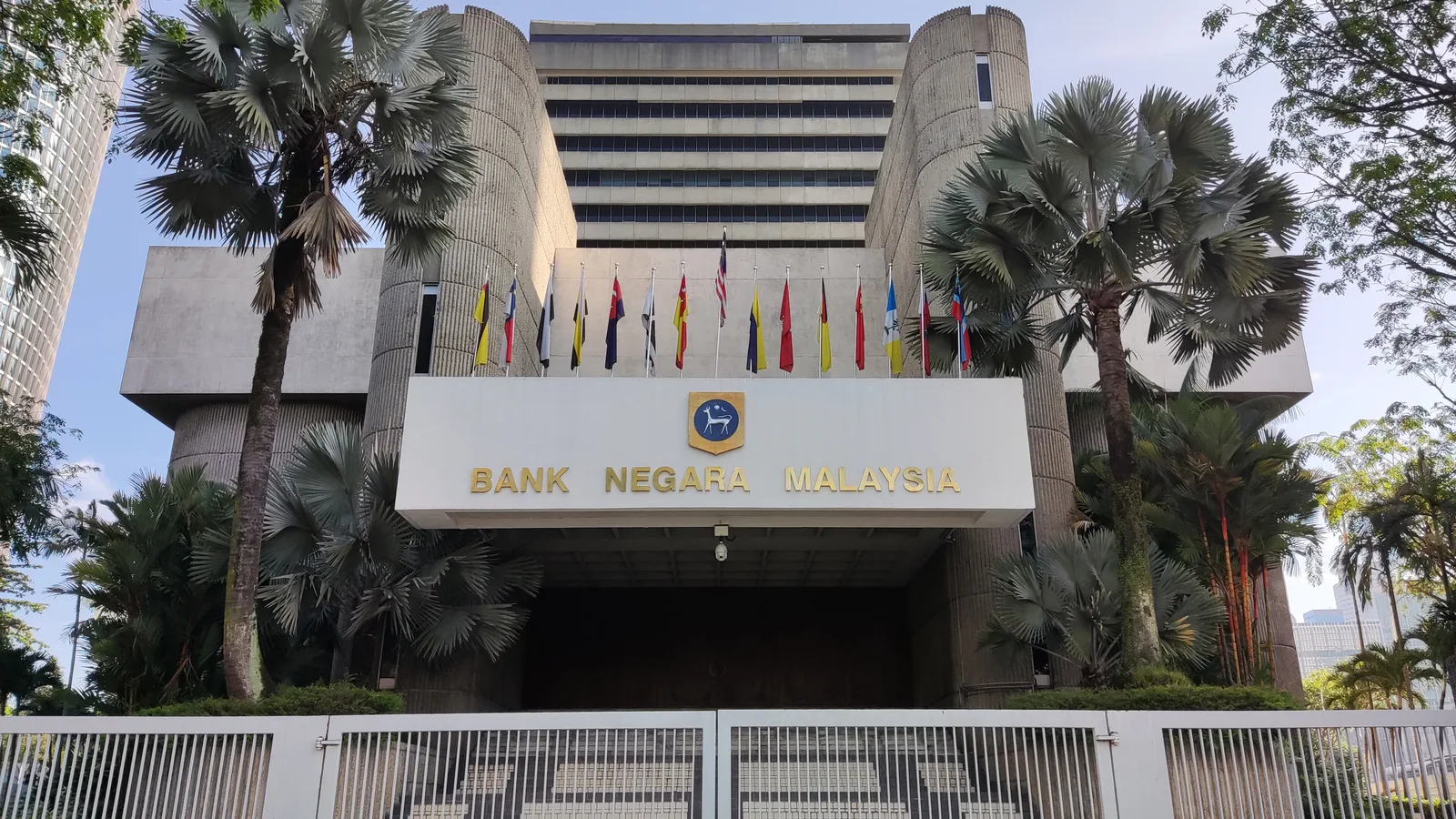 File photo
What happened
Key facts
- Bank Negara Malaysia launched SSDS+, a distributed-ledger platform for tokenized bonds and sukuk (per cointelegraph.com, crypto.news, digitalnewsasia.com).
- Bank Negara Malaysia launched SSDS+ on October 20 (per crypto.news, cointelegraph.com).
- Bank Negara Malaysia said it developed SSDS+ internally using cloud and distributed-ledger technologies (per crypto.news, cointelegraph.com).
- The platform is designed for wholesale issuance and is ready to support tokenized government bonds and corporate retail bonds (per cointelegraph.com).
- Bank Negara Malaysia said SSDS+ and RENTAS+ provide a foundation for new uses in securities and payments (per crypto.news, cointelegraph.com).
- The Securities Commission Malaysia said on April 28 that sovereign wealth fund Khazanah Nasional had priced Malaysia's first tokenized sukuk pilot at RM100 million (per crypto.news).
The brief
Bank Negara Malaysia has launched SSDS+, a distributed-ledger platform for issuing and safekeeping tokenized bonds and Islamic sukuk. The central bank said it developed the system internally using cloud and distributed-ledger technologies to modernize Malaysia’s bond-market infrastructure. Bank Negara Malaysia launched SSDS+ on October 20.
The platform is intended for wholesale issuance, and the central bank says it is also ready to support tokenized government bonds and corporate retail bonds. The stated scope includes tokenized debt securities, with sukuk among the instruments it can support. The rollout follows the central bank’s three-year asset-tokenization roadmap, which it unveiled in November 2025.
That plan outlined potential pilot projects in Islamic finance, supply-chain financing and programmable payments. The roadmap provides the stated policy context for the platform’s introduction; the sources do not describe the status or results of those proposed pilots.
Bank Negara Malaysia also described SSDS+ and RENTAS+ as a foundation for new uses in securities and payments, calling the pair “a secure, faster, more flexible and digitally-enabled foundation.” That is the central bank’s characterization of the systems.
The coverage identifies a connection between the securities platform and payment infrastructure, but does not provide performance data or describe specific transactions conducted through SSDS+. A separate tokenized-sukuk milestone offers a concrete example of activity in Malaysia’s digital debt market.
The Securities Commission Malaysia said on April 28 that sovereign wealth fund Khazanah Nasional had priced the country’s first tokenized sukuk pilot at RM100 million. The announcement establishes the pilot’s reported value and pricing, but does not establish that it used SSDS+.
The reporting presents the launch primarily as an infrastructure development, with one account emphasizing the platform’s intended wholesale role and readiness for government and corporate retail bonds, and another highlighting its internal development and the central bank’s description of the SSDS+ and RENTAS+ foundation.
Together, those details place the launch within Malaysia’s effort to build digital securities and payment capabilities, while leaving the platform’s actual uptake and use cases unreported.
Why it matters
- Malaysia’s bond-market infrastructure now includes SSDS+, which Bank Negara Malaysia says can support tokenized government bonds and corporate retail bonds.
- Sukuk issuers and market participants are among the potential users of a platform designed for tokenized debt issuance and safekeeping.
- The reported RM100 million Khazanah Nasional sukuk pilot shows a priced tokenized-debt initiative in Malaysia, though the reporting does not connect it to SSDS+.
- Bank Negara Malaysia’s roadmap identified Islamic finance, supply-chain financing and programmable payments as possible pilot areas.
What to watch next
- Whether Bank Negara Malaysia uses SSDS+ for issuance or safekeeping of tokenized government bonds.
- Whether the platform supports corporate retail bond activity, as Bank Negara Malaysia says it is ready to do.
- Whether projects in Islamic finance, supply-chain financing or programmable payments proceed from the central bank’s roadmap to pilots.
- Whether a future tokenized sukuk initiative is linked to SSDS+; the reported Khazanah Nasional pilot is not identified as using the platform.
How it's being covered
Coverage analysisShow details4 source articles · 4 unique outletsOutlet political mix: Too few rated· 2 Center · 2 unratedWhere the outlets are based: Unknown 50% · Europe 25% · Other 25%
How outlets' accounts compare
2 framing differences · 1 uncorroborated claim · 2 information gaps- Cointelegraph emphasizes SSDS+’s wholesale-issuance purpose and readiness for tokenized government and corporate retail bonds.
- crypto.news emphasizes the platform’s internal development using cloud and distributed-ledger technologies and reports the central bank’s description of SSDS+ and RENTAS+ as a foundation for new securities and payment uses.
- Bank Negara Malaysia described SSDS+ and RENTAS+ as a “secure, faster, more flexible and digitally-enabled foundation” for new uses in securities and payments.
- The sources do not provide details on specific transactions conducted through SSDS+ or measured platform performance.
- The sources do not establish whether the RM100 million Khazanah Nasional tokenized sukuk pilot used SSDS+.
Timeline
Developments from this story's sources, dated background we compiled and fact-checked, and our earlier coverage. Each row says which.- The first Malaysian corporate sukuk was issued in 1990 by Shell MDS, an early milestone in the market’s growth.Background · from our historical context
- Malaysia established the Securities Commission to regulate the capital market.Background · compiled and fact-checked by Updat3
- Bank Negara Malaysia introduced the Real-time Electronic Transfer of Funds and Securities System (RENTAS) in 1999 to settle large-value payments and securities transfers.Background · from our historical context
- Malaysia issued the world’s first sovereign sukuk in 2002, building on the country’s earlier development of Islamic capital markets.Background · from our historical context
- Malaysia enacted the Capital Markets and Services Act, consolidating laws governing capital-market activities.Background · compiled and fact-checked by Updat3
- On April 28, 2026, Khazanah Nasional priced a RM100 million tokenized sukuk pilot, Malaysia’s first, according to the Securities Commission Malaysia.Background · from our historical context
- Bank Negara Malaysia launched SSDS+ on October 20.
How we got here
On April 28, 2026, Khazanah Nasional priced a RM100 million tokenized sukuk pilot, Malaysia’s first, according to the Securities Commission Malaysia. The pilot followed decades of development in Malaysia’s bond and sukuk markets, where sukuk are securities structured to comply with Islamic finance principles.
Bank Negara Malaysia introduced the Real-time Electronic Transfer of Funds and Securities System (RENTAS) in 1999 to settle large-value payments and securities transfers. Malaysia’s Capital Markets and Services Act 2007 consolidated laws governing capital-market activities, while the Securities Commission, established in 1993, regulates the capital market.
Original sources
1 of 4 articles · Europe · Show allEvery story links to the reporting it was built from. How we choose sources
Spotted a factual error, a broken link or a misleading summary? Tell us.