
Bank of Japan holds rate at 1.25% as underlying inflation reaches target
The Bank of Japan kept its policy rate at 1.25% after concluding a two-day meeting and said underlying inflation had reached its 2% target. Government data showed consumer prices rose 2.1% year over year in September, while the bank’s quarterly report marked the target as reached.
AI-assisted synthesis · Based on 5 outlets' reporting · Article text read from 2 of 5 outletsHow it's made
View timeline · 10 entries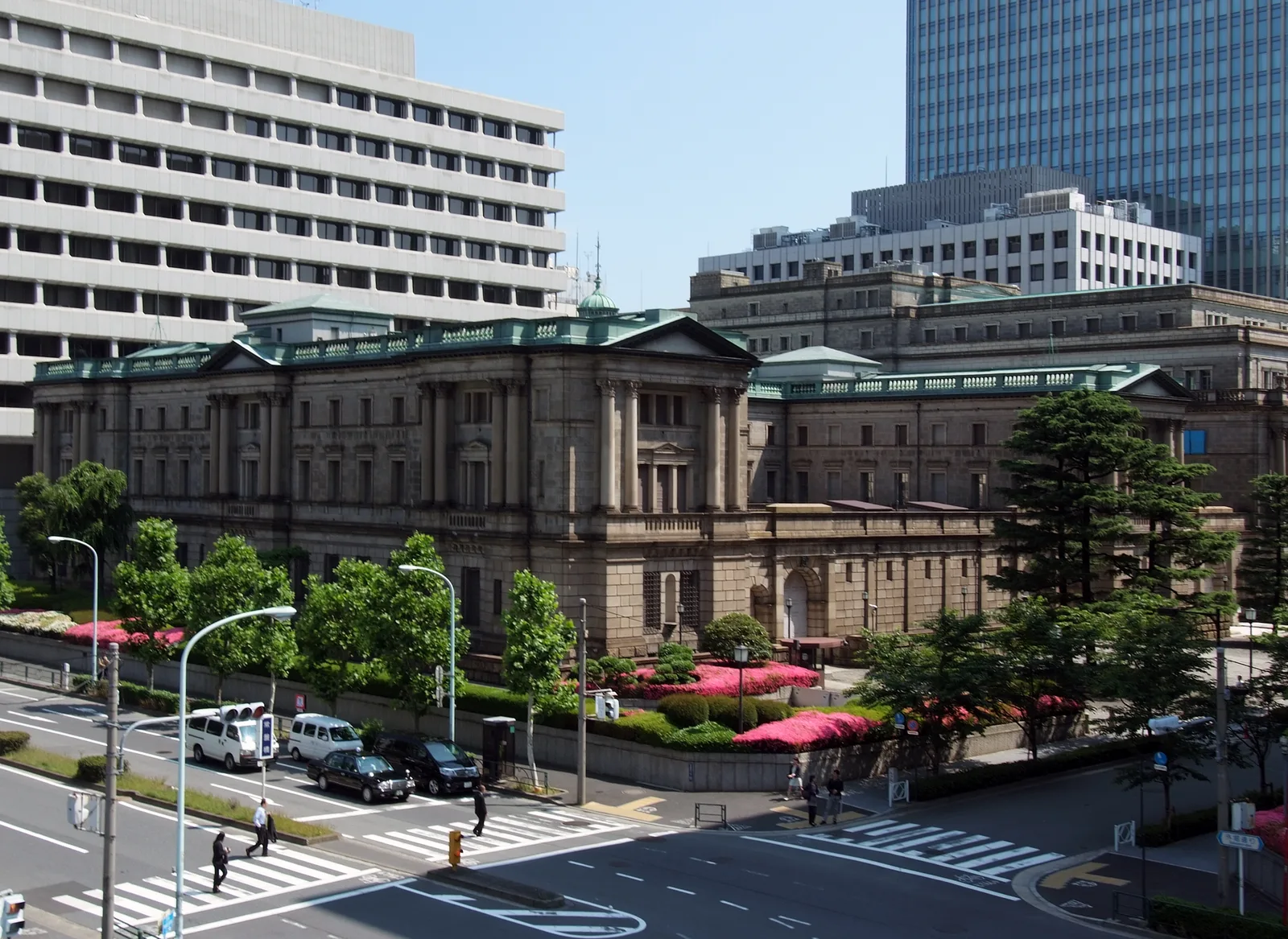 File photo
What happened
Key facts
- The Bank of Japan’s quarterly report said underlying inflation had reached its 2% target (per The Japan Times, chosun.com, Financial Times).
- Government data showed consumer prices rose 2.1% year over year in September (per The Japan Times).
- Inflation excluding fresh food was 2.1%, while inflation excluding fresh food and energy was 2.4% (per The Japan Times).
- Ryutaro Kono, BNP Paribas’s chief Japan economist, said the Bank of Japan was likely to judge that underlying inflation had reached around 2% (per The Straits Times).
- Bank of Japan Governor Ueda had described underlying inflation as very close to 2% (per The Straits Times, The Japan Times).
- Taro Kimura of Bloomberg Economics said early indications from labour and business leaders ahead of 2027 wage talks suggested wage growth could accelerate that year (per The Straits Times).
The brief
The Bank of Japan held its policy rate at 1.25% and said underlying inflation had reached its 2% target, while consumer prices rose 2.1% year over year in September. The bank announced the rate decision after concluding a two-day policy meeting and released a quarterly report on the economy and prices.
The government’s September data put inflation excluding fresh food at 2.1%, and the measure excluding both fresh food and energy at 2.4%. Those figures offer separate gauges of price growth alongside the bank’s assessment of underlying inflation. The Japan Times reported that September was the first time that year inflation topped 2% in Japan.
The rate decision followed the Bank of Japan’s September move to lift its policy rate from 1% to 1.25%. That raised borrowing costs to their highest level since 1995, according to The Japan Times. The bank left the rate unchanged at its latest meeting even as its quarterly report said the underlying-inflation target had been reached.
The 2% target dates to 2013, when the Bank of Japan introduced it under then-governor Haruhiko Kuroda. The Japan Times reported that Kuroda had pledged to achieve the target in two years; it was reached, by the bank’s current assessment, after a much longer period.
This history explains why the report’s assessment marks a significant milestone for the central bank’s stated price goal. Before the decision, The Straits Times reported that BNP Paribas chief Japan economist Ryutaro Kono expected the bank to judge underlying inflation to be around 2%. The same outlet said Governor Ueda had described inflation as very close to the goal.
These were expectations and prior remarks; the quarterly report subsequently stated that the threshold had been reached. The Straits Times also cited Bloomberg Economics economist Taro Kimura, who said early indications from labour and business leaders ahead of 2027’s annual wage talks pointed to the possibility of faster wage growth that year.
The comment links the outlook for prices to wage negotiations, but it was a forecast rather than a reported outcome. Coverage emphasized different parts of the decision: The Japan Times detailed September’s consumer-price measures and the rate’s recent increase, while The Straits Times focused on the expected inflation assessment and prospective wage growth.
The headlines from Chosun.com, the Financial Times and Firstpost also reported the rate hold or the target assessment; Firstpost’s headline additionally pointed to a possible December rate increase. The sources do not establish that the Bank of Japan announced such a move.
Why it matters
- Japanese consumers face price growth measured at 2.1% year over year in September; the measure excluding fresh food and energy was higher, at 2.4%.
- Borrowers in Japan are facing a policy rate of 1.25%, after the Bank of Japan raised it from 1% in September; the rate is at its highest level since 1995.
- The Bank of Japan’s report says underlying inflation has reached the 2% goal, while the September consumer-price measures provide distinct indicators of price growth.
- Labour and business leaders’ early indications ahead of 2027 wage talks could signal faster wage growth, according to Bloomberg Economics economist Taro Kimura.
What to watch next
- Whether the Bank of Japan changes its policy rate from 1.25% at a later meeting; Firstpost’s headline flagged a possible December increase, not an announced decision.
- How the Bank of Japan’s quarterly assessment of underlying inflation develops after its report said the 2% target had been reached.
- Whether wage growth accelerates in 2027, as Taro Kimura said early indications ahead of that year’s wage talks could suggest.
- How the consumer-price measures excluding fresh food, and excluding fresh food and energy, change from September’s 2.1% and 2.4% readings.
How it's being covered
Coverage analysisShow details5 source articles · 5 unique outletsOutlet political mix: Mostly Center· 4 Center · 1 RightWhere the outlets are based: Asia 80% · Europe 20%
- Coverage is currently concentrated among Center-rated outlets (4 of 5 rated sources); comparatively few Left-rated outlets have published on the event.
- Coverage is currently concentrated among outlets based in Asia (4 of 5 geographically-identified sources).
One source is from a wire service (AP, Reuters, AFP or Bloomberg), whose reporting other outlets often republish.
How outlets' accounts compare
3 framing differences · 2 uncorroborated claims · 1 information gap- The Japan Times foregrounded the completed rate decision, September’s consumer-price figures and the target assessment; The Straits Times focused on expectations ahead of the decision, Governor Ueda’s prior remarks and possible wage growth in 2027.
- Firstpost’s headline added that a December rate increase was possible; the other supplied headlines did not mention a possible December move.
- Firstpost’s headline describes a possible December rate increase, but the supplied coverage does not establish that the Bank of Japan announced one.
- Ryutaro Kono of BNP Paribas said the Bank of Japan was likely to assess underlying inflation at around 2%.
- Taro Kimura of Bloomberg Economics said early indications ahead of 2027 wage talks suggested wage growth could accelerate that year.
- The sources do not detail the household-level effects of September’s price increases or provide income comparisons.
Timeline
Developments from this story's sources, dated background we compiled and fact-checked, and our earlier coverage. Each row says which.- In March 2001, it began quantitative easing, using bank reserves as its operating target.Background · from our historical context
- The 2% inflation target was established in a January 22, 2013, joint statement by the BOJ and the Japanese government.Background · from our historical context
- The BOJ then launched quantitative and qualitative monetary easing in April 2013 under Governor Haruhiko Kuroda, expanding asset purchases in an attempt to overcome deflation.Background · from our historical context
- The Bank of Japan introduced a negative short-term interest rate.Background · compiled and fact-checked by Updat3
- The Bank of Japan adopted yield-curve control, targeting the 10-year government-bond yield around zero.Background · compiled and fact-checked by Updat3
- Kazuo Ueda took office as governor of the Bank of Japan.Background · compiled and fact-checked by Updat3
- The Bank of Japan ended negative interest rates and its yield-curve-control framework.Background · compiled and fact-checked by Updat3
- The Bank of Japan raised its policy rate to about 0.25% and announced plans to reduce government-bond purchases.Background · compiled and fact-checked by Updat3
- The Bank of Japan raised its policy rate to 0.5%.Background · compiled and fact-checked by Updat3
- The Bank of Japan’s tankan survey showed corporate inflation expectations remained elevated but had not accelerated from three months earlier.Background · compiled and fact-checked by Updat3
How we got here
The closest major precedent for the Bank of Japan’s present rate-setting framework was its March 19, 2024, decision to end negative interest rates and yield-curve control, its first rate increase since 2007. In January 2016, the BOJ had introduced a negative rate, and in September that year it added yield-curve control to hold down longer-term borrowing costs.
The 2% inflation target was established in a January 22, 2013, joint statement by the BOJ and the Japanese government. The BOJ then launched quantitative and qualitative monetary easing in April 2013 under Governor Haruhiko Kuroda, expanding asset purchases in an attempt to overcome deflation.
Original sources
5 articles from 5 outletsEvery story links to the reporting it was built from. How we choose sources
Spotted a factual error, a broken link or a misleading summary? Tell us.