
Poll puts Doerkson ahead of Eby as B.C.’s preferred premier
An Angus Reid poll conducted Oct. 15–18 found Lorne Doerkson leading David Eby 36% to 34% as preferred premier, while the B.C. Conservatives held a narrow edge over the NDP in voting intentions.
AI-assisted synthesis · Based on 4 outlets' reporting · Article text read from 2 of 4 outletsHow it's made
View timeline · 7 entries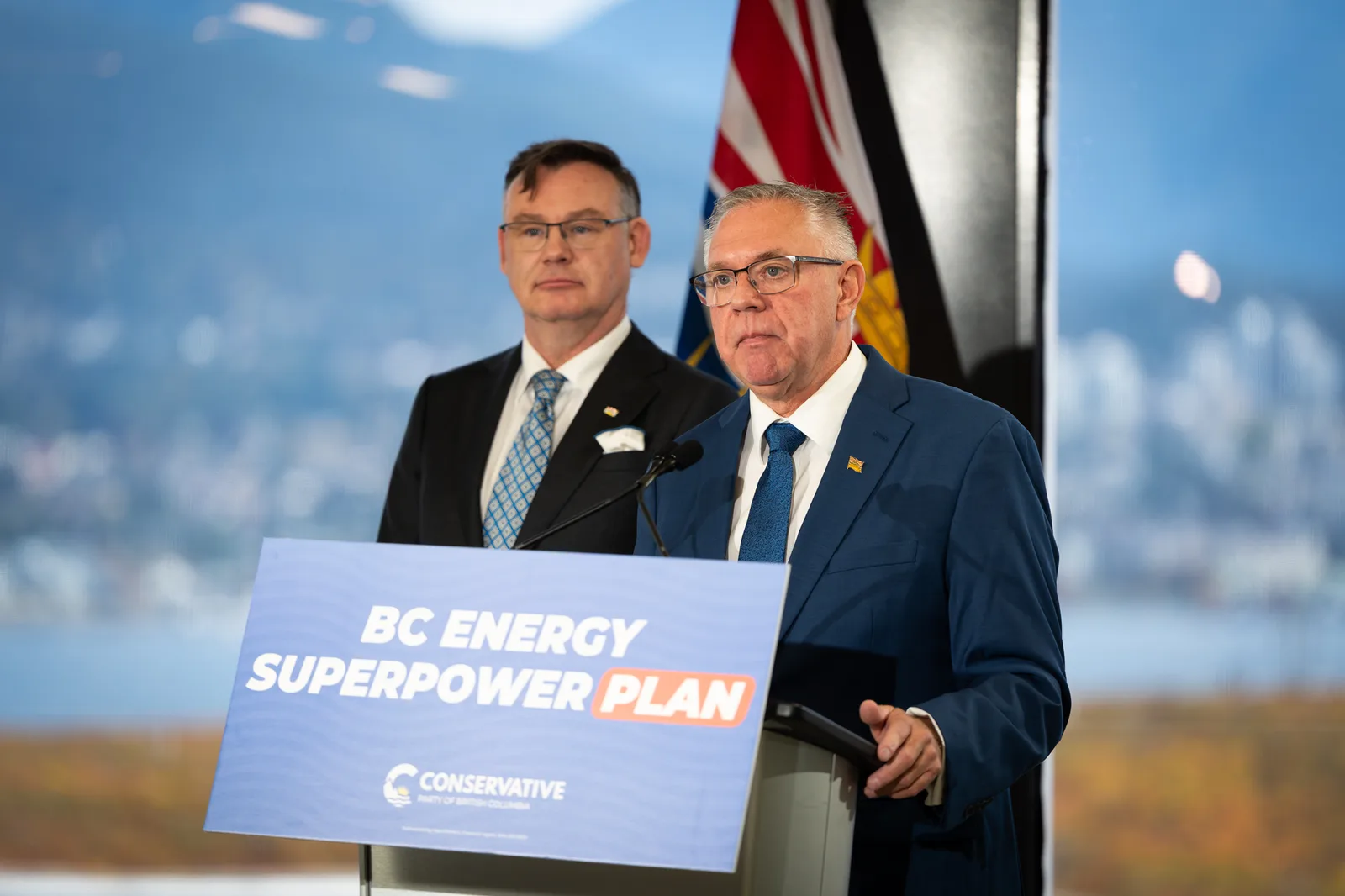 File photo
What happened
Key facts
- The poll found the B.C. Conservatives holding a narrow lead over the B.C. NDP.
- Angus Reid President Shachi Kurl said the results showed Doerkson leading Eby as the best potential premier.
The brief
An Angus Reid poll conducted from Oct. 15-18 found the B.C. Conservatives ahead of the NDP in voting intentions, while the contest for best potential premier was closer: Lorne Doerkson led David Eby by two points, 36 per cent to 34 per cent. Angus Reid President Shachi Kurl discussed those results on Monday. The poll surveyed 793 respondents.
The vote-intention figures are not included in the Vancouver Sun excerpt, so the size of the Conservatives’ lead in that measure cannot be stated from it. Castanet’s headline separately reported a five-point Conservative lead days before the election.
That figure and the poll’s two-point preferred-premier margin refer to different measures; the excerpts do not establish whether the vote-intention result is the same poll or give enough detail to reconcile the figures. The poll also put the B.C. Greens at eight per cent among decided and leaning voters. For the preferred-premier measure, the gap had been five points on Oct.
5 and eight points on Sept. 24, making the latest reported two-point margin narrower than those earlier comparisons. Kurl said the parties differed in voter retention: 89 per cent of people who voted Conservative in 2024 said they planned to support the party again, compared with 74 per cent of 2024 B.C. NDP voters returning to the party.
She also said the NDP faced a harder task in keeping supporters and getting them to vote. Those are poll findings and Kurl’s interpretation, not a measure of how many people will ultimately cast ballots. The Globe and Mail’s account places the polling contest against a campaign in which Eby presented himself as the leader best positioned to stand up to Donald Trump for B.C.
Eby also emphasized proposals to raise taxes on people earning more than $190,000, increase funding for health care and cap some grocery prices. The account describes those policies as aimed at energizing the party’s centre-left base. The Globe and Mail also reported that the BC Conservatives had been close to collapse when the writ dropped on Sept.
22, but had since regrouped and become a strong challenger to the NDP. This gives context to the party’s position in the poll without establishing what drove the shift or how voters assessed the campaign’s policies. The general election is scheduled for Saturday, Oct. 24. Several advance polling stations are open from 8 a.m. to 8 p.m.
PT, and polling stations on election day are also scheduled to operate during those hours. The poll’s findings describe voter intentions before the vote; they do not determine the result.
Why it matters
- The narrow lead and two-point preferred-premier gap suggest the race remains competitive, making turnout and late shifts in support especially consequential for who forms government. For voters, the result could determine which party sets provincial priorities and directs public spending after the election; the poll itself does not show that either leader or party has a clear mandate.
What to watch next
- Whether the Oct. 24 general election result matches the poll’s finding that the B.C. Conservatives lead the NDP in voting intentions.
- Whether the final vote reflects the reported 89 per cent Conservative and 74 per cent NDP voter-retention figures.
- Whether the B.C. Greens’ eight per cent share among decided and leaning voters is reflected in the election result.
- Whether advance voting, with several stations open from 8 a.m. to 8 p.m. PT, changes the turnout challenge Kurl described for the NDP.
How it's being covered
Coverage analysisShow details4 source articles · 4 unique outletsOutlet political mix: Center Only· 4 CenterWhere the outlets are based: US/Canada 50% · Unknown 50%
- Coverage is currently concentrated among Center-rated outlets (4 of 4 rated sources); comparatively few Left or Right-rated outlets have published on the event.
How outlets' accounts compare
2 framing differences · 3 uncorroborated claims · 1 information gap- The Vancouver Sun excerpt emphasizes Angus Reid’s poll measures, the narrowing preferred-premier gap and the parties’ voter-retention figures. The Globe and Mail emphasizes Eby’s campaign message and policies, alongside the Conservatives’ recovery from near collapse.
- The Vancouver Sun excerpt says the Conservatives led in voting intentions but gives no vote-share figures; Castanet’s headline reports a five-point lead without identifying the measure in the headline.
- The Vancouver Sun reports a two-point gap in preferred-premier preference, while Castanet’s headline reports a five-point Conservative lead in a poll. These are not established as competing figures for the same measure.
- Kurl said the NDP faced a tougher task in retaining supporters and getting them to vote.
- The Globe and Mail reports that Eby presented himself as the leader best able to stand up to Donald Trump for B.C.
- The excerpts do not provide the party vote-intention percentages, the poll’s margin of error, or details on how respondents were selected.
Timeline
Developments from this story's sources, dated background we compiled and fact-checked, and our earlier coverage. Each row says which.- The British Columbia Conservative Party was founded.Background · compiled and fact-checked by Updat3
- In 2020, the B.C. Conservatives won no seats, while the B.C. Liberals formed the official opposition.Background · from our historical context
- British Columbia voters returned an NDP majority government led by John Horgan.Background · compiled and fact-checked by Updat3
- David Eby was sworn in as British Columbia’s premier.Background · compiled and fact-checked by Updat3
- John Rustad became leader of the B.C. Conservatives after the B.C. Liberals expelled him.Background · compiled and fact-checked by Updat3
- In August 2024, BC United leader Kevin Falcon suspended his party’s election campaign and endorsed the Conservatives, consolidating much of the opposition vote behind Rustad’s party.Background · from our historical context
- The October 2024 election left the NDP with 47 seats and the Conservatives with 44, establishing the close contest that the current poll revisits.Background · from our historical context
How we got here
British Columbia’s fixed-date election law, enacted in 2001, set provincial elections for the third Saturday in October every four years, while allowing an earlier election if the lieutenant-governor dissolved the legislature on the premier’s advice. That framework makes the reported Sept. 22 writ drop and Oct.
24 vote a snap-election timeline, rather than the ordinary fixed-date cycle. The NDP and the party now called the B.C. Conservatives have faced each other in provincial elections, but the Conservatives’ present challenge grew out of a fractured right-of-centre party system, not a long-running two-party contest. In 2020, the B.C. Conservatives won no seats, while the B.C.
Original sources
4 articles from 4 outletsEvery story links to the reporting it was built from. How we choose sources
Spotted a factual error, a broken link or a misleading summary? Tell us.