
FAA may approve Boeing 737 MAX 10 as airlines weigh software concerns
The FAA may soon certify Boeing’s 737 MAX 10 after a final type certification board meeting on Friday. The Air Current reported that airlines may refuse deliveries of aircraft equipped with U14 or U14.1 software, while United has said it is not taking deliveries with those configurations.
AI-assisted synthesis · Based on 5 outlets' reporting · Article text read from 2 of 5 outletsHow it's made
View timeline · 6 entries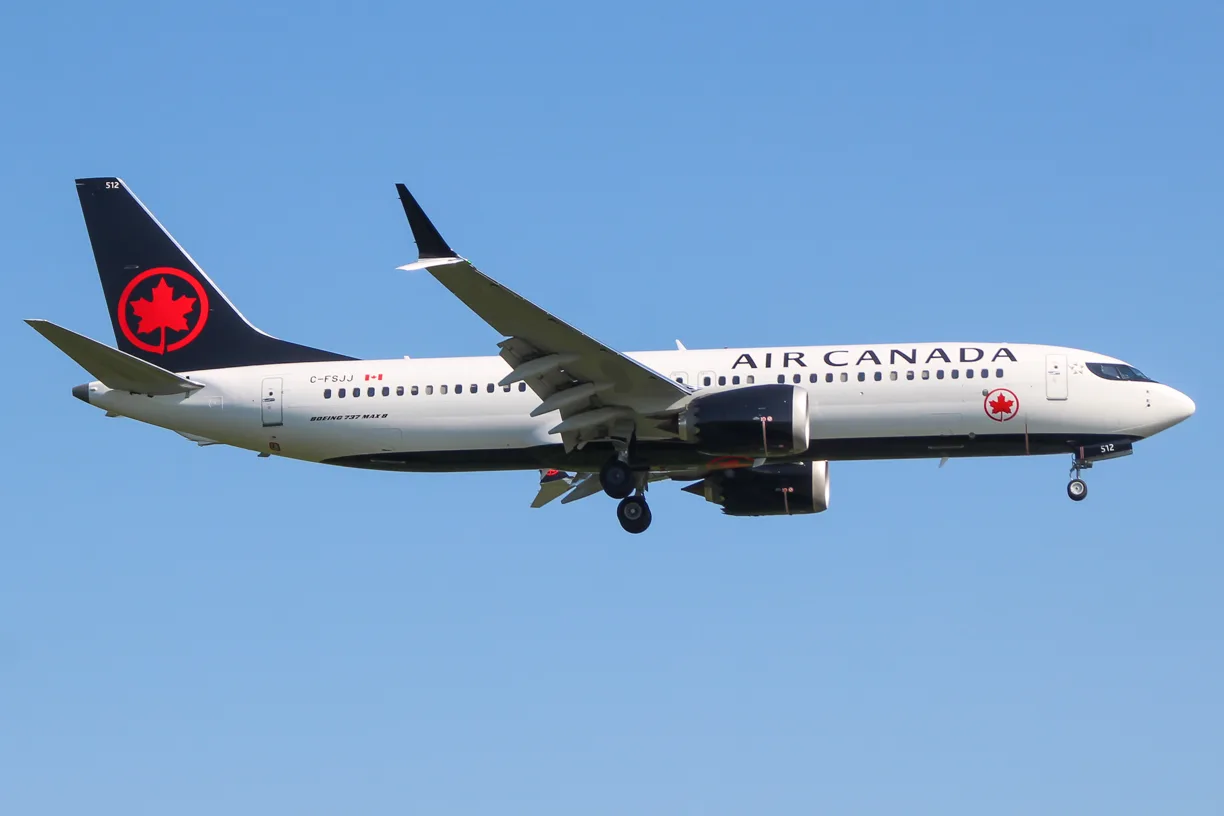 File photo
What happened
Key facts
- The FAA may be nearing approval of Boeing’s 737 MAX 10 (per djsaviation.net, simpleflying.com, ua.news).
- The Air Current, cited by djsaviation.net, reported that the FAA met with Boeing and its Type Certification Board and held positive discussions (per djsaviation.net, simpleflying.com).
- Boeing chief executive Kelly Ortberg said recent completion of final flight testing was a positive step toward final documentation (per djsaviation.net).
- The Air Current reported that US airlines have avoided U14 for years because of several separate software problems (per simpleflying.com).
- Alaska Airlines, American Airlines, Southwest Airlines and United Airlines have confirmed that none of their in-service MAX aircraft use U14 or U14.1 (per simpleflying.com).
The brief
The Federal Aviation Administration may be nearing certification of Boeing’s 737 MAX 10 after a final Type Certification Board meeting, according to reports cited by djsaviation.net and Simple Flying. The timing and outcome remain uncertain: djsaviation.net described approval as imminent, while Simple Flying said certification could come as soon as the following week.
Neither report states that the FAA has issued a final approval. Djsaviation.net said The Air Current reported that the FAA met with Boeing and the Type Certification Board and that the discussions were positive. The outlet dates the meeting to Friday 16 October 2026.
Simple Flying also described a successful final board meeting on Friday, without giving a calendar date in its excerpt. The FAA’s potential decision is therefore the central pending step described in these reports, rather than a completed certification. The coverage also raises a separate delivery issue involving software configurations.
Simple Flying cited The Air Current’s reporting that US airlines have avoided U14 for years because of several separate software problems. Alaska Airlines, American Airlines, Southwest Airlines and United Airlines have confirmed that none of their aircraft currently in service use U14 or U14.1.
That information concerns existing fleets; it does not establish that the FAA’s certification decision depends on those configurations. United has separately told Simple Flying that it is not taking deliveries of new aircraft equipped with U14 or U14.1.
A source quoted by The Air Current characterized U13 as “the lesser of the two evils.” The cited reporting does not explain the individual software problems or establish that every airline would refuse a MAX 10 delivery under the same conditions.
The distinction matters: possible FAA certification and airline acceptance of aircraft with particular software are related in the coverage but are not presented as the same decision. Boeing chief executive Kelly Ortberg said that completing final flight testing in recent months was a positive step toward final documentation.
Djsaviation.net noted that documentation is a demanding part of the process but is distinct from putting the aircraft through flight testing. The excerpt does not provide further detail about the tests or state that the FAA has completed its review. The two reports emphasize different parts of the story.
Djsaviation.net centers the FAA’s reported progress toward approval and the board meeting; Simple Flying foregrounds airline concerns about U14 and U14.1 alongside the possible certification. These are complementary details rather than incompatible accounts of the same fact.
The Jerusalem Post headline also frames the prospect of certification alongside possible airline refusals, while UA.NEWS and Yahoo Finance Australia headlines report that approval may be near; those headlines do not supply additional detail about the FAA process or airline decisions.
United CEO Scott Kirby said in August that the carrier expects its first MAX 10 around July 2027. That forecast signals United’s stated delivery expectation, not a confirmed delivery date or a decision about accepting a specific aircraft configuration.
The reports leave the immediate outcome contingent on the FAA’s certification decision and on airlines’ stated positions toward software-equipped aircraft.
Why it matters
- For Boeing, the FAA’s pending certification is a concrete regulatory milestone for the 737 MAX 10; the reports do not say that approval has been granted.
- For Alaska Airlines, American Airlines, Southwest Airlines and United Airlines, the documented mechanism is software configuration: none reports using U14 or U14.1 in its in-service MAX fleet.
- United has said it will not take deliveries of new aircraft equipped with U14 or U14.1, while its CEO has forecast the airline’s first MAX 10 around July 2027.
- The reporting separates the FAA’s certification decision from airline acceptance: approval may advance while delivery decisions remain tied to software configuration.
What to watch next
- Whether the FAA grants certification to Boeing’s 737 MAX 10 after the reported final Type Certification Board meeting.
- Whether Boeing’s final documentation progresses after the completion of final flight testing described by Kelly Ortberg.
- Whether United continues to decline new aircraft equipped with U14 or U14.1.
- Whether United’s stated expectation of receiving its first MAX 10 around July 2027 changes.
How it's being covered
Coverage analysisShow details5 source articles · 5 unique outletsOutlet political mix: Mostly Center· 3 Center · 1 Right · 1 unratedWhere the outlets are based: US/Canada 20% · Europe 20% · Other 60%
- Coverage is currently concentrated among Center-rated outlets (3 of 4 rated sources); comparatively few Left-rated outlets have published on the event.
How outlets' accounts compare
2 framing differences · 2 uncorroborated claims · 4 information gaps- Djsaviation.net foregrounds reported FAA progress and the Type Certification Board meeting; Simple Flying gives more attention to airline positions on U14 and U14.1 software.
- The account of positive discussions and the FAA’s reported progress is attributed by djsaviation.net to The Air Current and industry reporting; the excerpts do not include a direct FAA statement.
- A source told The Air Current that airlines view U13 as “the lesser of the two evils.”
- United CEO Scott Kirby said in August that United expects its first MAX 10 around July 2027.
- The reports do not explain the specific software problems associated with U14 or U14.1.
- The reports do not provide the FAA’s own account of the meeting or explain what documentation remains.
- The FAA’s certification decision has not been reported as completed; the sources describe it as possible or imminent.
- The reporting does not establish whether airlines would refuse all MAX 10 deliveries or only aircraft with specified software configurations.
Timeline
Developments from this story's sources, dated background we compiled and fact-checked, and our earlier coverage. Each row says which.- Boeing launched the 737 MAX program.Background · compiled and fact-checked by Updat3
- Boeing announced the 737 MAX 10, the largest variant of the MAX family.Background · compiled and fact-checked by Updat3
- The FAA grounded Boeing 737 MAX aircraft in the United States.Background · compiled and fact-checked by Updat3
- The FAA lifted its grounding order for the 737 MAX after Boeing revised flight-control software and met additional requirements.Background · compiled and fact-checked by Updat3
- The Boeing 737 MAX 10 made its first flight.Background · compiled and fact-checked by Updat3
- A provision in the Consolidated Appropriations Act, signed December 29, 2022, allowed the MAX 7 and MAX 10 to proceed without that system if Boeing added specified safety enhancements.Background · from our historical context
How we got here
Boeing’s 737 MAX 10 first flew on June 18, 2021, after the company announced the largest MAX variant in June 2017; it had not yet entered airline service. The FAA grounded the MAX in March 2019 and lifted the US order on November 18, 2020, after Boeing revised flight-control software and the agency required additional pilot training and maintenance measures.
A separate certification issue arose from a 2020 congressional law requiring updated cockpit-alerting systems in newly certified aircraft. A provision in the Consolidated Appropriations Act, signed December 29, 2022, allowed the MAX 7 and MAX 10 to proceed without that system if Boeing added specified safety enhancements.
Original sources
1 of 5 articles · US/Canada · Show allEvery story links to the reporting it was built from. How we choose sources
Spotted a factual error, a broken link or a misleading summary? Tell us.