
Newsom says DOJ is investigating him and his wife, Criticizes election lawsuit
California Gov. Gavin Newsom says the U.S. Department of Justice is investigating him and his wife. In a separate election-related dispute, Newsom criticized the department for suing California Secretary of State Dr. Shirley Weber and Los Angeles County Registrar-Recorder/County Clerk Dean Logan.
AI-assisted synthesis · Based on 5 outlets' reporting · Article text read from 1 of 5 outletsHow it's made
View timeline · 9 entries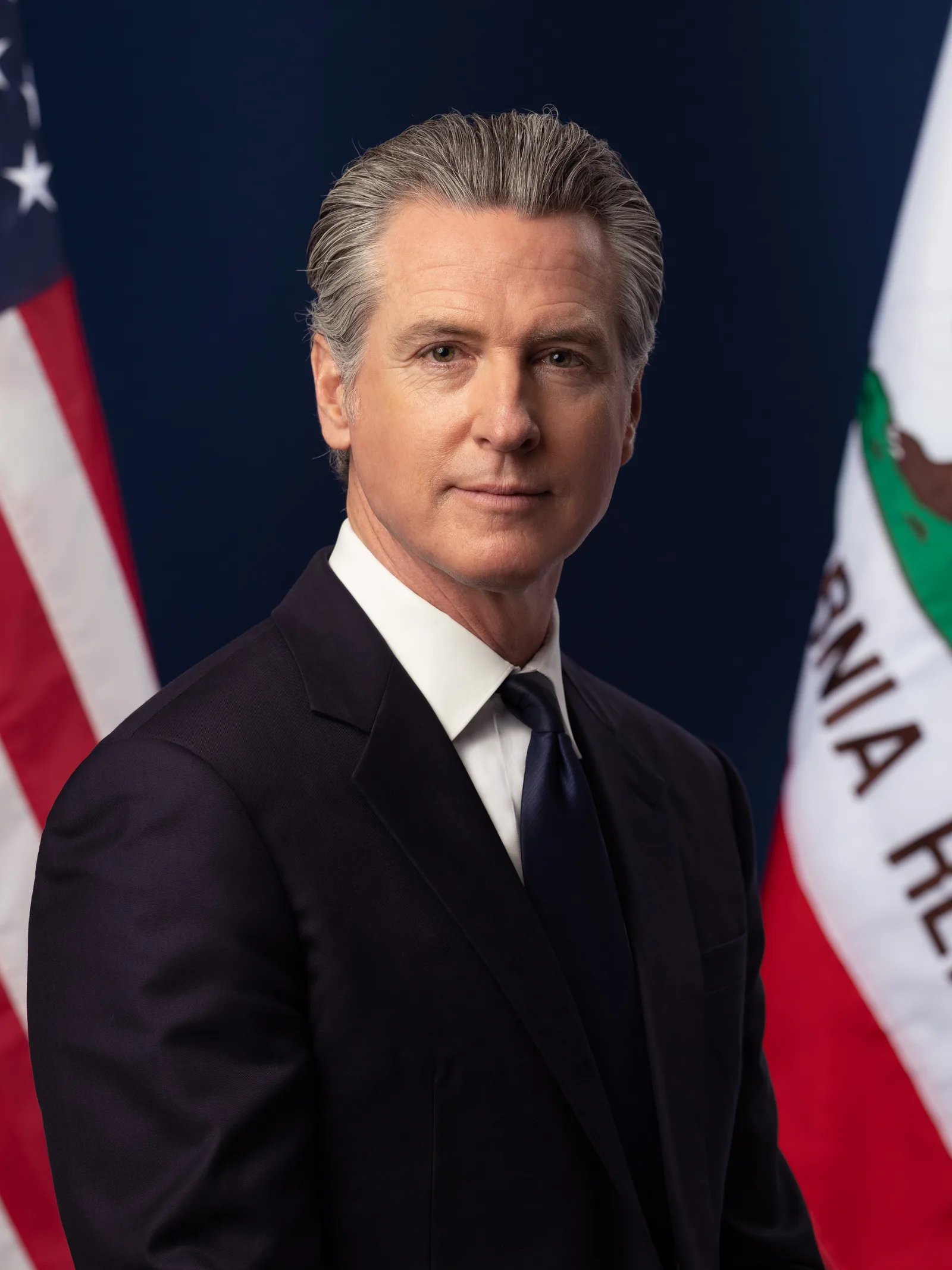 File photo
What happened
Key facts
- California Gov. Gavin Newsom says the Department of Justice is investigating him and his wife (per abcnews.com, ca.gov).
- Newsom responded to a Justice Department lawsuit against California Secretary of State Dr. Shirley Weber and Los Angeles Registrar-Recorder/County Clerk Dean Logan (per ca.gov).
- Newsom called the lawsuit an attempt by Trump to suppress California voters (per ca.gov).
- Newsom said the federal government has no role in how a state conducts its election process (per ca.gov).
- Newsom said the Justice Department asked local officials to violate federal law while Californians were voting (per ca.gov).
- Newsom said California would continue conducting elections and criticized Trump’s actions (per ca.gov).
- Newsom said he signed a 13-bill election protection package the previous month to increase safeguards against potential meddling by local or federal officials (per ca.gov).
The brief
California Gov. Gavin Newsom says the U.S. Department of Justice is investigating him and his wife, according to ABC News’ headline. The headline does not identify the basis or scope of the investigation. The Hill separately characterized the investigation as surrounded by uncertainty, without providing further details in its headline.
In a statement published by the California governor’s office, Newsom addressed a Justice Department lawsuit against California Secretary of State Dr. Shirley Weber and Los Angeles Registrar-Recorder/County Clerk Dean Logan. He called the filing an “unfounded lawsuit” and said it was an effort by President Donald Trump to suppress California voters.
Those descriptions are Newsom’s claims about the department’s action. Newsom said the courts had made clear that the federal government has no role in how a state carries out its election process. He also said the Justice Department had asked local officials to violate federal law while Californians were voting.
The statement does not identify the court decisions or specify the legal requirement he says the request would breach. Newsom praised Weber and Logan, saying the officials do a good job defending democracy. He described the request as unprecedented and said it should alarm Americans.
The statement gives no account from the Justice Department or the two county and state officials named in the lawsuit. Newsom said California would continue holding what he called free and fair elections and pledged to criticize Trump’s actions.
He linked the dispute to a 13-bill election protection package he signed the previous month, saying it increased safeguards against potential interference by local or federal officials. The statement does not describe the individual bills.
The governor’s office framed the lawsuit as an attempt to suppress voters and challenge California’s management of elections; those are Newsom’s characterizations. ABC News’ headline reports a separate DOJ investigation involving Newsom and his wife, while The Hill’s headline also refers to that investigation but supplies no particulars.
The available statements identify no announced decision or next step in either matter.
Why it matters
- California voters are the population Newsom says could face harm: he alleges the Justice Department’s lawsuit is intended to suppress their votes.
- The lawsuit names California Secretary of State Dr. Shirley Weber and Los Angeles Registrar-Recorder/County Clerk Dean Logan, and Newsom says the department asked local officials to violate federal law.
- Newsom said the 13-bill election protection package he signed the previous month aims to guard against potential meddling by local or federal officials.
What to watch next
- Whether the Justice Department takes a publicly described next step in its investigation of Newsom and his wife.
- How the Justice Department lawsuit against Dr. Shirley Weber and Dean Logan proceeds.
- Whether Newsom or the California governor’s office gives further details about the 13-bill election protection package.
How it's being covered
Coverage analysisShow details6 source articles · 5 unique outletsOutlet political mix: Center Only· 3 Center · 2 unratedWhere the outlets are based: US/Canada 40% · Unknown 40% · Other 20%
- Coverage is currently concentrated among Center-rated outlets (3 of 3 rated sources); comparatively few Left or Right-rated outlets have published on the event.
How outlets' accounts compare
Timeline
Developments from this story's sources, dated background we compiled and fact-checked, and our earlier coverage. Each row says which.- President Lyndon B. Johnson signed the Voting Rights Act, prohibiting racial discrimination in voting.Background · compiled and fact-checked by Updat3
- President Bill Clinton signed the National Voter Registration Act, setting federal requirements for voter registration and list maintenance.Background · compiled and fact-checked by Updat3
- President George W. Bush signed the Help America Vote Act, establishing federal election-administration requirements.Background · compiled and fact-checked by Updat3
- The Supreme Court invalidated the Voting Rights Act formula used to determine which jurisdictions needed federal approval before changing election rules.Background · compiled and fact-checked by Updat3
- California enacted the Voter’s Choice Act, allowing participating counties to use vote centers and mail ballots to registered voters.Background · compiled and fact-checked by Updat3
- California began automatically registering eligible voters through the Department of Motor Vehicles.Background · compiled and fact-checked by Updat3
- Gavin Newsom was elected governor of California.Background · compiled and fact-checked by Updat3
- In 2021, California enacted the Voter’s Choice Act, which allowed participating counties to offer vote centers and send ballots to registered voters.Background · from our historical context
- The Department of Homeland Security notified California Secretary of State Shirley Weber that it had identified thousands of likely noncitizens registered to vote.Background · compiled and fact-checked by Updat3
How we got here
California’s election system rests on a division of authority shaped by the U.S. Constitution: Article I, Section 4 gives state legislatures the initial power to set rules for congressional elections, while allowing Congress to change those rules.
The National Voter Registration Act of 1993 established federal standards for registering voters, and the Help America Vote Act of 2002 set requirements for election administration and voting systems. Federal oversight changed substantially with the Supreme Court’s 2013 decision in *Shelby County v. Holder*.
Original sources
2 of 6 articles · US/Canada · Show allEvery story links to the reporting it was built from. How we choose sources
Spotted a factual error, a broken link or a misleading summary? Tell us.