
Calley Means leaves White House as food-policy dispute draws scrutiny
Calley Means said he was resigning from his White House role amid disputes over food policy. The departure followed the cancellation of a planned federal definition of ultra-processed foods, which STAT said came after pressure from major food companies.
AI-assisted synthesis · Based on 5 outlets' reporting · Article text read from 2 of 5 outletsHow it's made
View timeline · 8 entries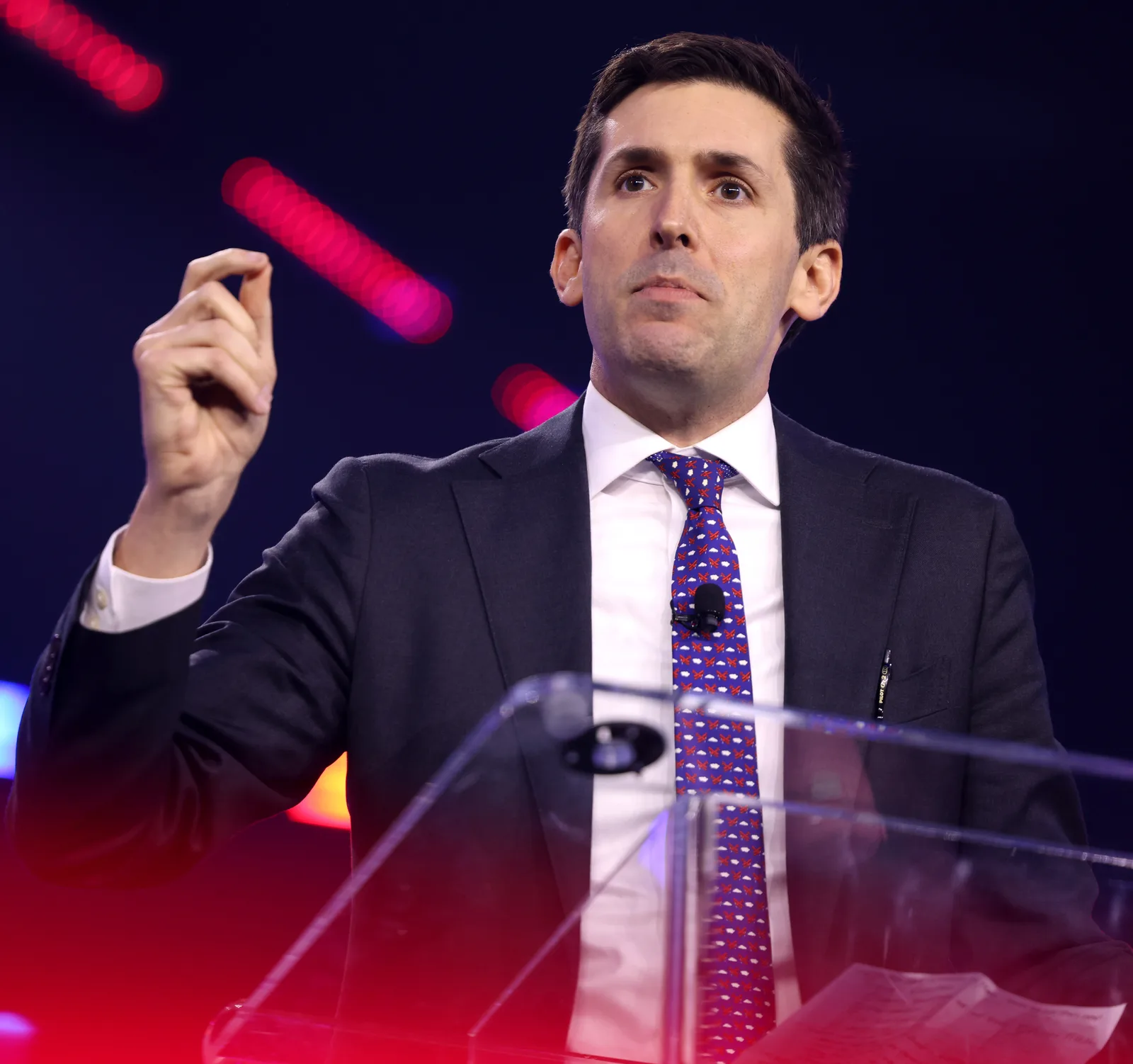 File photo
What happened
Key facts
- Means said he was leaving with respect for President Donald Trump and Robert F. Kennedy Jr.; Washington Examiner calls Kennedy “Bobby Kennedy,” while STAT refers to him as “RFK.” (per Washington Examiner, STAT).
- More than 80 nutrition researchers and experts urged the White House to release a proposed federal definition of ultra-processed foods, according to STAT (per Washington Examiner).
- STAT reported that the planned unveiling of the definition in August was canceled at the last minute under pressure from major food companies (per Washington Examiner).
- Means said on X that it was an honor to advocate for MAHA mothers in the administration (per Washington Examiner, STAT).
- Means wrote that policy and cultural change around MAHA goals had advanced in the previous two years and that the movement was just getting started (per Washington Examiner, STAT).
- The departure came shortly before the midterm election; Washington Examiner says House, Senate and gubernatorial candidates were seeking MAHA voters, while STAT says the election could serve as a referendum on the movement (per Washington Examiner, STAT).
The brief
Calley Means said he was resigning from his White House role amid disputes over food policy, adding a departure to a debate about a proposed federal definition of ultra-processed foods. The White House had planned to unveil the definition in August, but canceled the announcement at the last minute, according to STAT’s account cited by the Washington Examiner.
STAT reported that more than 80 nutrition researchers and experts urged the White House to release the proposal. The outlet said major food companies applied pressure before the planned unveiling was canceled. That account connects the policy dispute to Means’s departure, though it does not establish that the canceled announcement was the sole cause of his decision.
Means confirmed his departure to STAT and also announced it on X, according to the Washington Examiner. He expressed respect for President Donald Trump and Robert F. Kennedy Jr. In a statement shared with STAT, Means described Trump and Kennedy as committed to confronting what he called a corrupt Washington bureaucracy protecting the status quo.
The Washington Examiner quoted Means saying it had been an honor to advocate for MAHA mothers in the administration. The two outlets emphasize different aspects of the departure. The Washington Examiner foregrounds the food-policy dispute and the canceled definition announcement, drawing on STAT’s reporting about industry pressure.
STAT focuses on Means’s exit and the MAHA movement’s political and organizational position, saying it had struggled to build financial and messaging support and that some candidates were trailing in polls. These are distinct emphases, not conflicting accounts of what Means did. Means had first advised health secretary Robert F.
Kennedy Jr. before taking a White House role, STAT reported. The Washington Examiner says Means helped connect Kennedy and Trump in July 2024, when they were competing for the presidency.
The same outlet describes Means as a co-founder of TrueMed and says he worked to connect Kennedy with Trump; those details provide background to his place in the movement, rather than evidence about why he left. The departure came shortly before the midterm election.
The Washington Examiner says candidates in House, Senate and gubernatorial races were seeking to appeal to MAHA voters. STAT presents the election as a possible referendum on the movement, whose political support it characterizes as challenged by fundraising and messaging difficulties.
Means, by contrast, wrote that policy and cultural change around MAHA goals had advanced over the previous two years and that the movement was just getting started. The immediate question raised by the accounts is whether the White House will release the proposed food definition after the canceled unveiling and the researchers’ call for publication.
The coverage also puts Means’s departure in the context of competing assessments of MAHA’s momentum: his own positive appraisal and STAT’s account of organizational difficulties. Neither account supplies a further public explanation from Means that resolves how the policy dispute figured in his decision.
Why it matters
- More than 80 nutrition researchers and experts urged the White House to release a proposed federal definition of ultra-processed foods, while STAT reported that major food-company pressure preceded the cancellation of its planned unveiling.
- The proposed definition is the concrete policy at stake: its planned August unveiling was canceled, leaving the researchers’ request for release unresolved in these accounts.
- MAHA candidates in House, Senate and gubernatorial races were seeking the movement’s voters, while STAT said some candidates were trailing in polls and the movement faced fundraising and messaging difficulties.
What to watch next
- Whether the White House releases the proposed federal definition of ultra-processed foods that researchers urged it to publish.
- Whether House, Senate and gubernatorial candidates continue appealing to MAHA voters in the midterm election.
- Whether the MAHA movement addresses the financial and messaging challenges STAT described.
How it's being covered
Coverage analysisShow details5 source articles · 5 unique outletsOutlet political mix: Mixed· 2 Center · 2 Right · 1 unratedWhere the outlets are based: US/Canada 60% · Unknown 40%
How outlets' accounts compare
4 framing differences · 4 uncorroborated claims · 1 information gap- The Washington Examiner centers food-policy disputes and the canceled definition announcement; STAT emphasizes Means’s departure and the MAHA movement’s reported fundraising, messaging and polling challenges.
- The Washington Examiner quotes Means saying the movement had seen substantial policy and cultural change; STAT characterizes the movement as struggling to establish financial and messaging support.
- The account of major food-company pressure and the canceled unveiling is attributed to STAT through the Washington Examiner.
- The accounts do not establish whether the food-policy dispute was the sole reason for Means’s departure.
- The Washington Examiner links the departure to food-policy disputes and reports STAT’s account of pressure before the canceled announcement; the sources do not establish that this dispute alone caused Means to leave.
- Means said it was an honor to advocate for MAHA mothers in the administration.
- Means wrote that policy and cultural change around MAHA goals had advanced over the previous two years and that the movement was just getting started.
- STAT described the MAHA movement as struggling to establish financial and messaging support.
- The sources do not provide a detailed account of the proposed definition’s contents or the specific pressure exerted by food companies.
Timeline
Developments from this story's sources, dated background we compiled and fact-checked, and our earlier coverage. Each row says which.- The Federal Food, Drug, and Cosmetic Act, signed by President Franklin D. Roosevelt on June 25, 1938, established a central federal role in regulating food safety.Background · from our historical context
- The U.S. Departments of Agriculture and Health and Human Services have jointly issued Dietary Guidelines for Americans every five years since 1980.Background · from our historical context
- President George H. W. Bush signed the Nutrition Labeling and Education Act.Background · compiled and fact-checked by Updat3
- Robert F. Kennedy Jr. used the Make America Healthy Again platform in his presidential campaign.Background · compiled and fact-checked by Updat3
- After Kennedy endorsed Donald Trump in August 2024, the two joined forces politically.Background · from our historical context
- On February 13, 2025, Trump established the Make America Healthy Again Commission by executive order and appointed Kennedy, then secretary of Health and Human Services, to lead it.Background · from our historical context
- The commission’s May 22, 2025, report identified ultra-processed foods among the subjects of its investigation.Background · from our historical context
- In August 2026, the White House canceled a planned unveiling of a federal definition of ultra-processed foods; STAT reported that food-company pressure preceded the cancellation.Background · from our historical context
How we got here
In August 2026, the White House canceled a planned unveiling of a federal definition of ultra-processed foods; STAT reported that food-company pressure preceded the cancellation. More than 80 nutrition researchers and experts then urged the administration to release the proposed definition. The political framework around the dispute took shape with Robert F.
Kennedy Jr.’s 2024 presidential campaign, which used “Make America Healthy Again” (MAHA) to promote changes to food and health policy. After Kennedy endorsed Donald Trump in August 2024, the two joined forces politically.
Original sources
5 articles from 5 outletsEvery story links to the reporting it was built from. How we choose sources
Spotted a factual error, a broken link or a misleading summary? Tell us.