
Prime Minister Mark Carney urges Albertans in Calgary to vote no on nine referendum questions
Prime Minister Mark Carney campaigned in Calgary and publicly urged voters to reject the nine referendum questions other than the independence question. He said "polls don't vote," encouraged turnout and framed pipelines and increased crude production as reasons for Alberta to remain in Canada.
AI-assisted synthesis · Based on 4 independent reports from 5 outlets · Full text read from 2 of 4 reportsHow it's made
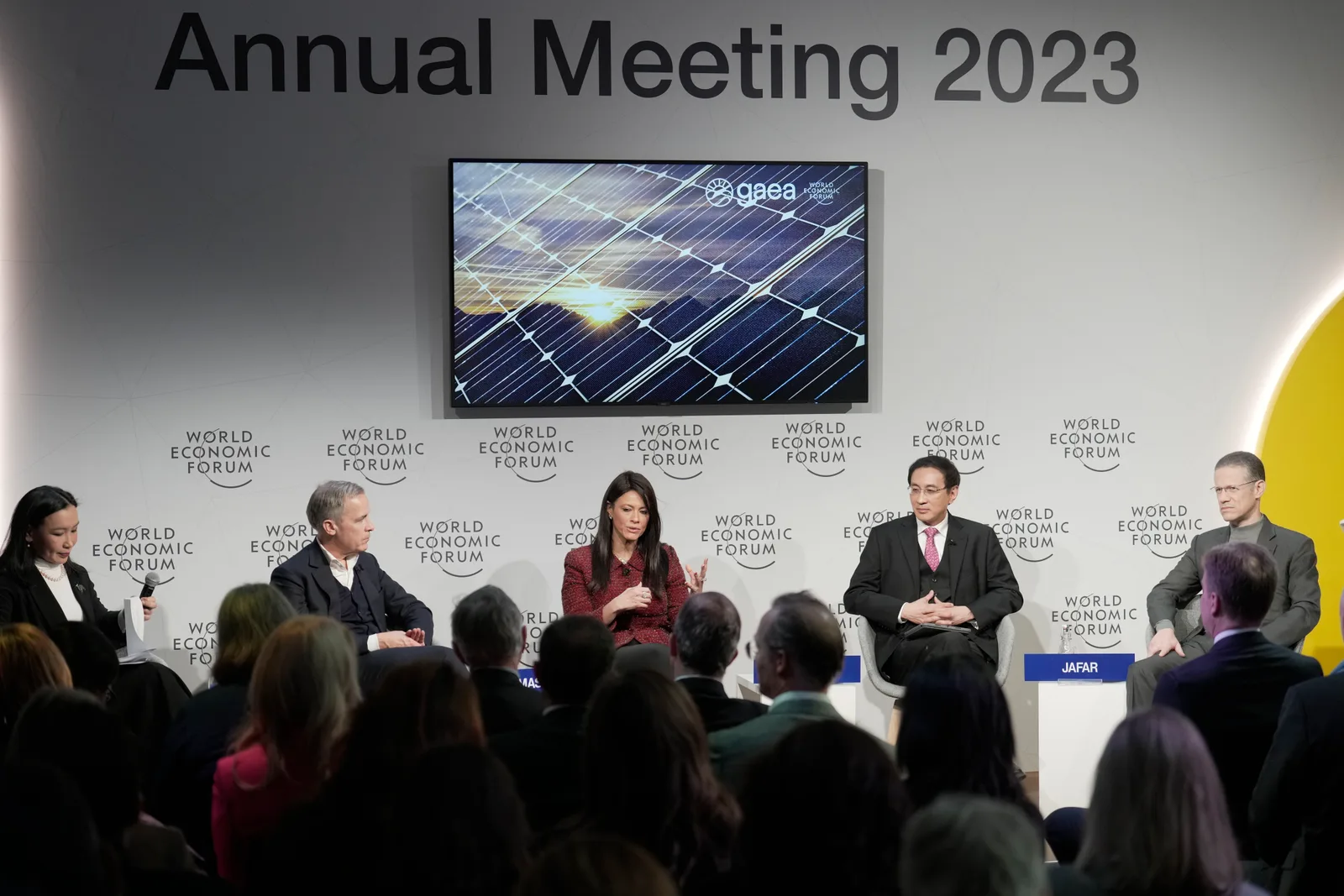 File photo
What happened
Key facts
- Prime Minister Mark Carney campaigned in Calgary and for the first time publicly urged Albertans to vote no on the nine referendum questions outside the independence question (per thestar.com, The Straits Times).
- Carney told supporters that "polls don't vote" and urged people to show up and mark their ballots (per thestar.com, The Straits Times).
- Carney framed pipelines and increased crude production as central to Alberta's future prosperity within a united Canada (per The Straits Times, thestar.com, darpanmagazine.com).
- The non-binding referendum on independence is scheduled for Oct 19, and Alberta Premier Danielle Smith called the vote to settle a divisive issue (per The Straits Times).
- Premier Danielle Smith has said she would launch a legally binding separation process if a majority votes for independence and would not approve another referendum if a majority votes to stay (per The Straits Times).
- Stephen Carter, a campaign strategist whose third-party advertiser is Alberta's Voice, attended the Calgary event (per thestar.com, The Straits Times).
The brief
Prime Minister Mark Carney spent part of Oct 15 campaigning in Calgary and for the first time publicly urged voters to reject the nine referendum questions on the ballot that do not concern independence. Carney told a crowd in northeast Calgary that "polls don't vote," pressed supporters to turn out and said Canadians need to mark their ballots rather than rely on polls.
He took part in events including a stop at Cinnamon Indian Cuisine & Bar and later spoke to volunteers with Public Interest Alberta, a group mobilising against the nine non-independence questions.
Carney presented economic themes to argue for unity, framing expanded pipeline capacity and higher crude production as central to Alberta's prosperity inside Canada; that emphasis appears most clearly in coverage outside Canada that highlighted his economic arguments.
Alberta Premier Danielle Smith called the Oct 19 vote non-binding to settle a divisive issue, and Smith has said she would begin a legally binding separation process if a majority supported independence while declining to allow another referendum if a majority voted to remain.
The Toronto Star's report named Stephen Carter, a campaign strategist linked to Alberta's Voice, among attendees at Carney's Calgary event.
Polling cited in one account shows fewer than a quarter of Alberta's roughly five million residents favour secession, a figure the same report contrasts with separatist leader Mitch Sylvestre's claim that his side could secure about 40 percent support.
Coverage differs in emphasis: Toronto Star reporting centred on Carney's direct appeal to reject the nine other questions and his presence at local volunteer gatherings, while international coverage stressed his broader message on pipelines and Canada's economic case for Alberta.
Sources agree on Carney's core messages—reject the nine non-independence questions and get out to vote—while differing on which evidence best undergirds his argument, with local reporting noting campaign participants and international pieces citing polling and statements by provincial leaders.
The visit crystallised federal campaigning aimed at encouraging turnout against the supplementary ballot items; it also highlighted competing political calculations in Alberta, where provincial leaders have set the terms of the referendum and separatist voices publicly dispute polling numbers.
Why it matters
- Alberta voters face a ballot that includes nine non-independence questions; turnout mechanics matter because Carney and anti-referendum volunteers are mobilising to influence how many people mark those items, and Carney said "polls don't vote," pointing to participation as the decisive mechanism.
- The vote schedule set by Premier Danielle Smith places a non-binding independence question on Oct 19 and carries a documented procedural consequence she stated: she would launch a legally binding separation process if a majority backs independence, affecting Alberta's institutional path depending on that majority.
- Economic policy is a concrete stake for Alberta's oil sector: Carney argued that pipelines and increased crude production tie directly to provincial prosperity within Canada, an argument aimed at voters in an economy where crude production and pipeline access are documented central concerns.
- Campaign actors include federal politicians and provincial strategists: Carney's intervention and the presence of campaign strategist Stephen Carter and Alberta's Voice show organised mobilization around the nine ballot questions, which can shift public information, turnout and messaging dynamics ahead of the Oct 19 vote.
What to watch next
- Whether a majority of voters in the Oct 19 referendum vote to back independence, which Premier Danielle Smith has said would trigger a legally binding separation process.
- Whether turnout on Oct 19 yields higher participation on the nine non-independence questions after federal and volunteer groups urged voters to mark those ballots, as Carney and Public Interest Alberta encouraged.
- Whether separatist leaders such as Mitch Sylvestre report support levels at or above the 40 percent figure he mentioned, compared with polling cited that puts pro-secession support under one quarter of Alberta's population.
How it's being covered
Coverage analysisShow details5 source articles · 5 unique outlets · 4 distinct reportsCoverage mix: Center Only· 4 CenterWhere the outlets are based: US/Canada 40% · Europe 20% · Other 40%
- Coverage is currently concentrated among Center-rated outlets (4 of 4 rated sources); comparatively few Left or Right-rated outlets have published on the event.
How outlets' accounts compare
4 framing differences · 4 uncorroborated claims · 3 information gaps- S1 (Toronto Star) frames Carney's visit chiefly as a domestic federal intervention urging rejection of the nine non-independence questions and highlights grassroots mobilisation; S2 (The Straits Times) frames the visit more as an argument about pipelines and economic reasons for Alberta to stay in Canada and places stronger emphasis on polling figures and provincial leaders' positions.
- The Straits Times reports less than a quarter of Alberta’s roughly five million people want to break away; The Straits Times also cites Mitch Sylvestre saying he would be "very surprised if we got less than 40 percent."
- thestar.com and The Straits Times both present Carney's visit as an effort aimed at influencing turnout and votes on Oct 19, but neither source documents a direct causal chain showing how his visit changed voter intentions or turnout.
- thestar.com attributes the presence of campaign strategist Stephen Carter and a link to Alberta's Voice; The Straits Times attributes polling figures and quotes about turnout expectations to Mitch Sylvestre and to unspecified polls.
- Support levels for independence: The Straits Times cites polling that places pro-secession sentiment under one quarter of Alberta's population, while separatist leader Mitch Sylvestre is quoted as expecting at least 40 percent support; these figures are inconsistent.
- Carney: "It's hard to think of a worse time to have a referendum, or a better time for the province."
- Carney: "polls don't vote"
- Mitch Sylvestre: "I would be very surprised if we got less than 40 percent."
- No report Updat3 read provides the exact text of the nine non-independence questions or explains how each question would be implemented administratively if passed.
- No source details how votes on the nine non-independence questions would interact legally with the independence question or with existing federal constitutional processes.
- No source provides independent verification of the polling figures cited or the methodology behind the poll mentioned by The Straits Times.
How we got here
Immediate backdrop: Alberta’s government scheduled a non‑binding referendum on provincial independence for Oct. 19, 2026, a vote Premier Danielle Smith framed as a means to settle a divisive issue ahead of that date.
The referendum includes nine ballot questions in addition to the independence question, and Premier Smith has publicly said she would pursue a legally binding separation process if a majority votes for independence (statement attributed to Smith prior to Oct. 19, 2026). The campaign environment before Oct.
Original sources
2 of 5 articles · US/Canada · Show allEvery story links to the reporting it was built from. How we choose sources
Spotted a factual error, a broken link or a misleading summary? Tell us.