
China and North Korea open New Yalu River Bridge, restoring 3-km Dandong–Sinuiju crossing
China and North Korea opened the New Yalu River Bridge, a crossing completed in 2014 that had remained unused until now. Trucks waited on the bridge before the opening, while Chinese customs officials recorded increased activity in the days beforehand.
AI-assisted synthesis · Based on 9 independent reports from 10 outlets · Article text read from 4 of 9 reportsHow it's made
View timeline · 8 entries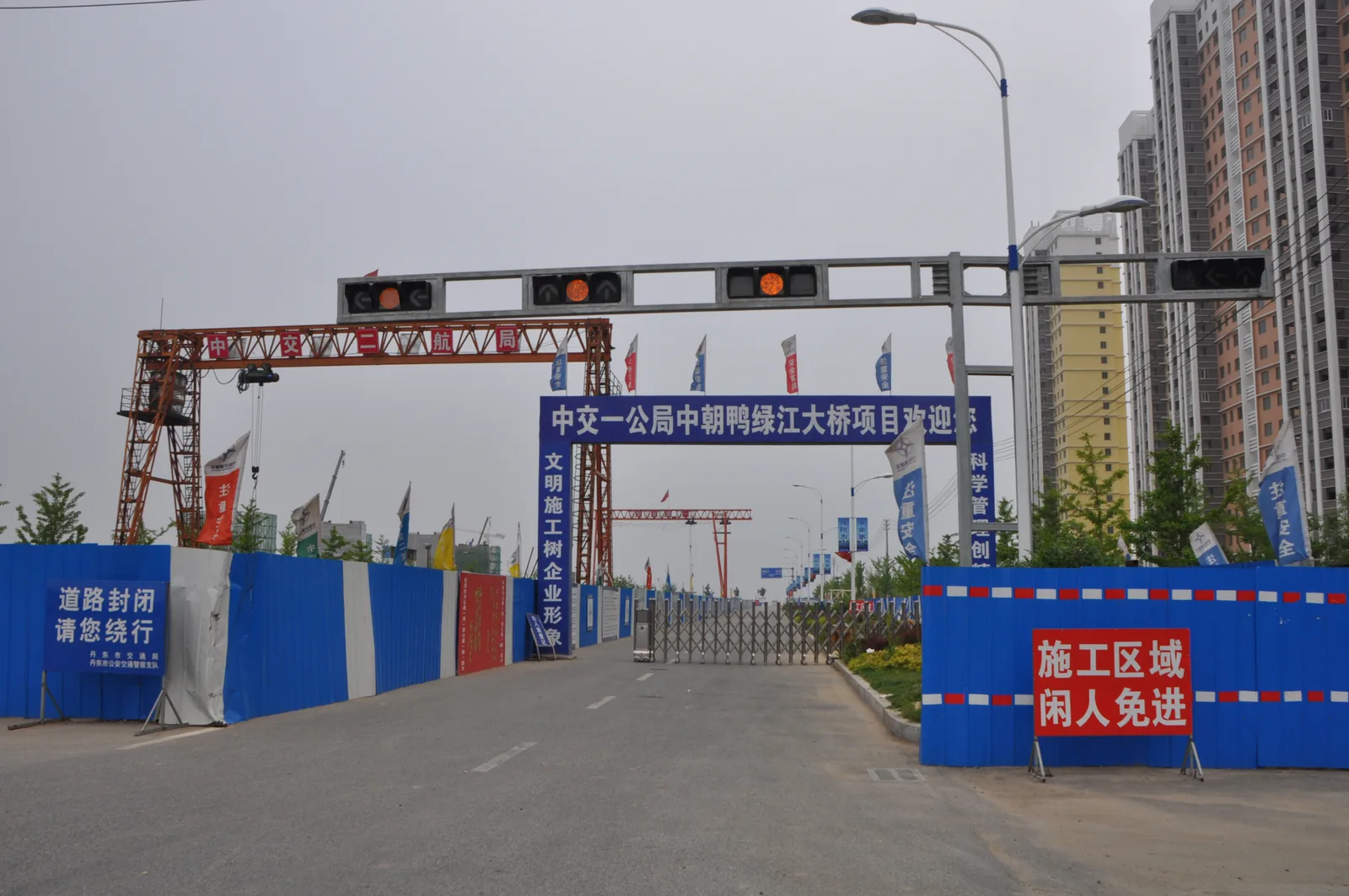 File photo
What happened
Key facts
- Chinese premier Li Qiang said the relationship had entered a “new stage” and described the crossing as a landmark of their traditional friendship.
- The bridge was completed on the Chinese side in 2014 but remained unused for more than a decade because work on the North Korean side stalled.
- Trucks bearing Chinese and North Korean flags were present on the bridge at the opening ceremony, and officials from both countries attended virtually.
- The new crossing is expected to ease pressure on the older Sino-Korean Friendship Bridge, built in 1943, which currently carries over 70% of official trade and allows one-way vehicle crossings at a time.
- The bridge is 3,026 meters long and links China’s Dandong New Zone with North Korea’s Sinuiju.
- The bridge is located in Dandong, Liaoning province, on the Chinese side.
- The structure was completed 12 years before its opening.
The brief
China and North Korea officially opened the New Yalu River Bridge, a 3-kilometre border crossing that had sat unused since its completion in 2014. Trucks bearing Chinese flags waited on the bridge before the opening, and Chinese customs officials recorded increased activity in the preceding days. The crossing links Dandong in China with Sinuiju in North Korea.
The Times of India, CNA, DW and The Japan Times describe its length as 3 kilometres; The Japan Times gives a more exact figure of 3,026 metres. The reports place the opening 12 years after completion. The ceremony was presented as an effort to revive cross-border commerce after years of strained ties and disruptions to exchanges, according to CNA and DW.
The accounts provide different details about how the bridge remained unused, without establishing a contradiction. DW, citing South Korea’s Yonhap News agency, says connecting roads on the North Korean side were lacking.
The Times of India says work on that side stalled, while CNA reports that the bridge’s pylons were completed in 2014 and the structure stayed unused until the opening. These accounts point to delayed infrastructure work but do not identify a single, independently confirmed explanation. China’s state news agency Xinhua reported an opening ceremony, CNA said.
China’s premier, Li Qiang, described the relationship as having entered a “new stage” and called the crossing a landmark of traditional friendship, according to The Times of India. North Korean premier Pak Thae Song said the bridge would promote prosperity and improve people’s well-being, the outlet reported, citing North Korean state media.
These are the leaders’ stated views; the reports do not provide independent measures of the expected effects. The bridge’s prospective trade role is significant in the accounts, but projections and current conditions should be distinguished.
The Times of India says the older Sino-Korean Friendship Bridge carries more than 70% of official trade and allows vehicles to cross in one direction at a time; it says the new crossing is expected to ease pressure on that route. The outlet also reports that China accounted for about 98% of North Korea’s external trade in 2025, citing figures in reports.
CNA describes the opening as an effort to rejuvenate trade and commerce, rather than reporting a measured increase in trade after the bridge opened. The coverage emphasizes different aspects of the event.
CNA highlights trucks waiting and heightened customs activity, while DW notes spectators gathered on the Chinese side and points to the reported lack of North Korean connecting roads. The Japan Times foregrounds the bridge’s length and the ceremony in Dandong.
Al Jazeera’s headline raises a separate question, saying experts suggest the bridge may do little to spur trade; that headline does not identify the experts’ reasoning or provide supporting details. The Korea Times headline says North Korea reported the opening, whereas CNA says North Korean state media had not reported the scheduled event before it took place.
The opening establishes that the crossing is operational, but the reports do not quantify post-opening traffic or trade. The next concrete measures in the coverage are whether trucks use the route and whether customs activity continues; the potential trade benefit remains a stated aim, not a documented outcome.
Why it matters
- North Korean trade is highly concentrated: The Times of India cites figures showing China accounted for about 98% of North Korea’s external trade in 2025, making the functioning of this land crossing directly relevant to that trade channel.
- The older Sino-Korean Friendship Bridge carries more than 70% of official trade and permits traffic in only one direction at a time, according to The Times of India; the new crossing is expected to ease pressure on that route.
- The prospective benefit is cross-border commerce between China and North Korea, while Al Jazeera’s headline reports experts’ doubts that the bridge will do much to increase trade.
What to watch next
- Whether trucks begin using the New Yalu River Bridge for regular cross-border crossings.
- Whether the increased Chinese customs activity reported before the opening continues after the bridge becomes operational.
- Whether the crossing eases pressure on the older Sino-Korean Friendship Bridge, which carries more than 70% of official trade.
- Whether trade activity grows, the outcome the countries’ stated goal of reviving commerce would require.
How it's being covered
Coverage analysisShow details11 source articles · 10 unique outlets · 9 distinct reportsOutlet political mix: Center Only· 7 Center · 3 unratedWhere the outlets are based: Asia 70% · Europe 10% · Other 20%
- Coverage is currently concentrated among Center-rated outlets (7 of 7 rated sources); comparatively few Left or Right-rated outlets have published on the event.
2 sources are from a wire service (AP, Reuters, AFP or Bloomberg), whose reporting other outlets often republish.
How outlets' accounts compare
4 framing differences · 4 uncorroborated claims · 3 information gaps- CNA emphasizes trucks waiting and increased activity at Chinese customs; DW highlights spectators on the Chinese side and the reported lack of North Korean connecting roads.
- The Japan Times emphasizes the bridge’s 3,026-metre length and the opening ceremony in Dandong, while The Times of India foregrounds leaders’ statements and the older bridge’s share of official trade.
- Al Jazeera’s headline cites experts who say the bridge may do little to spur trade; CNA and DW describe the opening as aimed at rejuvenating commerce.
- CNA says Xinhua reported an opening ceremony and notes that North Korean state media had not reported the scheduled event before it took place; The Korea Times headline says North Korea reported the opening.
- The reason the bridge remained unused is described differently: DW, citing Yonhap, points to missing connecting roads on the North Korean side; The Times of India says work there stalled. The reports do not establish whether these descriptions refer to distinct issues or the same cause.
- The Times of India reports that Li Qiang called the relationship a “new stage.”
- The Times of India, citing North Korean state media, reports that Pak Thae Song said the crossing would support prosperity and improve people’s well-being.
- Al Jazeera’s headline says experts believe the bridge may do little to spur trade.
- The reports do not provide measurements of trade or truck traffic after the opening.
- The reports do not identify the experts or give their evidence for the view in Al Jazeera’s headline that the bridge may do little to spur trade.
- The reports do not describe the construction cost, funding arrangements, or the terms of any cross-border trade agreement connected to the bridge.
Timeline
Developments from this story's sources, dated background we compiled and fact-checked, and our earlier coverage. Each row says which.- China and North Korea signed a Treaty of Friendship, Cooperation and Mutual Assistance.Background · compiled and fact-checked by Updat3
- China and North Korea signed agreements during Premier Wen Jiabao’s visit, including one on building a new bridge over the Yalu River.Background · compiled and fact-checked by Updat3
- China and North Korea held a groundbreaking ceremony for the New Yalu River Bridge.Background · compiled and fact-checked by Updat3
- China completed construction of the New Yalu River Bridge, but the crossing remained unusable for cross-border traffic.Background · compiled and fact-checked by Updat3
- The UN Security Council adopted Resolution 2270, imposing sanctions on North Korea after its nuclear test and satellite launch.Background · compiled and fact-checked by Updat3
- Bilateral trade flows between China and North Korea, which China’s customs data showed grew through the early 2010s, fell sharply after the passage of tighter UNSC measures in 2017 (customs and UN reporting, 2017).Background · from our historical context
- North Korea closed its border to most cross-border traffic during the COVID-19 pandemic.Background · compiled and fact-checked by Updat3
- China and North Korea resumed freight train services between Dandong and Sinuiju after a pandemic-related suspension.Background · compiled and fact-checked by Updat3
How we got here
The immediate backdrop was that the bridge’s main structure had been finished in 2014 but remained unused for years thereafter, a fact reported by multiple outlets in 2026 that framed the opening as the end of a long delay.
The structural framework for cross‑border links between China and North Korea rests on the 1961 Sino–North Korean Border Treaty (signed 1961), which established the legal basis for bridges and river crossings along the Yalu River.
Original sources
11 articles from 10 outletsEvery story links to the reporting it was built from. How we choose sources
Spotted a factual error, a broken link or a misleading summary? Tell us.