
Netanyahu loses majority as blocs fall short, leaving coalition path uncertain
Benjamin Netanyahu lost his governing majority after Israel’s election, while his bloc and Gadi Eisenkot’s bloc were projected to fall short of a majority. The outcome leaves Netanyahu’s political future tied to whether opposition Jewish parties form a common front with Palestinian parties.
AI-assisted synthesis · Based on 4 independent reports from 5 outlets · Article text read from 2 of 4 reportsHow it's made
View timeline · 9 entries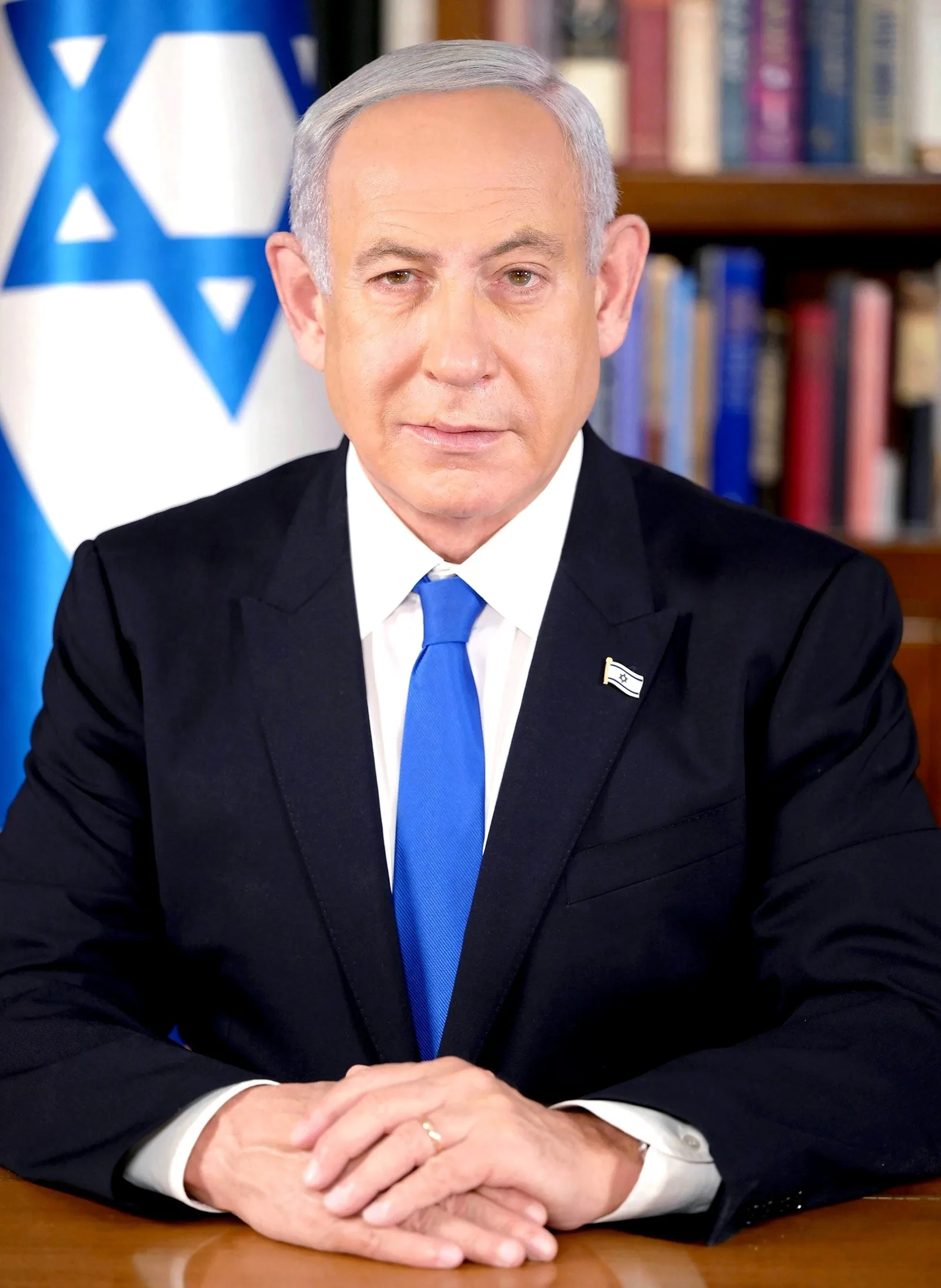 File photo
What happened
Key facts
- Benjamin Netanyahu lost his governing majority after Israel’s election (per sundayguardianlive.com, breakingnews.ie, The Irish Times).
- Netanyahu’s bloc and Gadi Eisenkot’s bloc were projected to fall short of a majority (per sundayguardianlive.com, breakingnews.ie, The Guardian).
- Gadi Eisenkot called Netanyahu a caretaker prime minister without a mandate or the public’s trust (per sundayguardianlive.com, breakingnews.ie, The Irish Times).
The brief
Benjamin Netanyahu lost his governing majority in Israel’s election, while his bloc and the bloc led by Gadi Eisenkot were projected to fall short of the seats needed for a majority. That leaves the formation of the next government uncertain and makes potential coalition alignments central to Netanyahu’s political future.
The election outcome was still being assessed as the first exit polls appeared. Netanyahu spoke to supporters at the Likud election headquarters in Jerusalem after those projections became available. The source reporting the scene did not provide a vote count or a seat tally, so the projected shortfall is the clearest available measure of the blocs’ positions.
Eisenkot, identified as Netanyahu’s rival and an opposition leader, challenged Netanyahu’s standing. He called him a caretaker prime minister without a mandate or the public’s trust, and urged the security establishment to put Israel’s security ahead of political interests.
Netanyahu and Eisenkot offered contradictory statements about the results, but the available account does not give the full wording of Netanyahu’s remarks. The central question raised by the election coverage is whether opposition Jewish parties will form a common front with Palestinian parties.
The Irish outlet breakingnews.ie said Netanyahu’s political future depended on that possibility and reported that Palestinian-party support had surged in the election. The report did not quantify that increase or identify the parties involved. The Sunday Guardian Live described the competing blocs as falling short in exit polls and said the next government remained uncertain.
The Guardian’s headline likewise said coalition talks loomed as the blocs were set to miss a majority, while Al Jazeera’s headline characterized the camps as clashing over election projections. Those headlines corroborate the focus on competing interpretations and coalition prospects, but do not provide additional vote totals or positions.
The election took place on October 27, 2026, according to the Sunday Guardian Live. That outlet said final results were expected within days of voting. Until the final count is known, the projections do not settle which parties can assemble a governing majority or whether opposition parties will cooperate across the political divisions described in the coverage.
Why it matters
- Israeli voters face an uncertain government-formation process because neither Netanyahu’s bloc nor Eisenkot’s bloc was projected to secure a majority.
- Netanyahu’s political position depends on whether opposition Jewish parties join with Palestinian parties, according to breakingnews.ie.
- Palestinian parties’ support was reported as having surged, but no figure was given to measure the change.
- Eisenkot’s challenge to Netanyahu’s mandate puts the question of political authority alongside the arithmetic of coalition-building.
What to watch next
- Whether final election results confirm the projections that both blocs fall short of a majority.
- Whether opposition Jewish parties form a common front with Palestinian parties.
- Whether Netanyahu or Eisenkot changes or clarifies their stated position as results are finalized.
- Whether the security establishment responds to Eisenkot’s appeal to prioritize security over political interests.
How it's being covered
Coverage analysisShow details5 source articles · 5 unique outlets · 4 distinct reportsOutlet political mix: Mostly Left· 2 Left · 1 Right · 2 unratedWhere the outlets are based: Europe 60% · Middle East 20% · Other 20%
How outlets' accounts compare
2 framing differences · 4 uncorroborated claims · 2 information gaps- Sunday Guardian Live emphasizes contradictory statements by Netanyahu and Eisenkot and describes the next government as uncertain; breakingnews.ie centers Netanyahu’s political fate on a possible alliance between opposition Jewish parties and Palestinian parties.
- Al Jazeera’s headline frames the camps as clashing over projections, while The Guardian’s headline emphasizes looming coalition talks.
- Eisenkot’s claim that Netanyahu lacks a mandate and public trust is presented as Eisenkot’s position, not an established finding.
- Sunday Guardian Live says Netanyahu and Eisenkot made contradictory statements, but the coverage does not provide a complete account of both statements or resolve their competing interpretations.
- Eisenkot called Netanyahu “a caretaker prime minister, without a mandate or the people’s trust.”
- Eisenkot urged the security establishment to “stand firm” against political interests taking precedence over Israel’s security.
- The sources do not give seat totals, the number of votes counted, or the vote share of either bloc.
- The sources do not identify the opposition Jewish or Palestinian parties involved in a possible coalition.
Timeline
Developments from this story's sources, dated background we compiled and fact-checked, and our earlier coverage. Each row says which.- In 1948, the creation of Israel during war displaced more than 700,000 Palestinians, an event Palestinians call the Nakba.Background · from our historical context
- Benjamin Netanyahu first became Israel’s prime minister.Background · compiled and fact-checked by Updat3
- Hamas had won Palestinian legislative elections in 2006.Background · from our historical context
- Benny Gantz, Gideon Sa'ar and Gadi Eisenkot formed the National Unity alliance.Background · compiled and fact-checked by Updat3
- Israel held a Knesset election in which Benjamin Netanyahu's bloc won a majority.Background · compiled and fact-checked by Updat3
- Benjamin Netanyahu returned to office as prime minister after his bloc won a majority in the Knesset election.Background · compiled and fact-checked by Updat3
- Benjamin Netanyahu’s government proposed changes to Israel’s judicial system.Background · compiled and fact-checked by Updat3
- The October 7, 2023 Hamas-led attack on Israel killed about 1,200 people and resulted in roughly 250 hostages being taken, according to Israeli figures.Background · from our historical context
- Benny Gantz and Gadi Eisenkot left Israel’s emergency government.Background · compiled and fact-checked by Updat3
How we got here
In Israel’s last completed national election, on November 1, 2022, Benjamin Netanyahu’s Likud-led bloc won 64 of the Knesset’s 120 seats, and Netanyahu returned as prime minister on December 29.
In 2023, its proposed changes to judicial oversight prompted mass protests; Netanyahu’s opponents argued the proposals threatened democratic checks, while the government said they would rebalance power between elected officials and the courts.
Original sources
3 of 5 articles · Europe · Show allEvery story links to the reporting it was built from. How we choose sources
Spotted a factual error, a broken link or a misleading summary? Tell us.