
Khera says Congress seeks government change through elections, not unrest
After Rajnath Singh accused Congress and its allies of using protests over the Election Commission to destabilise India, Pawan Khera said the opposition sought to change the government through elections. Khera challenged Singh’s comparison with Bangladesh and pointed to the 1977 change of government as an example of electoral change.
AI-assisted synthesis · Based on 4 outlets' reporting · Full text read from 3 of 4 outletsHow it's made
View timeline · 2 entries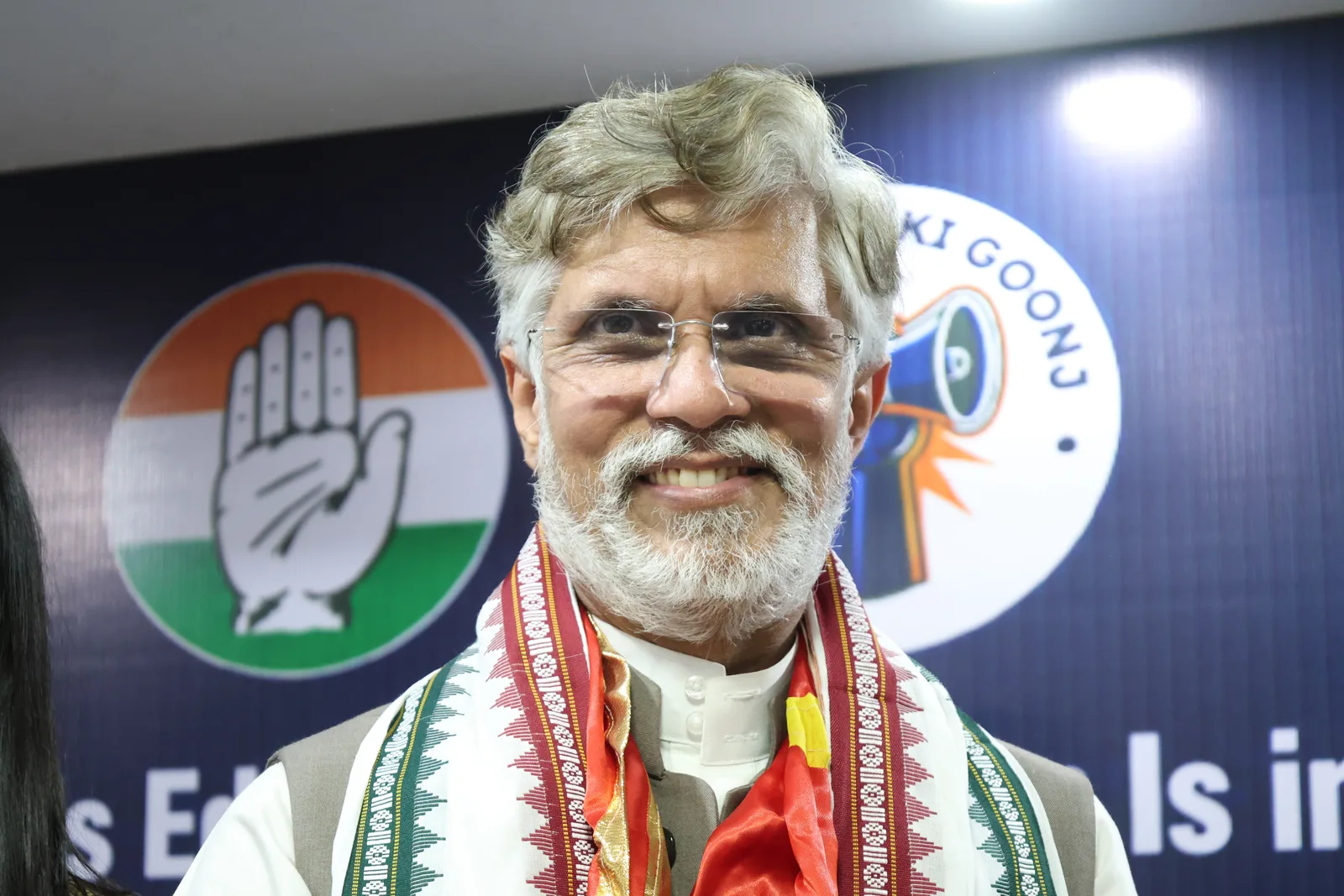 File photo
What happened
Key facts
- Rajnath Singh alleged that Congress and its allies were using protests concerning the Election Commission to pursue regime change and create unrest (per etnownews.com, dynamitenews.com, The Times of India).
- Pawan Khera said the opposition aimed to defeat Narendra Modi’s government through elections and bring about political change (per etnownews.com).
- Khera accused the BJP of hypocrisy over its objections to calls for regime change (per The Times of India).
- Khera said the BJP had “lost the habit of practising democracy.” (per The Times of India).
The brief
Pawan Khera said the opposition wants to defeat Narendra Modi’s government through elections after Defence Minister Rajnath Singh accused Congress and its allies of using protests concerning the Election Commission to destabilise India.
Singh’s allegation and Khera’s rebuttal frame the dispute differently: Singh described the protests as part of an effort to create unrest and pursue regime change, while Khera presented electoral defeat as the opposition’s stated political objective. Singh compared the alleged effort with the 2024 uprising in Bangladesh that led to Sheikh Hasina’s ouster.
That comparison is Singh’s characterization of the opposition’s activity; the reporting does not establish that the protests in India and the events in Bangladesh are equivalent. Khera challenged Singh’s framing and said that changing a government through elections was the opposition’s agenda.
Khera also pointed to the 1977 change of government as an example of voters bringing about political change. The example supports his argument that a change in government through elections is a democratic political goal.
His statement, as reported, concerns electoral change; it does not establish that the opposition’s protests are intended to bring about change outside the ballot box. Khera widened his criticism to the BJP, accusing it of hypocrisy over objections to calls for regime change.
He said the party had “lost the habit of practising democracy,” a political charge rather than an independently established finding. Singh’s allegation, by contrast, assigns a destabilising purpose to the protests. The accounts therefore differ over how to interpret the political activity, not over a reported outcome or a confirmed change of government.
The coverage also records Khera defending the right of people holding OCI cards to protest. Dynamite News and The Times of India include this point, while ET Now’s account focuses on the dispute over Singh’s allegation and Khera’s electoral argument.
Dynamite News further reports that Khera referred to lawyer and activist Prashant Bhushan’s remarks on regime change in 2013, arguing that Bhushan had previously been treated as an ally but was now portrayed as an adversary.
The central issue is whether protests concerning the Election Commission should be understood as ordinary political opposition or, as Singh alleges, as an effort to destabilise the country. Khera’s answer is that the opposition wants to change the government through elections.
The reports establish the competing public claims and the historical examples each side of the argument invokes; they do not establish that the protests have caused unrest or that the opposition is pursuing an extra-electoral change of government.
Why it matters
- Congress and its allies face Singh’s allegation that protests concerning the Election Commission are intended to destabilise India; the dispute puts their protest activity and stated electoral goal at the centre of the political argument.
- The Election Commission is the subject of the protests Singh cited, linking the dispute to public demonstrations about an electoral institution.
- Khera’s defence of protest rights for OCI cardholders raises a distinct question about their ability to take part in demonstrations, as reported by Dynamite News and The Times of India.
- The 1977 change of government is the historical example Khera used to support his claim that voters can change governments through elections.
What to watch next
- Whether Rajnath Singh or Congress and its allies provide further public details supporting their competing accounts of the protests concerning the Election Commission.
- Whether Congress leaders continue to describe the party’s objective as defeating Narendra Modi’s government through elections.
- Whether Khera or other Congress leaders pursue his stated defence of protest rights for people holding OCI cards.
- Whether the BJP responds to Khera’s accusation of hypocrisy and his criticism of the party’s democratic practice.
How it's being covered
Coverage analysisShow details4 source articles · 4 unique outletsCoverage mix: Too few rated· 2 CenterWhere the outlets are based: Unknown 75% · Asia 25%
- Coverage is currently concentrated among outlets based in Unknown (3 of 4 geographically-identified sources).
How outlets' accounts compare
4 framing differences · 3 uncorroborated claims · 3 information gaps- ET Now emphasizes Khera’s rebuttal of Singh’s Bangladesh comparison and his statement that the opposition seeks political change through elections.
- Dynamite News and The Times of India also emphasize Khera’s criticism of the BJP; both include his defence of OCI cardholders’ right to protest, which ET Now does not cover.
- Dynamite News reports Khera’s reference to Prashant Bhushan’s 2013 remarks; the other article texts do not include that claim.
- The Times of India reports Khera’s accusation that the BJP had “lost the habit of practising democracy”; ET Now does not include that statement.
- Singh’s claim about destabilisation and regime change is presented as an allegation; Khera’s account of the opposition’s electoral objective is his stated position.
- Khera said the opposition wanted to defeat the government through elections and change the system.
- Khera accused the BJP of having “lost the habit of practising democracy.”
- The reports do not give details of the protests’ size, dates, locations, organisers, or specific actions concerning the Election Commission.
- The reports do not provide evidence independently assessing whether the protests caused unrest or were connected to an effort to change the government outside elections.
- Singh alleged that the protests were being used to destabilise India and pursue regime change; Khera described the opposition’s aim as electoral defeat of the government. The reports do not independently establish Singh’s allegation about the protests’ purpose.
Timeline
Developments from this story's sources, dated background we compiled and fact-checked, and our earlier coverage. Each row says which.- The Election Commission’s constitutional authority comes from Article 324, which took effect with the Constitution on January 26, 1950.Background · from our historical context
- Parliament later enacted the Chief Election Commissioner and Other Election Commissioners (Appointment, Conditions of Service and Term of Office) Act, 2023, which received presidential assent on December 28, 2023.Background · from our historical context
How we got here
Voting took place from April 19 to June 1, 2024, and the Election Commission of India announced the results on June 4: the Bharatiya Janata Party won 240 Lok Sabha seats, short of a majority, while the Congress won 99. Narendra Modi began a third term as prime minister on June 9, leading a coalition government.
The result made elections, the Election Commission and the possibility of changing the government through voting immediate reference points in national political debate. The Election Commission’s constitutional authority comes from Article 324, which took effect with the Constitution on January 26, 1950.
Original sources
4 articles from 4 outletsEvery story links to the reporting it was built from. How we choose sources
Spotted a factual error, a broken link or a misleading summary? Tell us.