
Nasdaq 100 drops 5.5% as investors reassess AI valuations
The Nasdaq 100 fell 5.5% last week as investors reassessed valuations tied to artificial intelligence. The failed listing of Australian data-centre company Firmus was cited as a prompt for that reassessment.
AI-assisted synthesis · Based on 4 outlets' reporting · Article text read from 1 of 4 outletsHow it's made
View timeline · 4 entries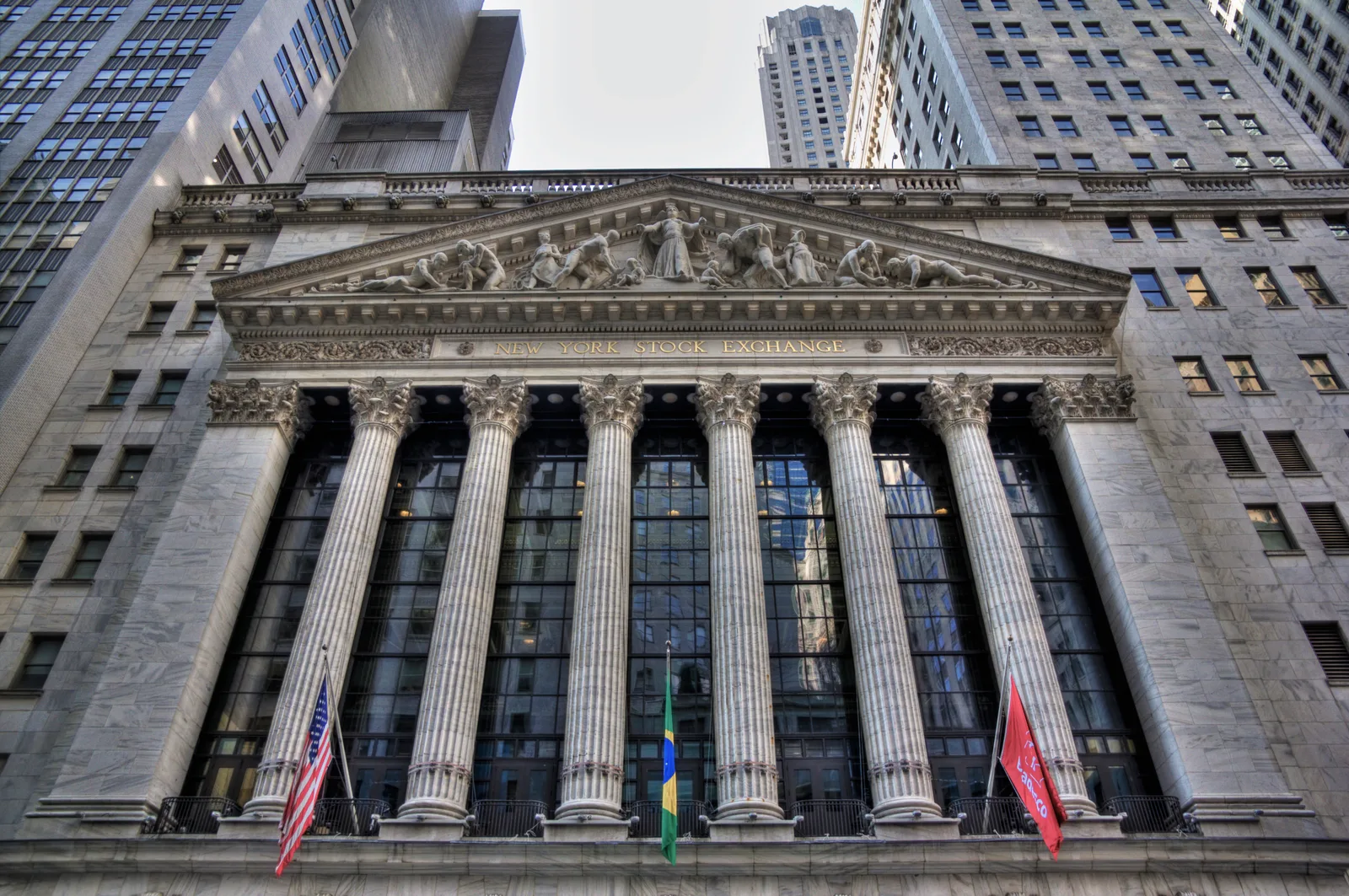 File photo
What happened
Key facts
- The Nasdaq 100 fell 5.5% last week (per aol.co.uk).
- Gerard Minack of Minack Advisors said investors may overestimate the returns AI providers can deliver, but he was not confident identifying the market's precise peak (per aol.co.uk).
- Raisah Rasid of JP Morgan Asset Management described the sell-off as a valuation reset, not evidence that investors were questioning AI's effectiveness (per aol.co.uk).
The brief
The Nasdaq 100 fell 5.5% last week as investors reassessed the valuations of companies linked to artificial intelligence. AOL.co.uk reported that the failed listing of Australian data-centre company Firmus prompted the renewed scrutiny. The index tracks 100 of the largest non-financial companies on the Nasdaq exchange. Firmus did not complete its planned listing on the ASX.
The initial public offering could have valued the company above Telstra, AOL.co.uk reported. The account links the unsuccessful listing to investors’ reassessment of AI-related valuations, but does not describe the terms of the offering or explain why it failed. Market commentators offered different interpretations of the sell-off.
Gerard Minack of Minack Advisors said investors may be pricing in returns from AI providers that are too high. He also said he could not confidently identify the market’s precise peak. Raisah Rasid of JP Morgan Asset Management characterized the decline as a valuation reset, rather than evidence that investors had lost faith in AI’s effectiveness.
The decline followed a period of substantial gains. Despite last week’s drop, the Nasdaq 100 was still worth nearly three times its value at the start of 2023, according to AOL.co.uk. The same account said the combined market value of the so-called “magnificent seven” companies had risen by more than 50% over the previous two years.
Minack said the largest technology companies spent $US425bn on AI-related capital expenditure in 2025. He said they were on course to invest $US800bn that year and more than $US1.1tn the following year. These are Minack’s figures and projections as reported by AOL.co.uk.
The article also cited the International Monetary Fund’s estimate that bonds issued by those companies made up nearly 10% of the global investment-grade credit market, compared with 0.5% at the end of 2024. Separately, Commonwealth Bank economists estimated Australian data-centre investment would reach $150bn by 2030 and $260bn by the mid-2030s.
Those estimates indicate the scale of investment connected to the sector, alongside the uncertainty investors are weighing over its returns.
Why it matters
- Investors face valuation risk: the Nasdaq 100 dropped 5.5%, while Minack cautioned that expectations for AI providers’ returns may be too high.
- Large technology companies’ borrowing is a specific market exposure: their bonds represented nearly 10% of the global investment-grade credit market, according to the IMF, compared with 0.5% at the end of 2024.
- Australia’s data-centre sector has substantial projected investment: Commonwealth Bank economists estimated $150bn by 2030 and $260bn by the mid-2030s.
What to watch next
- Whether investors continue reassessing AI-related valuations after Firmus failed to list on the ASX.
- Whether the Nasdaq 100’s reported decline changes the competing assessments from Gerard Minack and Raisah Rasid about AI returns and the meaning of the sell-off.
- Whether AI-related capital spending by the largest technology companies tracks the investment figures Gerard Minack cited.
How it's being covered
Coverage analysisShow details4 source articles · 4 unique outletsOutlet political mix: Mixed· 1 Left · 1 Center · 1 Right · 1 unratedWhere the outlets are based: Asia 50% · US/Canada 25% · Other 25%
How outlets' accounts compare
Timeline
Developments from this story's sources, dated background we compiled and fact-checked, and our earlier coverage. Each row says which.- The Nasdaq-100, launched in January 1985, tracks 100 of the largest non-financial companies listed on the Nasdaq exchange; it is distinct from the Nasdaq Composite, which includes a broader range of listed firms.Background · from our historical context
- Nvidia, founded in 1993, had originally built its business around graphics-processing chips; those chips later became important for training and running AI models.Background · from our historical context
- The Nasdaq Composite peaked in March 2000 during the dot-com boom, then fell sharply as investors reassessed internet-company valuations.Background · from our historical context
- Google researchers submitted “Attention Is All You Need,” introducing the transformer architecture.Background · compiled and fact-checked by Updat3
How we got here
The immediate backdrop to the 2026 reassessment was the extraordinary run-up in shares associated with artificial intelligence after OpenAI released ChatGPT on November 30, 2022. The technology behind that shift had earlier roots: Google researchers introduced the transformer architecture in their 2017 paper “Attention Is All You Need,” and OpenAI was founded in December 2015.
Nvidia, founded in 1993, had originally built its business around graphics-processing chips; those chips later became important for training and running AI models. The Nasdaq Composite peaked in March 2000 during the dot-com boom, then fell sharply as investors reassessed internet-company valuations.
Original sources
2 of 4 articles · Asia · Show allEvery story links to the reporting it was built from. How we choose sources
Spotted a factual error, a broken link or a misleading summary? Tell us.