
Crisafulli says GST distribution exposes ‘inbuilt injustice’ for Queensland
Queensland Premier David Crisafulli told business leaders that federal policies amounted to a “siege on small businesses” and renewed his criticism of GST distribution. He said Queensland’s share was unfair and called for a discussion about changing the distribution.
AI-assisted synthesis · Based on 2 independent reports from 4 outlets · Article text read from 1 of 2 reportsHow it's made
View timeline · 8 entries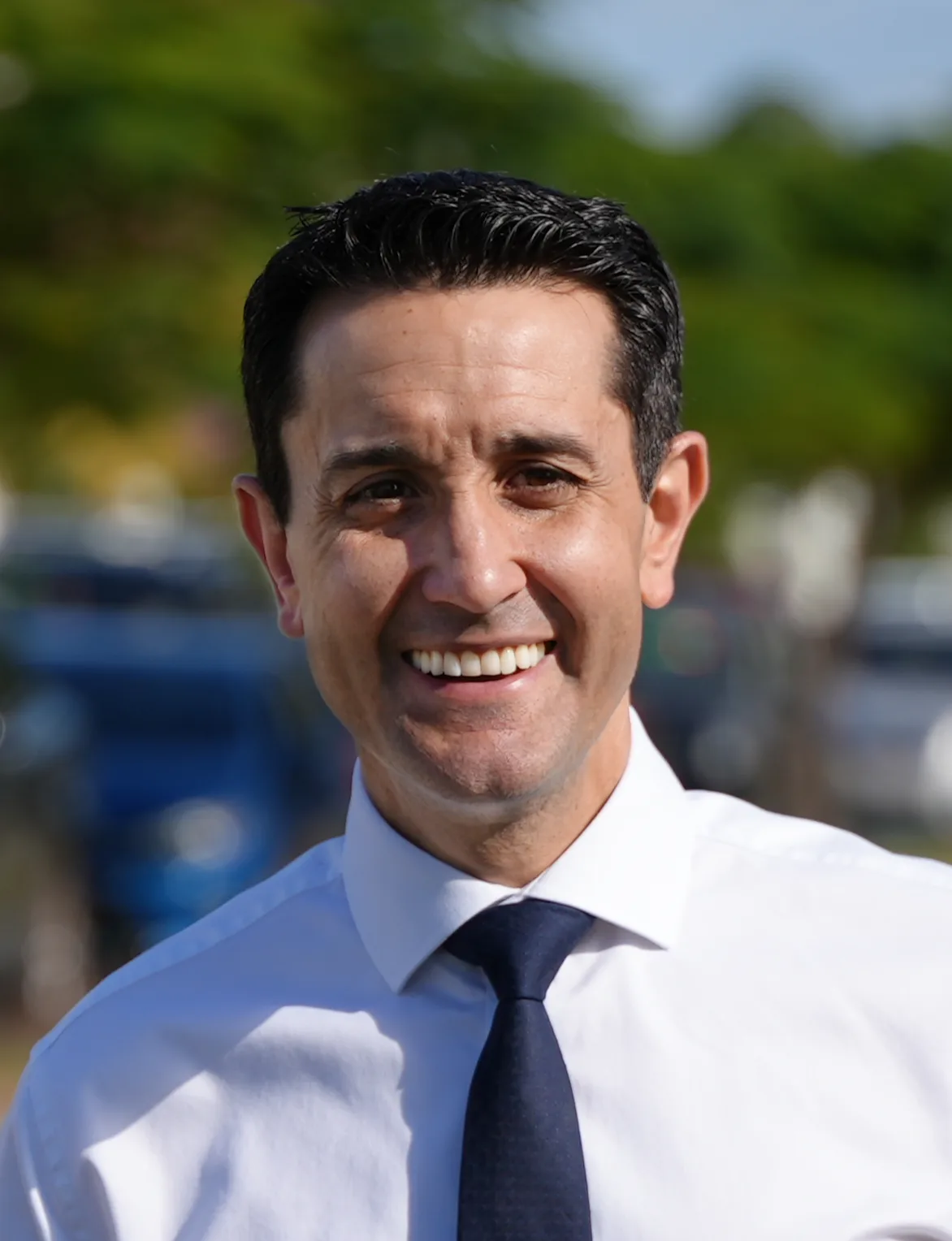 File photo
What happened
Key facts
- Queensland Premier David Crisafulli accused the federal government of creating a “siege on small businesses.” (per The Sydney Morning Herald).
- Crisafulli described Queensland’s GST distribution as containing an “inbuilt injustice” and said the state received an unfair share (per The Sydney Morning Herald).
- Crisafulli said Western Australia had received an “amazing deal” in GST distribution and said he did not begrudge it (per The Sydney Morning Herald).
- Crisafulli called for a discussion about GST distribution, saying it was important for the country (per The Sydney Morning Herald).
- Treasurer David Janetzki had also called for GST distribution to be reconsidered (per The Sydney Morning Herald).
- Crisafulli said he wanted people to come to Australia, embrace its values, work hard and be proud Australians (per The Sydney Morning Herald).
- Crisafulli said Queensland needed to stand up for itself and find common ground on issues dividing the political left and right (per The Sydney Morning Herald).
The brief
Queensland Premier David Crisafulli accused the federal government of placing small businesses “under siege,” linking his criticism to proposed or recent policy changes and a dispute over GST distribution. The Sydney Morning Herald reported that he made the remarks while addressing business leaders at a Centre for Economic Development Australia breakfast on Monday.
Crisafulli described Queensland’s GST distribution as an “inbuilt injustice” and argued the state was receiving an unfair share. He called for a discussion about changing the arrangement, saying the issue mattered to the country. Treasurer David Janetzki had also called for the distribution to be reconsidered, the newspaper reported.
Crisafulli referred to Western Australia’s position in the GST system, saying it had secured an “amazing deal.” He added that he did not begrudge Western Australia that outcome, while criticising what he characterised as an unfair arrangement for Queensland. His comments made GST distribution a central part of his appeal to challenge federal policy.
The speech also touched on other subjects. The Sydney Morning Herald said Crisafulli discussed critical minerals deals, a data-centre energy carve-out and an 80-20 federal-state funding split for the Bruce Highway.
It described much of the address as covering ground that had been discussed before, while identifying his challenge to Canberra over Queensland’s treatment as the main message. Crisafulli called on Queensland to stand up for itself and urged common ground on issues that divide the political left and right.
He also spoke about migration and national identity, saying he wanted people to come to Australia, embrace its values, work hard and take pride in being Australian. The Cairns Post headline separately characterised Crisafulli’s remarks as an attack on federal Treasurer Jim Chalmers over tax measures.
The Age headline likewise described his accusation as a “siege” on small business. Crisafulli’s remarks, as reported by the Sydney Morning Herald, centred on federal policies and Queensland’s GST share; the account does not detail a specific alternative distribution formula.
Why it matters
- Queensland’s share of GST revenue is the concrete issue Crisafulli identified, and he said the existing distribution was unfair.
- Small businesses are the group Crisafulli said federal policies were putting “under siege.”
- The GST question also involves Western Australia: Crisafulli described its deal as “amazing” while saying he did not begrudge it.
- Crisafulli and Treasurer David Janetzki both called for the GST distribution to be reconsidered.
What to watch next
- Whether Crisafulli’s call for a discussion about GST distribution leads to a proposal to reconsider the arrangement.
- Whether Treasurer David Janetzki continues to press for a rethink of GST distribution.
- Whether Crisafulli’s criticism of federal policies remains focused on GST distribution or also takes up the other subjects mentioned in his speech.
How it's being covered
Coverage analysisShow details4 source articles · 4 unique outlets · 2 distinct reportsOutlet political mix: Center Only· 4 CenterWhere the outlets are based: Asia 100%
- Coverage is currently concentrated among Center-rated outlets (4 of 4 rated sources); comparatively few Left or Right-rated outlets have published on the event.
- Coverage is currently concentrated among outlets based in Asia (4 of 4 geographically-identified sources).
How outlets' accounts compare
Timeline
Developments from this story's sources, dated background we compiled and fact-checked, and our earlier coverage. Each row says which.- The broader framework began with the federal-state fiscal arrangements established at Federation in 1901.Background · from our historical context
- Australia’s Constitution took effect, including section 96, which empowers the Commonwealth to grant financial assistance to states.Background · compiled and fact-checked by Updat3
- The Commonwealth Grants Commission, established in 1933, assesses each state’s revenue-raising capacity and spending needs, then recommends annual GST relativities.Background · from our historical context
- Parliament passed the A New Tax System (Goods and Services Tax) Act.Background · compiled and fact-checked by Updat3
- Australia introduced the GST, with its revenue distributed to states and territories.Background · compiled and fact-checked by Updat3
- In 2010, WA’s share fell below 70 cents per dollar of GST revenue, prompting the Commonwealth to commission a review of the system.Background · from our historical context
- David Crisafulli became leader of the Queensland Liberal National Party.Background · compiled and fact-checked by Updat3
- David Crisafulli became Queensland premier.Background · compiled and fact-checked by Updat3
How we got here
The immediate policy backdrop was the 2018 agreement to change how Australia’s goods and services tax (GST) revenue is shared among the states and territories. After a Productivity Commission review that year, the Turnbull government legislated a transition to a new horizontal fiscal equalisation system, including a minimum GST share, or “floor,” for each state.
The floor was phased in from 2019–20, with Commonwealth top-up payments intended to protect states during the change. The Commonwealth Grants Commission, established in 1933, assesses each state’s revenue-raising capacity and spending needs, then recommends annual GST relativities.
Original sources
4 articles from 4 outletsEvery story links to the reporting it was built from. How we choose sources
Spotted a factual error, a broken link or a misleading summary? Tell us.