
Delhi court issues bailable warrants for Dhruv Rathee in video defamation case
A Delhi court issued bailable warrants against YouTuber Dhruv Rathee in a defamation case linked to a video he posted in 2018. The court acted after a process server reported that Rathee’s house was locked while attempting to serve a summons.
AI-assisted synthesis · Based on 4 independent reports from 5 outlets · Full text read from 2 of 4 reportsHow it's made
View timeline · 6 entries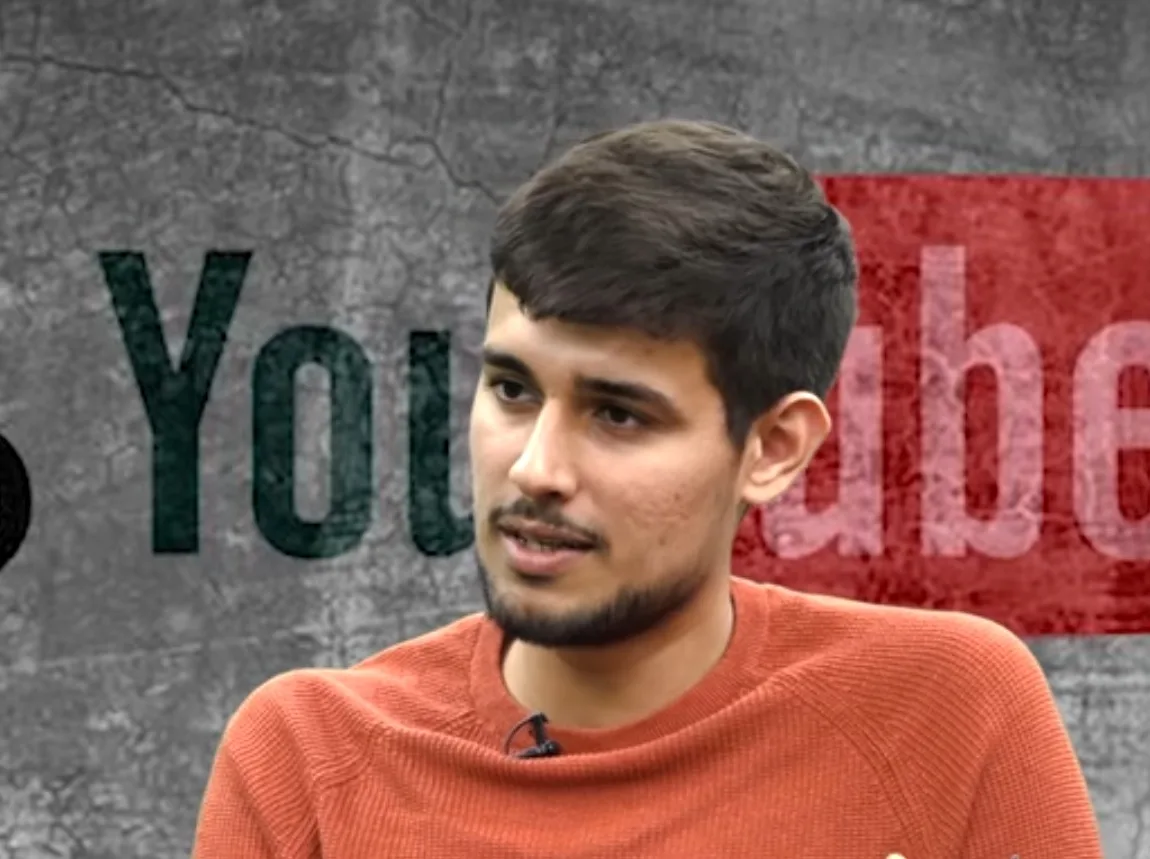 File photo
What happened
Key facts
- A Delhi court issued bailable warrants against Dhruv Rathee in a defamation case concerning a video he posted in May 2018.
- The complainant's counsel told the court that summons had gone unserved for several years because Rathee primarily lived abroad.
- The court was told Rathee was then in India and living at an address in Gurugram, Haryana.
- Judicial Magistrate Rahul Jain noted Rathee was first summoned on July 23, 2019, and that the complainant had continued to pursue service.
The brief
A Delhi court issued bailable warrants against YouTuber Dhruv Rathee in a defamation case concerning a video he posted in 2018. The Print reported that a process server said Rathee’s house was locked while attempting to deliver a summons; The Times of India also reported that the court had been told repeated efforts to serve him had failed.
The case was filed by a member of the Bharatiya Janata Party’s Information Technology cell and concerns a video Rathee published in May 2018. The Times of India said the video allegedly claimed that the party’s IT cell had tried to bribe a man to defame Rathee. That allegation is the subject of the complaint, not a finding established by the court in the reporting.
The Times of India reported that Arvind Kejriwal, who was then Delhi chief minister, retweeted the video. The reports connect Kejriwal to the video’s circulation but describe the warrants as being against Rathee. The Tribune’s headline likewise identifies the matter as a 2018 defamation case brought by a BJP member; it does not add further details about the court proceedings.
The court had issued fresh summons on October 12 after the complainant said service had repeatedly failed. The Times of India identified Judicial Magistrate Rahul Jain as the judge who ordered those summons and said Rathee was first summoned on July 23, 2019. The Print described the first summons as occurring in July 2019.
The accounts give context for the service problem from different courtroom statements. The Times of India reported that the complainant’s counsel, advocate Samaksh Sharma, said Rathee primarily lived abroad and that he was then in India at an address in Gurugram, Haryana.
The Print reported Sharma’s submission that Rathee ordinarily lived in Austria and had come to India for protests in Delhi by the Cockroach Janata Party. These are statements attributed to counsel, rather than independent findings about Rathee’s residence or travel.
The immediate basis reported for the warrants was the difficulty serving Rathee with court process: The Print cited the process server’s account of a locked house, while The Times of India recounted the complainant’s claim of unsuccessful service over several years.
The coverage establishes the issuance of bailable warrants, but does not report an arrest or a ruling on whether the defamation allegation is true.
Why it matters
- Rathee faces bailable warrants in a case over his May 2018 video, putting his participation in the court process at stake.
- The complainant, a BJP IT Cell member, is pursuing a defamation complaint over the video’s allegation concerning the party’s Information Technology cell.
- The process server’s report that Rathee’s house was locked, alongside the complainant’s counsel’s account of repeated failed service, explains the procedural issue behind the warrants.
- Kejriwal’s retweet links him to the video’s circulation, but the reporting identifies Rathee—not Kejriwal—as the subject of the warrants.
What to watch next
- Whether Rathee is served with the court process after the reported difficulty reaching him.
- Whether the court takes further procedural steps in the defamation case.
- Whether the complainant advances the allegation about the video’s claim concerning the BJP’s Information Technology cell.
- Whether Kejriwal’s retweet becomes relevant to any further reported court proceedings.
How it's being covered
Coverage analysisShow details5 source articles · 5 unique outlets · 4 distinct reportsCoverage mix: Center Only· 5 CenterWhere the outlets are based: Asia 100%
- Coverage is currently concentrated among Center-rated outlets (5 of 5 rated sources); comparatively few Left or Right-rated outlets have published on the event.
- Coverage is currently concentrated among outlets based in Asia (5 of 5 geographically-identified sources).
How outlets' accounts compare
1 framing difference · 3 uncorroborated claims · 2 information gaps- The Print foregrounds the process server’s report that Rathee’s house was locked and counsel’s account that Rathee ordinarily lived in Austria; The Times of India emphasizes the repeated unsuccessful attempts to serve summons and adds the reported Gurugram address.
- The Times of India attributes the claim about the video’s allegation to its account of the video; it presents the alleged bribery as an allegation, not an established finding.
- The Print reports the process server’s account that Rathee’s house was locked during an attempt to serve a summons.
- The Times of India reports the complainant’s counsel’s claim that attempts to serve Rathee had remained unsuccessful for several years.
- The reports do not give the complainant’s name or detail any court finding on the merits of the defamation allegation.
- Counsel’s statements about Rathee’s residence and location are attributed courtroom submissions; the reports do not independently establish them.
Timeline
Developments from this story's sources, dated background we compiled and fact-checked, and our earlier coverage. Each row says which.- India’s criminal-defamation provisions are in sections 499 and 500 of the Indian Penal Code, enacted in 1860.Background · from our historical context
- Article 19(1)(a) of the Constitution, which took effect on January 26, 1950, protects freedom of speech and expression; Article 19(2) permits reasonable restrictions, including those relating to defamation.Background · from our historical context
- The Supreme Court considered the boundary between those provisions in *Subramanian Swamy v. Union of India*, decided May 13, 2016.Background · from our historical context
- The dispute began with a video Rathee posted in May 2018.Background · from our historical context
- The court noted that Rathee was first summoned in July 2019.
- The court issued fresh summons to Rathee on October 12 after repeated attempts to serve him had been unsuccessful.
How we got here
On October 12, 2026, the Delhi court issued fresh summons to Dhruv Rathee after earlier efforts to serve him had not succeeded; a process server reported that his house was locked. The court had first summoned Rathee in July 2019, according to the case history reported in 2026.
The complainant’s counsel told the court Rathee was in India and living at a Gurugram address, while Rathee’s counsel said he ordinarily resided in Austria and had come to Delhi for protests by the Cockroach Janata Party. The dispute began with a video Rathee posted in May 2018.
Original sources
5 articles from 5 outletsEvery story links to the reporting it was built from. How we choose sources
Spotted a factual error, a broken link or a misleading summary? Tell us.