
Economists expect Bank of Japan to raise rates to 1.50% in December
A Reuters poll found that 69% of economists expect the Bank of Japan to raise its policy rate to 1.50% in the fourth quarter, with most of those who named a month choosing December. The Japan Times reported a separate survey in which 83% expected a December increase from the current 1.25% rate.
AI-assisted synthesis · Based on 6 outlets' reporting · Article text read from 1 of 6 outlets · short excerpt from 1 more · 1 article captured only in partHow it's made
View timeline · 12 entries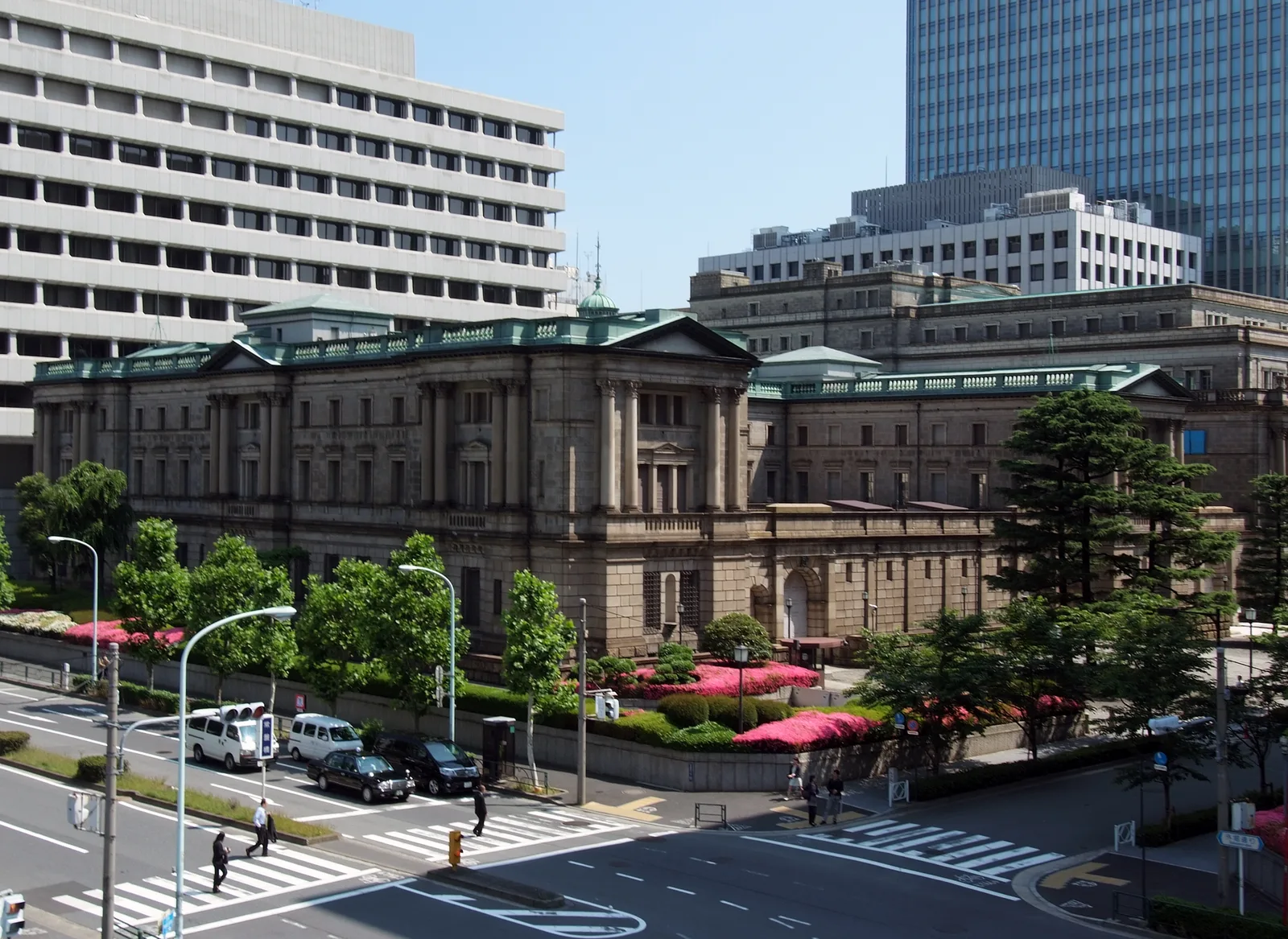 File photo
What happened
Key facts
- The Reuters poll found that 60% of economists expected the rate to reach 1.75% by the end of June 2027 (per investinglive.com).
- The Japan Times reported that 83% of economists in a recent survey expected the Bank of Japan to raise its 1.25% rate at a December meeting (per The Japan Times).
- In the previous month’s survey cited by The Japan Times, 35% expected a December increase, while January was the most popular month (per The Japan Times).
- The Japan Times reported that the share expecting rate increases every three months rose to 67%, from 46% in the previous survey (per The Japan Times).
The brief
A Reuters poll found that 69% of economists—54 of 78 respondents—expect the Bank of Japan to raise its policy rate to 1.50% in the fourth quarter. Among those who specified a month, about 80% selected December, while 2% chose the meeting ending October 30. The poll ran from October 13 to 19.
The Japan Times reported a separate survey in which 83% of economists expected a December increase from the Bank of Japan’s current 1.25% rate. In the previous month’s survey, 35% had forecast a December move and January was the most popular choice. The two surveys report different shares for December expectations; their reported figures describe separate polls.
The Reuters poll also points to expectations of further increases after the projected December move. Sixty percent of respondents anticipated a rate of 1.75% by the end of June 2027. The Japan Times reported that 67% of respondents in its survey expected the Bank of Japan to raise rates every three months, compared with 46% in the previous survey.
On the eventual peak, Reuters found 51% of economists now expected the policy rate to reach 2.00% or higher, up from 40% in September. The Reuters report also said nearly two-thirds expected the government to keep new bond issuance below 40 trillion yen for fiscal 2027.
The Reuters poll included economists’ views on the yen: nearly three-quarters said further dissent by government-nominated board members at the next rate increase could weigh on the currency. The report placed the yen about 4% above its 2026 low, near 164 per dollar.
The Japan Times’ survey adds a measure of how expectations for the pace have shifted: the proportion forecasting increases at three-month intervals rose from 46% to 67%. Together, the reported survey results center on a December rate decision, while also recording expectations about the pace and scale of later increases.
Why it matters
- The expected policy move is specific: 69% in the Reuters poll forecast a rise to 1.50% in the fourth quarter, and about 80% of respondents naming a month chose December.
- Economists surveyed by Reuters also anticipate a higher rate path: 60% expect 1.75% by the end of June 2027, while 51% see an eventual peak of at least 2.00%.
- The Reuters poll links possible further dissent by government-nominated board members at the next increase to pressure on the yen; nearly three-quarters of respondents identified that possibility.
- Nearly two-thirds of economists in the Reuters poll expect the government to keep fiscal 2027 new bond issuance below 40 trillion yen.
What to watch next
- Whether the Bank of Japan raises its policy rate at the December meeting, as expected by 69% in the Reuters poll and 83% in the survey reported by The Japan Times.
- Whether the Bank of Japan’s next rate increase draws further dissent from government-nominated board members, a possibility nearly three-quarters of Reuters poll respondents said could weigh on the yen.
- Whether the policy rate reaches 1.75% by the end of June 2027, the level expected by 60% of Reuters poll respondents.
- Whether the government keeps new bond issuance below 40 trillion yen for fiscal 2027, as nearly two-thirds of economists in the Reuters poll expected.
How it's being covered
Coverage analysisShow details6 source articles · 6 unique outletsOutlet political mix: Center Only· 4 Center · 2 unratedWhere the outlets are based: US/Canada 50% · Asia 50%
- Coverage is currently concentrated among Center-rated outlets (4 of 4 rated sources); comparatively few Left or Right-rated outlets have published on the event.
One source is from a wire service (AP, Reuters, AFP or Bloomberg), whose reporting other outlets often republish.
How outlets' accounts compare
Timeline
Developments from this story's sources, dated background we compiled and fact-checked, and our earlier coverage. Each row says which.- The Bank of Japan cut its short-term interest rate effectively to zero.Background · compiled and fact-checked by Updat3
- The Bank of Japan adopted quantitative easing and used bank reserves as its operating target.Background · compiled and fact-checked by Updat3
- The framework for that policy began with the BOJ’s January 22, 2013, agreement with the Japanese government to pursue a 2% inflation target.Background · from our historical context
- On April 4, 2013, Governor Haruhiko Kuroda launched “quantitative and qualitative monetary easing,” expanding asset purchases to raise prices and economic activity.Background · from our historical context
- The Bank of Japan introduced a negative short-term interest rate.Background · compiled and fact-checked by Updat3
- The Bank of Japan adopted yield-curve control, targeting the 10-year government-bond yield around zero.Background · compiled and fact-checked by Updat3
- In July 2018, it made yield-curve control more flexible while maintaining its 2% inflation target.Background · from our historical context
- Kazuo Ueda took office as governor of the Bank of Japan.Background · compiled and fact-checked by Updat3
- The March 2024 decision marked the end of negative rates and yield-curve control, while retaining government-bond purchases as part of monetary policy.Background · from our historical context
- The Bank of Japan raised its policy rate to about 0.25% and announced plans to reduce government-bond purchases.Background · compiled and fact-checked by Updat3
- The Bank of Japan raised its policy rate to 0.5%.Background · compiled and fact-checked by Updat3
- ScheduledThe Reuters poll found that 60% of economists expected the rate to reach 1.75% by the end of June 2027.
How we got here
The Bank of Japan’s move toward higher rates followed its March 19, 2024, decision to end negative interest rates and its July 31, 2024, increase in the short-term policy rate to about 0.25%. The framework for that policy began with the BOJ’s January 22, 2013, agreement with the Japanese government to pursue a 2% inflation target.
On April 4, 2013, Governor Haruhiko Kuroda launched “quantitative and qualitative monetary easing,” expanding asset purchases to raise prices and economic activity. The BOJ introduced a negative short-term interest rate on January 29, 2016, and adopted yield-curve control on September 21, 2016, targeting the 10-year government bond yield as well as short-term rates.
Original sources
3 of 6 articles · Asia · Show allEvery story links to the reporting it was built from. How we choose sources
Spotted a factual error, a broken link or a misleading summary? Tell us.