
Ecuador judge orders Luisa Gonzalez held before trial
An Ecuadorian judge ordered pretrial detention for opposition politician Luisa Gonzalez in a case examining alleged irregularities in campaign financing. Prosecutors allege that about $500,000 may have moved through companies to fund campaign advertising, while Gonzalez rejects the allegations and calls the case political persecution.
AI-assisted synthesis · Based on 4 independent reports from 5 outlets · Article text read from 1 of 4 reportsHow it's made
View timeline · 7 entries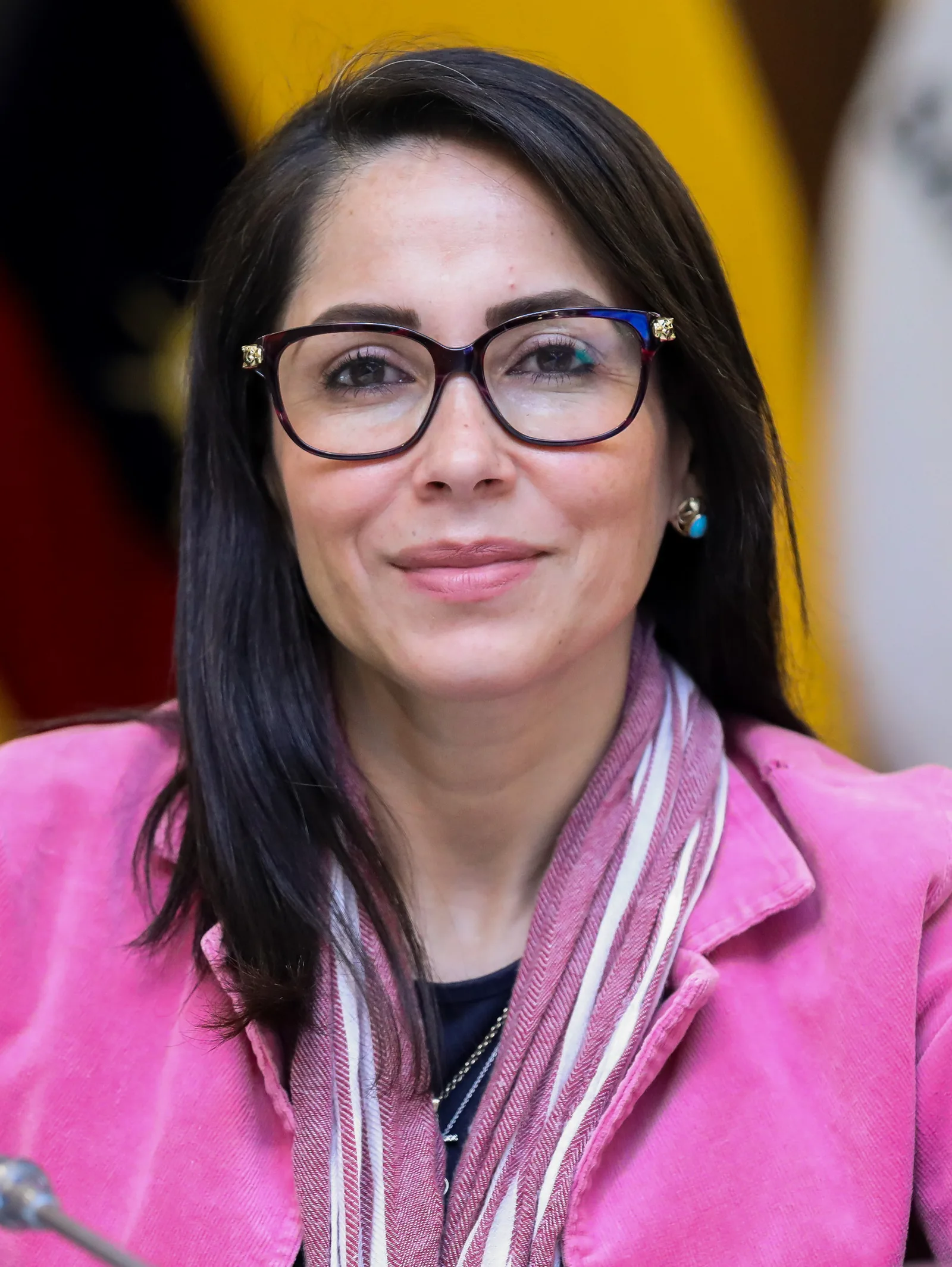 File photo
What happened
Key facts
- An Ecuadorian judge ordered pretrial detention for Luisa Gonzalez (per aa.com.tr).
- Gonzalez rejected the allegations and described the case as political persecution (per aa.com.tr).
- Primicias reported that Gonzalez was detained during an operation in Manabi province on Oct. 22 (per aa.com.tr).
- Latin Times described Luisa González as an ex-candidate and said Ecuador arrested her over alleged Venezuelan campaign cash (per latintimes.com, aa.com.tr).
The brief
An Ecuadorian judge ordered pretrial detention for opposition politician Luisa Gonzalez in an investigation into alleged irregularities in the financing of the Citizens’ Revolution’s 2023 presidential campaign. The Attorney General’s Office announced the ruling, which concerns alleged money laundering linked to campaign financing, according to Anadolu Agency.
Prosecutors are examining where campaign contributions came from and whether they were justified, as well as payments that may not have been properly reported to electoral authorities. They allege that approximately $500,000 may have moved through a network of companies to pay for campaign advertising between May and October 2023.
Those details are prosecutorial allegations; the account does not describe them as findings of guilt. Primicias reported that Gonzalez was detained during an operation in Manabi province on Oct. 22. The judge’s pretrial detention order concerns Gonzalez.
Anadolu Agency’s account also says two other people were investigated in connection with alleged money laundering, but does not identify them in the article text. The Attorney General’s Office said the formal instruction period will last 90 days. During that period, prosecutors are examining the contributions and advertising payments described in the case.
The account gives no trial date or final court ruling. Gonzalez, who represented the Citizens’ Revolution movement in the 2023 and 2025 presidential elections, has rejected the allegations and called the case political persecution. The account reports her position alongside the prosecutors’ claims; it does not report a court determination on the allegations.
Yahoo and Al Jazeera headlines also describe a judge’s order for pretrial detention, while a teleSUR English headline says prosecutors sought preventive detention. Latin Times’ headline characterizes Gonzalez as arrested over alleged Venezuelan campaign cash.
The article text from Anadolu Agency says prosecutors allege campaign funds moved through companies, but does not identify Venezuela as the source of the money. The 90-day formal instruction period is the stated next phase of the case.
Why it matters
- Gonzalez faces pretrial detention, a direct legal consequence of the judge’s order in the campaign-financing investigation.
- The alleged $500,000 in campaign-advertising funds is central to prosecutors’ inquiry into contributions and payments that may not have been reported to electoral authorities.
- The case concerns the Citizens’ Revolution’s 2023 presidential campaign, which Gonzalez represented.
What to watch next
- Whether prosecutors complete the formal instruction phase within the 90-day period stated by the Attorney General’s Office.
- Whether prosecutors establish the origin and justification of the contributions and advertising payments under examination.
- Whether Gonzalez’s pretrial detention status changes as the case proceeds.
How it's being covered
Coverage analysisShow details5 source articles · 5 unique outlets · 4 distinct reportsOutlet political mix: Mostly Center· 1 Left · 2 Center · 2 unratedWhere the outlets are based: Middle East 40% · US/Canada 20% · Other 40%
How outlets' accounts compare
Timeline
Developments from this story's sources, dated background we compiled and fact-checked, and our earlier coverage. Each row says which.- Ecuadorian voters approved a new constitution in a referendum.Background · compiled and fact-checked by Updat3
- Ecuador’s campaign-finance rules are rooted in the Organic Law on Elections and Political Organizations, commonly called the Code of Democracy, published on April 27, 2009.Background · from our historical context
- Reforms to the Code of Democracy approved in 2020 further changed electoral procedures and campaign oversight.Background · from our historical context
- Luisa González took office as a member of Ecuador’s National Assembly.Background · compiled and fact-checked by Updat3
- President Guillermo Lasso dissolved Ecuador’s National Assembly.Background · compiled and fact-checked by Updat3
- González lost Ecuador’s presidential runoff to Daniel Noboa.Background · compiled and fact-checked by Updat3
- González lost a second presidential runoff to Noboa.Background · compiled and fact-checked by Updat3
How we got here
She ran again in 2025, reaching the April 13 runoff against Noboa and losing a second time. González had served in the National Assembly from 2021 until its dissolution in 2023. Her political movement, Citizen Revolution, grew out of the movement associated with former president Rafael Correa, who governed Ecuador from 2007 to 2017.
Correa’s presidency reshaped the country’s political landscape, including through the 2008 constitution, which expanded the state’s role and established a new institutional framework. Ecuador’s campaign-finance rules are rooted in the Organic Law on Elections and Political Organizations, commonly called the Code of Democracy, published on April 27, 2009.
Original sources
5 articles from 5 outletsEvery story links to the reporting it was built from. How we choose sources
Spotted a factual error, a broken link or a misleading summary? Tell us.