
Eli Lilly shares jump as weight-loss drug sales top expectations
Eli Lilly raised its earnings forecast as strong demand for its weight-loss drugs lifted sales above expectations and sent shares higher, highlighting the growing commercial impact of treatments such as Zepbound.
AI-assisted synthesis · Based on 5 outlets' reporting · Article text read from 1 of 5 outletsHow it's made
View timeline · 6 entries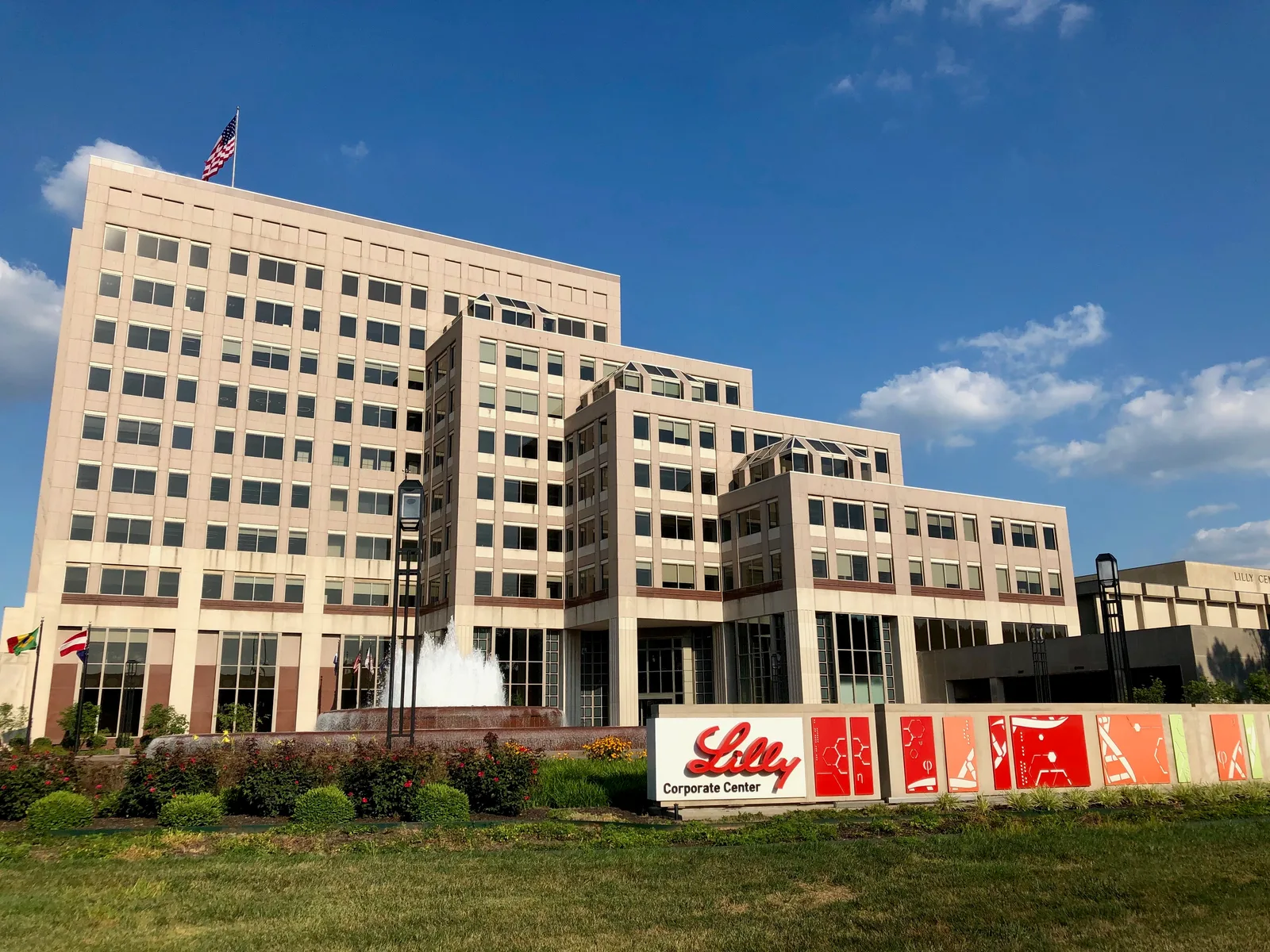 File photo
What happened
Key facts
- The headline identifies Eli Lilly as the company involved.
- The available source verifies a headline reporting a surge in Eli Lilly’s profits; it does not substantiate that the company’s shares jumped.
- The available source does not substantiate that sales of Eli Lilly’s weight-loss drugs topped expectations.
- The headline does not identify a specific weight-loss drug.
- The headline gives no sales figures, earnings-forecast figures, or date for the share movement.
The brief
Eli Lilly raised its full-year earnings forecast as demand for its weight-loss drugs lifted sales, according to the New York Post. The paper said sales of Mounjaro and Zepbound each exceeded expectations by more than 5%, strengthening the company’s position in the obesity-drug market.
Reuters and RTÉ headlines also reported that Lilly raised its outlook on weight-loss drug sales; Reuters’s headline described demand for its weight-loss shot as soaring. Lilly’s shares climbed 6%, and the New York Post put the company’s valuation at $1.3 trillion. GuruFocus’s headline said Lilly reached a record high, but did not specify a share-price figure.
The New York Post also cited Reuters for a comparison with Novo Nordisk, the maker of Wegovy, which it said had a valuation of about $171 billion. The New York Post said Lilly’s recent acquisitions of AtaiBeckley and Curevo reduced its profit outlook. It attributed that account to Reuters.
The article quoted Halter, a shareholder who owns more than 16,000 Lilly shares, saying the company was spending money now to make money in the future. The excerpt does not quantify the acquisitions’ effect on earnings or give details of the deals.
The article also cited separate study results for oral weight-loss drugs: users of oral Wegovy lost about 14% of their body weight over 64 weeks, while patients taking Foundayo lost roughly 11% over 72 weeks. Those figures describe the reported study outcomes; the excerpt does not give study designs or further comparisons between the medicines.
The company’s raised earnings forecast and the reported sales figures are the central financial developments. The New York Post linked the forecast increase to Lilly’s weight-loss drug sales, while its account also noted acquisition-related costs as a drag on the profit outlook.
Reuters and RTÉ headlines characterized the outlook change as a revenue increase, while the Financial Times headline framed the story around rising profits. The accounts do not provide the updated forecast figures or specify how much revenue or profit the medicines generated.
The New York Post’s report supplies the sales comparison, share movement, valuation figures, acquisition information and study results; the other outlet headlines offer narrower descriptions of the outlook change, stock movement, record high and profit surge.
Why it matters
- If the reported sales and earnings forecast are accurate, demand for Mounjaro and Zepbound is translating into stronger near-term revenue expectations for Eli Lilly, affecting investors’ assessment of the company’s growth. Continued demand may also increase pressure on Lilly to expand supply, which matters to patients seeking treatment; the report does not establish that production or access has changed.
What to watch next
- Whether Eli Lilly provides updated full-year earnings forecast figures.
- Whether the company gives more detail on Mounjaro and Zepbound sales.
- Whether Eli Lilly quantifies the effect of its AtaiBeckley and Curevo acquisitions on its profit outlook.
How it's being covered
Coverage analysisShow details6 source articles · 5 unique outletsOutlet political mix: Mostly Center· 4 Center · 1 RightWhere the outlets are based: Europe 40% · US/Canada 20% · Other 40%
- Coverage is currently concentrated among Center-rated outlets (4 of 5 rated sources); comparatively few Left-rated outlets have published on the event.
One source is from a wire service (AP, Reuters, AFP or Bloomberg), whose reporting other outlets often republish.
How outlets' accounts compare
Timeline
Developments from this story's sources, dated background we compiled and fact-checked, and our earlier coverage. Each row says which.- Lilly, founded by Eli Lilly in Indianapolis in 1876, had built its business around developing and manufacturing medicines long before the arrival of these treatments.Background · from our historical context
- The FDA approved exenatide, marketed as Byetta, to treat type 2 diabetes.Background · compiled and fact-checked by Updat3
- The FDA approved Novo Nordisk’s semaglutide as Wegovy for chronic weight management.Background · compiled and fact-checked by Updat3
- The FDA had approved the same active ingredient as Mounjaro for type 2 diabetes on May 13, 2022; that approval preceded Zepbound’s use for obesity.Background · from our historical context
- Eli Lilly’s immediate commercial backdrop was the launch of Zepbound, its tirzepatide drug for chronic weight management, after the U.S. Food and Drug Administration approved it on November 8, 2023.Background · from our historical context
- On December 20, 2024, the FDA also approved Zepbound for adults with obesity and moderate-to-severe obstructive sleep apnea.Background · from our historical context
How we got here
Eli Lilly’s immediate commercial backdrop was the launch of Zepbound, its tirzepatide drug for chronic weight management, after the U.S. Food and Drug Administration approved it on November 8, 2023. The FDA had approved the same active ingredient as Mounjaro for type 2 diabetes on May 13, 2022; that approval preceded Zepbound’s use for obesity.
On December 20, 2024, the FDA also approved Zepbound for adults with obesity and moderate-to-severe obstructive sleep apnea. The FDA approved the GLP-1 drug exenatide in 2005 for type 2 diabetes, and approved Novo Nordisk’s semaglutide as Wegovy for chronic weight management in June 2021.
Original sources
2 of 6 articles · US/Canada · Show allEvery story links to the reporting it was built from. How we choose sources
Spotted a factual error, a broken link or a misleading summary? Tell us.