
Five European NATO powers pledge a larger security role and reaffirm US ties
France, Germany, Italy, Poland and the UK pledged to take greater responsibility for European security while reaffirming the United States’ role as an indispensable ally. Their joint statement says European allies should gain more responsibility within NATO, while maintaining support for Ukraine.
AI-assisted synthesis · Based on 5 outlets' reporting · Article text read from 2 of 5 outletsHow it's made
View timeline · 4 entries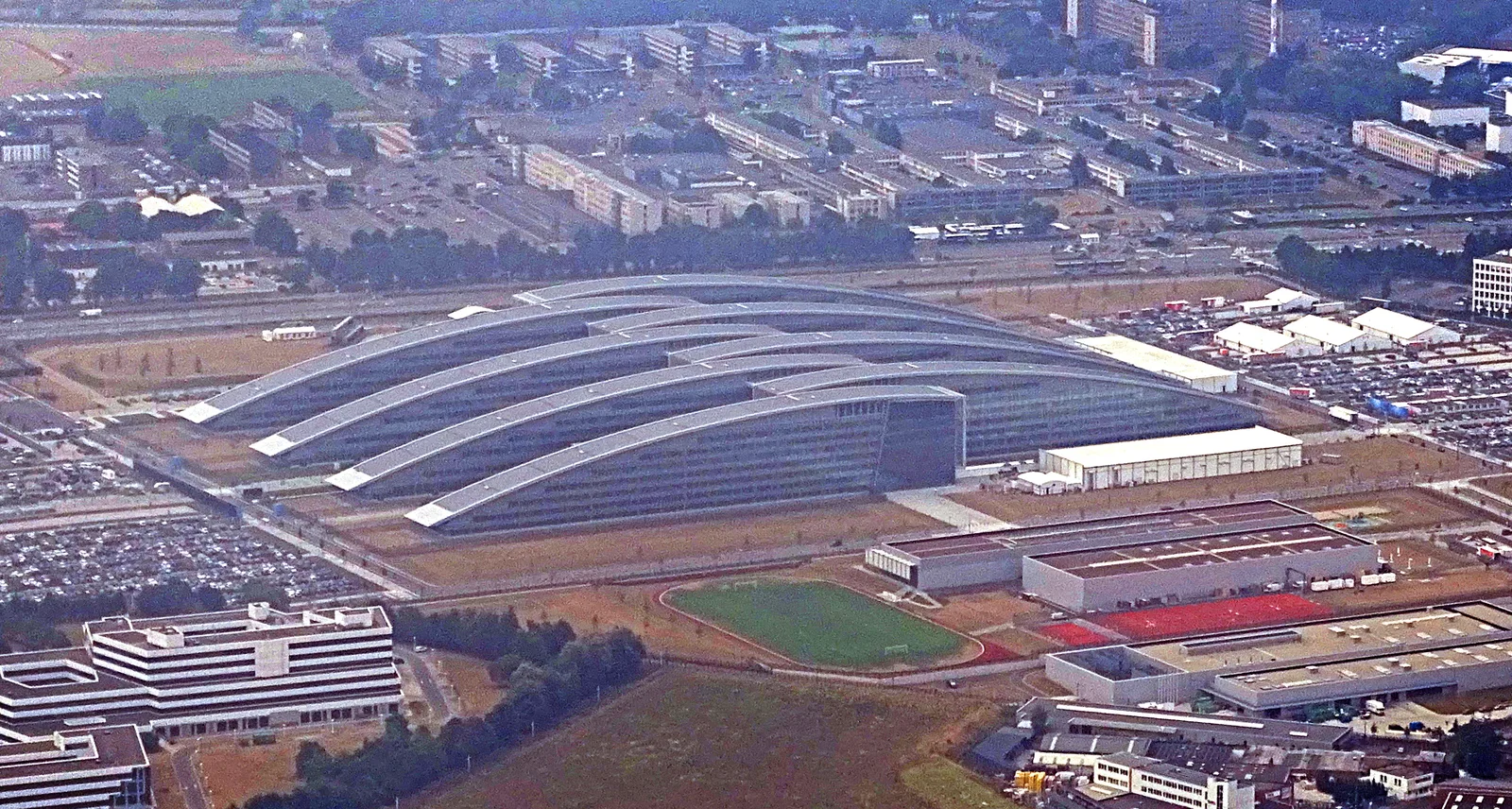 File photo
What happened
Key facts
- A draft statement said that European allies should be empowered within NATO as they assume greater responsibility (per cnbctv18.com, turkiyetoday.com).
- The draft cited Russia’s war against Ukraine, alleged violations of allied airspace, sabotage and hybrid attacks as security concerns (per cnbctv18.com, Bloomberg, turkiyetoday.com).
- The draft said the five countries would continue supporting Ukraine in its fight against Russian military actions (per cnbctv18.com).
- The draft highlighted efforts to counter Russia’s shadow fleet and its continued violations of European airspace (per cnbctv18.com, turkiyetoday.com).
The brief
France, Germany, Italy, Poland and the UK pledged to assume greater responsibility for European security while reaffirming the United States’ role as an indispensable ally. The five countries’ defense officials met at the French Defense Ministry in Paris on Oct.
26, 2026, and issued a joint statement setting out their position on Europe’s role in NATO and its security priorities. The statement’s central proposal is to increase European allies’ capacity and responsibility within NATO. It presents a stronger European role alongside continued US participation, rather than as a replacement for the alliance with Washington.
The five governments thus paired a call for greater European responsibility with an explicit endorsement of the United States as an indispensable ally. The account published by CNBC TV18 describes a draft statement that characterises Russia as the most acute long-term threat to continental security.
It cites Russia’s war against Ukraine, alleged breaches of allied airspace, sabotage and increasing hybrid attacks across multiple domains. These are the E5 statement’s stated grounds for its security assessment; the material does not separately establish the responsibility for each cited incident.
The draft also commits the five countries to continuing support for Ukraine against Russian military actions. It highlights efforts to counter Russia’s shadow fleet and its continuing violations of European airspace. Those commitments connect the proposed increase in Europe’s NATO role to both support for Ukraine and the security concerns identified in the statement.
The immediate backdrop in the Turkish outlet’s account is uncertainty over Washington’s plans to reduce its military presence in Europe. That context makes the E5’s dual message consequential: the five governments call for Europe to assume more responsibility, while publicly reaffirming the US alliance.
The account does not specify the scale or timing of any proposed US reduction. German Chancellor Merz had made a related argument in a Bloomberg Television interview on Oct. 19, saying Europe should treat the threat more seriously, strengthen its defenses and lessen its dependence on the United States while continuing to support Ukraine.
His remarks align with the draft’s call for a stronger European contribution, although the joint statement also stresses the continuing importance of the US alliance. The E5 group’s next meeting is scheduled to take place in Rome in March 2027.
That gathering will provide a further occasion for the five countries to discuss their shared security agenda; the reported statement identifies the direction of policy but does not detail specific new capabilities, spending commitments or implementation steps.
Why it matters
- The five governments’ proposed shift concerns how France, Germany, Italy, Poland and the UK divide responsibility for European security within NATO, while retaining the US role they call indispensable.
- Ukraine is directly affected by the E5’s stated commitment to continued support against Russian military actions.
- The draft identifies European airspace security and efforts to counter Russia’s shadow fleet as specific areas of concern for the five governments.
- The Turkish outlet links the pledge to uncertainty about possible US reductions in its European military presence, a concern that bears on the alliance’s division of security responsibilities.
What to watch next
- Whether France, Germany, Italy, Poland and the UK turn the call for greater European responsibility within NATO into specific capabilities or commitments.
- Whether the five governments maintain the draft’s stated support for Ukraine against Russian military actions.
- Whether the E5 group’s next meeting takes place in Rome in March 2027.
- How the E5 governments address the reported uncertainty over Washington’s plans to reduce its military presence in Europe.
How it's being covered
Coverage analysisShow details5 source articles · 5 unique outletsOutlet political mix: Center Only· 3 Center · 2 unratedWhere the outlets are based: Middle East 40% · Europe 20% · Other 40%
- Coverage is currently concentrated among Center-rated outlets (3 of 3 rated sources); comparatively few Left or Right-rated outlets have published on the event.
One source is from a wire service (AP, Reuters, AFP or Bloomberg), whose reporting other outlets often republish.
How outlets' accounts compare
1 framing difference · 4 uncorroborated claims · 1 information gap- CNBC TV18 foregrounds the draft’s assessment of Russia as the most acute long-term threat and its references to Ukraine, airspace violations, sabotage, hybrid attacks and the shadow fleet; Türkiye Today foregrounds the pledge to take greater responsibility and uncertainty about US military presence.
- CNBC TV18 presents the Russia threat assessment and associated security concerns as language in a draft joint statement; Türkiye Today reports a joint statement announcing the greater-responsibility pledge.
- Türkiye Today reports uncertainty over Washington’s plans to reduce its military presence but does not provide a scale or schedule for a possible reduction.
- The E5 governments described the United States as an “indispensable ally.”
- Merz said Europe should strengthen its defenses and reduce its reliance on the United States while continuing to support Ukraine.
- The sources do not give details of specific new European defense capabilities, spending commitments or implementation steps.
Timeline
Developments from this story's sources, dated background we compiled and fact-checked, and our earlier coverage. Each row says which.- The North Atlantic Treaty, signed on 4 April 1949, established NATO and its collective-defence obligation.Background · from our historical context
- Poland, Hungary and the Czech Republic joined NATO.Background · compiled and fact-checked by Updat3
- The United States and European Union imposed sanctions on Russian individuals and businesses after Russia took control of Crimea.Background · compiled and fact-checked by Updat3
- Russia launched its full-scale invasion of Ukraine on 24 February 2022.Background · from our historical context
How we got here
The commitment followed years of debate over how much European allies should contribute to NATO and how they could take on more responsibility while retaining the United States’ role in the alliance. The North Atlantic Treaty, signed on 4 April 1949, established NATO and its collective-defence obligation.
Russia seized and annexed Crimea in March 2014 after Ukraine’s 2013–14 Euromaidan protests and the departure of President Viktor Yanukovych. Armed conflict between Ukrainian forces and Russia-backed separatists began in eastern Ukraine in 2014; the Minsk agreements of September 2014 and February 2015 sought to halt the fighting but did not settle the conflict.
Original sources
1 of 5 articles · Global · Show allEvery story links to the reporting it was built from. How we choose sources
Spotted a factual error, a broken link or a misleading summary? Tell us.