
Tafoya challenges Flanagan over Minnesota fraud oversight
Michele Tafoya challenged Peggy Flanagan during a Minnesota Senate debate over fraud, including a scheme the New York Post says bilked taxpayers of $250 million in COVID-era funds. Flanagan said the governor held oversight, while Tafoya accused her administration of allowing fraud.
AI-assisted synthesis · Based on 5 outlets' reporting · Article text read from 1 of 5 outletsHow it's made
View timeline · 9 entries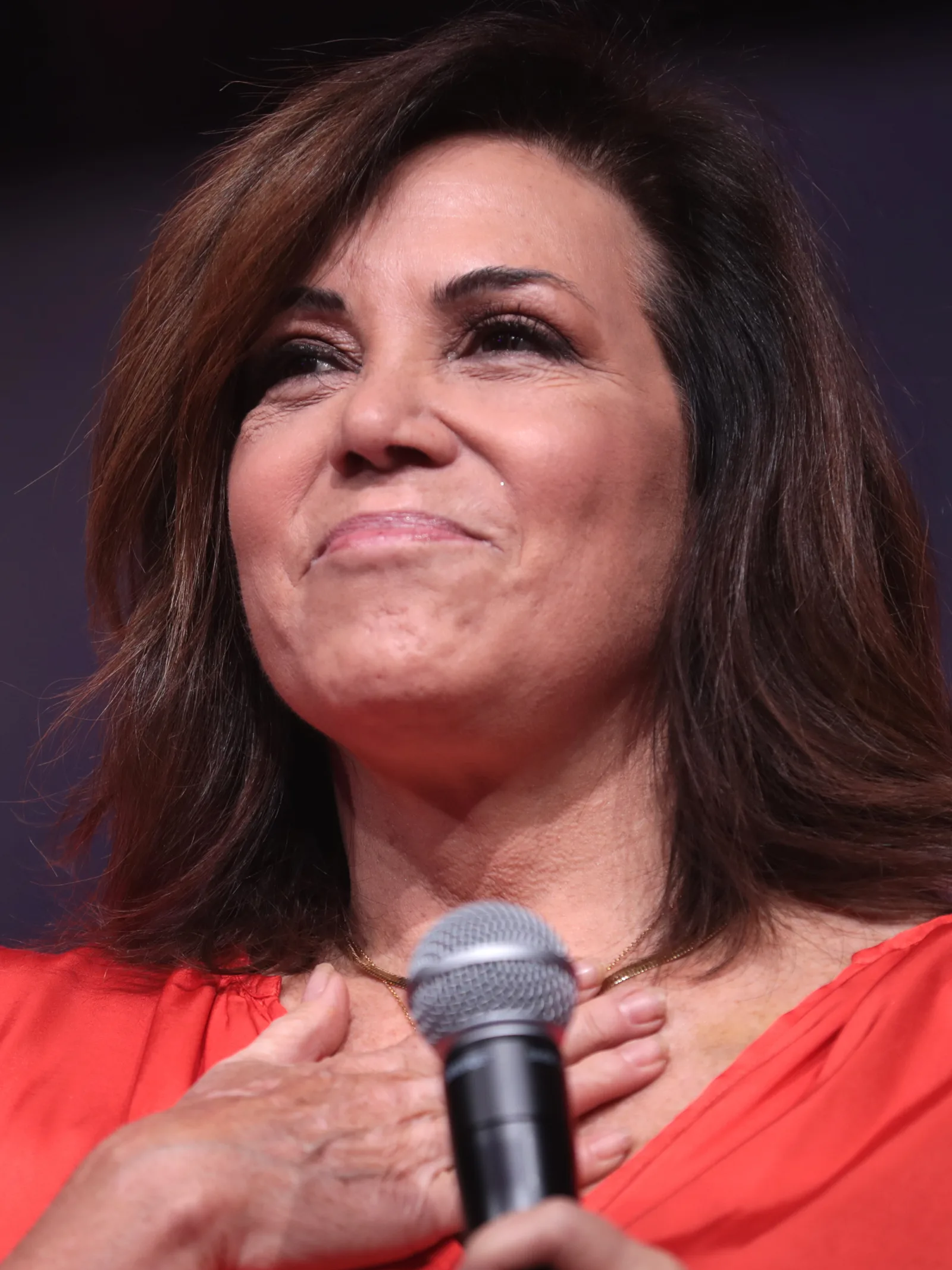 File photo
What happened
Key facts
- Asked whether she had ownership of fraud during the administration's two terms, Flanagan said the governor had oversight (per New York Post).
- Tafoya said that only one of the candidates had let $9 billion walk out the door to fraud (per New York Post).
- The Star Tribune headline says Trump ties and a fraud crisis put Tafoya and Flanagan on the defensive during the Senate debate (per startribune.com, New York Post).
- The Pioneer Press headline says Trump and fraud featured in the Tafoya-Flanagan Senate debate (per twincities.com, New York Post).
The brief
The New York Post says a scheme tied to Feeding Our Future bilked taxpayers of $250 million in COVID-era funds. The outlet describes Feeding Our Future as a nonprofit and reports that Republican Senate candidate Michele Tafoya challenged Minnesota Lt. Gov. Peggy Flanagan about fraud in the state during a debate. The report does not establish the allegations made in the candidates’ exchange as findings about either candidate’s personal responsibility. The debate took place at Minnesota Public Radio headquarters in St. Paul, according to the New York Post. The outlet identifies Flanagan as a Democratic candidate for the U.S. Senate and Tafoya as her Republican opponent. Its account centers on a question to Flanagan about whether she had “any ownership over the fraud that occurred over the last two terms of this administration.”
Flanagan answered that the governor had said responsibility rested with him and that he had oversight. The New York Post reports her answer as a statement about the governor’s role; it does not provide further detail about what oversight involved. The exchange therefore records Flanagan’s account of responsibility, rather than independently establishing how the administration handled the scheme. Tafoya responded with a broader accusation about fraud, saying that only one of the candidates had let $9 billion “walk out the door to fraud.” That figure is Tafoya’s claim in the debate as reported by the New York Post. The article does not explain its calculation or identify which cases it includes, so it should not be treated as a figure verified by the account. The outlet also reports that Tafoya challenged Flanagan over fraud scandals in Minnesota. Its article links the $250 million scheme to Feeding Our Future but does not describe the scheme’s operation beyond that connection. The $250 million figure and Tafoya’s $9 billion claim refer to different scopes in the account and should not be conflated. The Washington Post headline characterizes its coverage as takeaways from the only Minnesota Senate debate between the candidates. The Star Tribune headline emphasizes Trump ties and a fraud crisis, while the Pioneer Press headline says Trump and fraud featured in the debate. MPR News describes the candidates as squaring off in a “testy” debate. Those headlines identify different angles, but provide no additional detail about the exchange or the fraud scheme. The New York Post reports that Flanagan was leading Tafoya by 2.6 percentage points in the race, citing the RealClearPolitics polling aggregator. The debate placed their competing statements about oversight and fraud before voters: Flanagan pointed to the governor’s oversight role, while Tafoya assigned responsibility to her administration in her remarks. The article does not report a subsequent decision or action by either candidate concerning the scheme.
Why it matters
- The New York Post reports that taxpayers were bilked of $250 million in COVID-era funds by a scheme tied to the nonprofit Feeding Our Future.
- The debate raised questions about oversight: Flanagan said the governor held oversight, while Tafoya accused the administration of allowing fraud.
- Tafoya cited $9 billion in fraud, but the article does not specify how she calculated that amount or which cases it covers.
- The New York Post reports a 2.6-percentage-point lead for Flanagan, citing the RealClearPolitics polling aggregator.
What to watch next
- Whether Flanagan provides further detail about the governor’s oversight role in the scheme.
- Whether Tafoya explains the basis and scope of her $9 billion fraud claim.
- Whether either candidate makes further statements about the Feeding Our Future scheme.
How it's being covered
Coverage analysisShow details5 source articles · 5 unique outletsOutlet political mix: Mixed· 1 Left · 1 Center · 1 Right · 2 unratedWhere the outlets are based: Unknown 60% · US/Canada 40%
How outlets' accounts compare
Timeline
Developments from this story's sources, dated background we compiled and fact-checked, and our earlier coverage. Each row says which.- Congress enacted the National School Lunch Act, establishing federal support for school meals.Background · compiled and fact-checked by Updat3
- Congress enacted the Child Nutrition Act, expanding federal child-nutrition programs.Background · compiled and fact-checked by Updat3
- The Summer Food Service Program, created in 1975, reimburses eligible providers for meals served to children when school is out.Background · from our historical context
- Feeding Our Future, a Minnesota nonprofit incorporated in 2016, sponsored meal sites seeking federal reimbursements through those programs.Background · from our historical context
- Peggy Flanagan became Minnesota’s lieutenant governor in January 2019, serving alongside Gov. Tim Walz, whose administration includes MDE.Background · from our historical context
- During the COVID-19 emergency, the Families First Coronavirus Response Act, signed on March 18, 2020, authorized waivers that gave the U.S. Department of Agriculture flexibility in administering child-nutrition programs.Background · from our historical context
- In 2022, MDE also faced litigation from Feeding Our Future after it suspended payments; the nonprofit alleged discrimination, while the state said it had acted over concerns about claims.Background · from our historical context
- The FBI searched sites connected to the Feeding Our Future investigation.Background · compiled and fact-checked by Updat3
- Federal prosecutors announced the first charges in the Feeding Our Future case.Background · compiled and fact-checked by Updat3
How we got here
The closest pre-debate backdrop was Minnesota’s 2024 legislative auditor’s review of the state education department’s oversight of Feeding Our Future.
The Office of the Legislative Auditor reported in June 2024 that the Minnesota Department of Education (MDE) had not adequately investigated warning signs or used its authority to address concerns about the nonprofit’s meal claims.
Original sources
3 of 5 articles · Unknown · Show allEvery story links to the reporting it was built from. How we choose sources
Spotted a factual error, a broken link or a misleading summary? Tell us.