
Bomb threat diverts Austrian Airlines flight from Tel Aviv to Sofia; 57 land safely
Austrian Airlines diverted flight OS82 from Tel Aviv to Vienna to Sofia after a bomb threat. The aircraft landed safely with 51 passengers and six crew members aboard, and the airline’s parent company said security checks were underway.
AI-assisted synthesis · Based on 5 outlets' reporting · Article text read from 2 of 5 outletsHow it's made
View timeline · 5 entries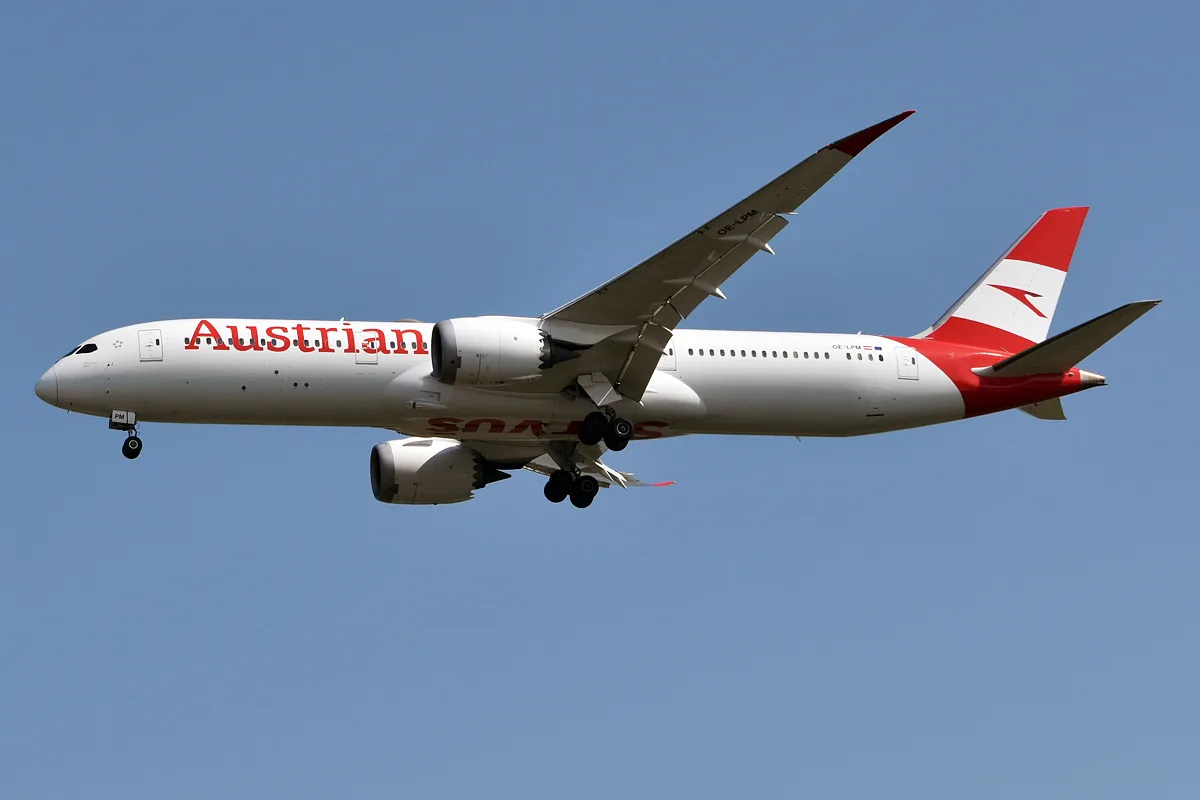 File photo
What happened
Key facts
- Austrian Airlines flight OS82 was travelling from Tel Aviv to Vienna when a bomb threat prompted it to divert to Sofia, Bulgaria (per New York Post, turkiyetoday.com).
- Israel’s Channel 12 News reported preliminary information that a Vienna resident called the threat in to Austrian police (per New York Post).
- Ynet reported that an Austrian citizen told Austrian Airlines a bomb was aboard the aircraft after it left Israel, and that the person was not on the plane (per turkiyetoday.com, New York Post, Yahoo).
- Israeli security officials were told investigators were examining whether the threat was a hoax (per New York Post).
The brief
Austrian Airlines diverted flight OS82 from Tel Aviv to Vienna to Sofia, Bulgaria, after a bomb threat, and the Airbus A320 landed safely with 51 passengers and six crew members aboard. The flight made an emergency landing in Bulgaria late Sunday, according to Turkiye Today. The New York Post also reported that the plane landed safely, citing a Lufthansa Group statement.
Lufthansa Group, Austrian Airlines’ parent company, said the aircraft was undergoing security checks. The company said passengers would be rebooked on alternative flights after the inspections were completed. The reports give no further details about the checks or the timing of the rebooking. Accounts differ on how the threat reached the airline and authorities.
Turkiye Today, citing Israeli outlet Ynet, reported that an Austrian citizen told Austrian Airlines a bomb was aboard after the plane left Israel; the person was not on the aircraft. The New York Post, citing Israel’s Channel 12 News, reported preliminary information that a Vienna resident called the threat in to Austrian police.
These accounts identify different recipients of the warning, while both describe a report originating from someone outside the plane. The New York Post also reported that Israeli security officials had been told investigators were examining whether the threat was a hoax.
That is an investigative possibility, not a finding about the threat’s credibility or the identity of the person who made it. Neither account reports that investigators found a bomb.
Turkiye Today reported that Bulgarian fighter jets escorted the aircraft to the airport and said Bulgaria’s Defense Ministry confirmed an operation coordinated with NATO’s Combined Air Operations Centre in Spain. The New York Post’s account does not mention an escort.
The difference is one of detail: it does not provide a conflicting account of whether fighter jets accompanied the plane. The immediate operational consequences documented so far are the diversion, the security checks and the planned rebooking of passengers. The reports do not identify any injuries or deaths.
The threat prompted a change in the aircraft’s route, while the airline’s stated next step for passengers depends on completion of its inspections.
Why it matters
- The 51 passengers and six crew members aboard faced a route diversion to Sofia and security checks before the airline’s stated plan to rebook them.
- Lufthansa Group said inspections of the Airbus A320 were underway, making their completion the documented condition for arranging alternative flights.
- The warning reached Austrian Airlines or Austrian police, according to the differing accounts; investigators were examining a possible hoax, but that possibility was not reported as a conclusion.
What to watch next
- Whether Lufthansa Group completes the aircraft’s security checks and arranges the alternative flights it said passengers would receive.
- Whether investigators determine whether the bomb threat was a hoax, a possibility reported by the New York Post.
How it's being covered
Coverage analysisShow details5 source articles · 5 unique outletsOutlet political mix: Mostly Center· 2 Center · 1 Right · 2 unratedWhere the outlets are based: US/Canada 40% · Middle East 40% · Other 20%
How outlets' accounts compare
3 framing differences · 3 uncorroborated claims · 1 information gap- Turkiye Today reports that Bulgarian fighter jets escorted the aircraft and cites confirmation from Bulgaria’s Defense Ministry; the New York Post does not mention an escort.
- The New York Post describes the threat as preliminary information that a Vienna resident reported to Austrian police, while Turkiye Today, citing Ynet, says an Austrian citizen notified Austrian Airlines.
- Turkiye Today attributes the report that an Austrian citizen contacted Austrian Airlines to Ynet; the New York Post attributes the account of a Vienna resident contacting Austrian police to Channel 12 News.
- The accounts identify different recipients of the warning: Austrian police in the Channel 12 account cited by the New York Post, and Austrian Airlines in the Ynet account cited by Turkiye Today.
- The New York Post reports that Israeli security officials were told investigators were examining whether the threat was a hoax.
- Turkiye Today says Bulgaria’s Defense Ministry confirmed that fighter jets escorted the aircraft in coordination with NATO’s Combined Air Operations Centre in Spain.
- The sources do not identify the person who made the threat or report a final investigative determination about its credibility.
Timeline
Developments from this story's sources, dated background we compiled and fact-checked, and our earlier coverage. Each row says which.- On 22 July 1968, members of the Popular Front for the Liberation of Palestine hijacked an El Al flight from Rome to Algiers; the passengers were held for 39 days.Background · from our historical context
- On 30 May 1972, three members of the Japanese Red Army, acting on behalf of the Popular Front for the Liberation of Palestine, attacked passengers at Lod Airport near Tel Aviv, killing 26 people.Background · from our historical context
- The International Civil Aviation Organization adopted its first aviation-security standards, known as Annex 17.Background · compiled and fact-checked by Updat3
- On 27 December 1985, gunmen attacked the El Al counters at the airports in Rome and Vienna, killing 19 people in Rome and three in Vienna.Background · from our historical context
- Bulgaria joined NATO and became part of the alliance’s integrated air-defence system.Background · compiled and fact-checked by Updat3
How we got here
On 22 July 1968, members of the Popular Front for the Liberation of Palestine hijacked an El Al flight from Rome to Algiers; the passengers were held for 39 days. On 30 May 1972, three members of the Japanese Red Army, acting on behalf of the Popular Front for the Liberation of Palestine, attacked passengers at Lod Airport near Tel Aviv, killing 26 people.
Those incidents formed part of the security history of international travel to and from Israel. The 1944 Chicago Convention established the International Civil Aviation Organization (ICAO), and ICAO adopted its first aviation-security standards, known as Annex 17, in 1974.
Original sources
2 of 5 articles · US/Canada · Show allEvery story links to the reporting it was built from. How we choose sources
Spotted a factual error, a broken link or a misleading summary? Tell us.