
Flávio Bolsonaro apologises twice to Lula in Brazil debate
Senator Flávio Bolsonaro apologised twice to President Luiz Inácio Lula da Silva during Brazil’s final televised debate before the runoff. The candidates also argued over proposals and Argentina, while the latest Datafolha poll put each at 50% of valid votes.
AI-assisted synthesis · Based on 4 outlets' reporting · Article text read from 2 of 4 outletsHow it's made
View timeline · 12 entries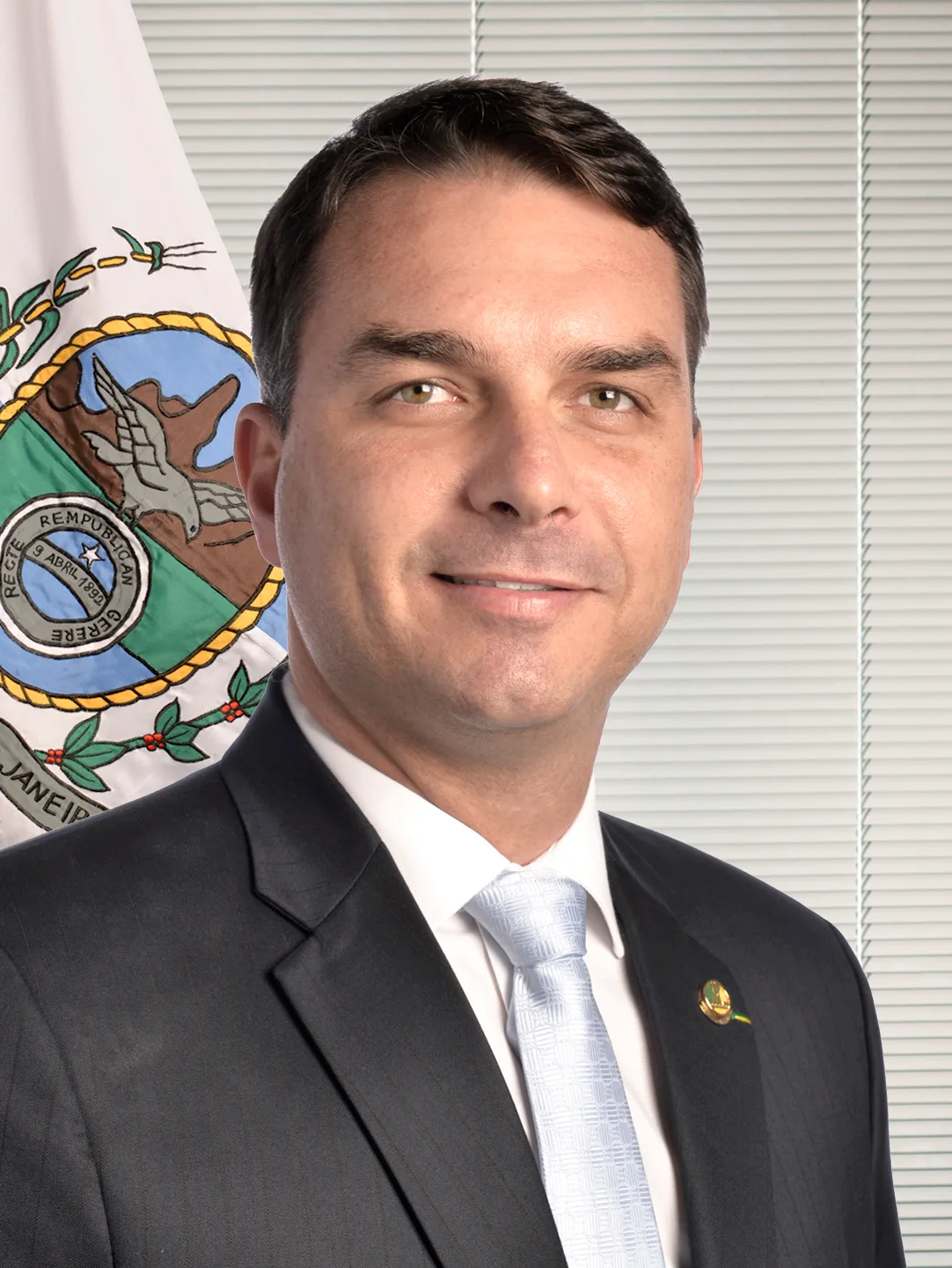 File photo
What happened
The brief
Senator Flávio Bolsonaro apologised twice to President Luiz Inácio Lula da Silva in Brazil’s final televised debate before the runoff, according to Mercopress. The Friday-night broadcast on TV Globo was more measured in tone than the first debate, and The Straits Times likewise characterized it as calmer.
The candidates entered the debate with equal support in the latest Datafolha poll: each had 50% of valid votes. Mercopress said the poll was published on Thursday. That result framed the contest as a closely balanced runoff, while the first-round tally had placed Bolsonaro ahead, with 47.03% against Lula’s 45.16%.
The apologies came during an exchange about Bolsonaro’s past voting choices. Bolsonaro said, “Today, after having children, I would vote completely differently.” Lula answered that Bolsonaro had not supported the measure when he had the chance.
The reported account does not identify the specific vote or explain what prompted the apologies, so the exchange’s subject remains limited to the candidates’ remarks. The candidates also disputed how to assess proposals associated with Argentina. Lula compared Bolsonaro’s proposals with those of the Argentine government.
Bolsonaro countered that the left had governed Argentina for 20 years and “destroyed the country,” and said Javier Milei began his government with inflation at 200%. Those characterizations were Bolsonaro’s claims in the debate; the account supplies no independent assessment of Argentina’s economic record or the inflation figure.
The two accounts emphasize different aspects of the contest. Mercopress details the apologies, the poll and the debate exchanges, while The Straits Times headline adds only the broader characterization that the debate was calmer. McAlester news’ headline describes Lula using state tools to woo runoff voters, but provides no further detail about the measures or their scale.
Bolsonaro concentrated on household costs and public debt, according to Mercopress. That focus placed economic concerns at the centre of his campaign argument, while Lula’s comparison with Argentina challenged Bolsonaro’s proposals through a regional policy contrast. The source does not provide additional details about particular cost-of-living measures or public-finance plans.
The runoff is the immediate electoral context for the debate: the first-round result left neither candidate with the lead described as a majority, and the candidates faced each other again before voters cast their runoff ballots. The poll’s equal shares of valid votes and the narrow first-round margin underscore how closely the contest was positioned in the reported figures.
Why it matters
- Brazilian voters face a runoff between candidates who received 47.03% and 45.16% in the first round; the debate’s exchanges and campaign arguments addressed the cost of living and public debt.
- The latest Datafolha poll put both candidates at 50% of valid votes, making voter support the immediate electoral stake described in the reporting.
- Lula and Bolsonaro contested the relevance of Argentina’s record to Bolsonaro’s proposals: Lula drew the comparison, while Bolsonaro cited 20 years of left-led government and a 200% inflation figure attributed to the start of Javier Milei’s government.
What to watch next
- Whether either candidate returns to the Argentina comparison in the runoff campaign.
- Whether Bolsonaro continues emphasizing the cost of living and public debt.
- Whether Lula continues comparing Bolsonaro’s proposals with those of the Argentine government.
- How the runoff vote compares with the first-round figures of 47.03% for Bolsonaro and 45.16% for Lula.
How it's being covered
Coverage analysisShow details4 source articles · 4 unique outletsOutlet political mix: Mostly Center· 3 Center · 1 RightWhere the outlets are based: Asia 50% · US/Canada 25% · Other 25%
- Coverage is currently concentrated among Center-rated outlets (3 of 4 rated sources); comparatively few Left-rated outlets have published on the event.
How outlets' accounts compare
2 framing differences · 2 uncorroborated claims · 3 information gaps- Mercopress described the debate as more measured than the first and reported the two apologies and detailed exchanges; The Straits Times headline characterized it as calmer without providing those details.
- McAlester news’ headline focused on Lula’s use of state tools to attract runoff voters, a subject not detailed in the Mercopress account.
- Bolsonaro’s claims about Argentina’s political history and inflation were reported as his debate remarks, with no independent verification included.
- Bolsonaro said he would vote differently after having children; Lula replied that Bolsonaro had not voted in favour when he had the opportunity.
- The sources do not specify the subject of Bolsonaro’s apologies.
- The sources do not provide details of the state tools mentioned in the McAlester news headline.
- The reported account does not identify the vote Bolsonaro referred to when he said having children changed how he would vote, or specify the measure Lula said Bolsonaro had not supported.
Timeline
Developments from this story's sources, dated background we compiled and fact-checked, and our earlier coverage. Each row says which.- Luiz Inácio Lula da Silva helped found Brazil’s Workers’ Party.Background · compiled and fact-checked by Updat3
- Brazil promulgated a constitution requiring a presidential runoff if no candidate wins more than half of valid votes; it set the criminal-responsibility age at 18.Background · compiled and fact-checked by Updat3
- Luiz Inácio Lula da Silva won Brazil’s presidential runoff against José Serra.Background · compiled and fact-checked by Updat3
- His son Flávio Bolsonaro, a former Rio de Janeiro state legislator, was elected to the Federal Senate in 2018.Background · from our historical context
- Jair Bolsonaro won Brazil’s presidential runoff against Fernando Haddad.Background · compiled and fact-checked by Updat3
- Brazil’s Supreme Federal Court annulled Lula’s corruption convictions, ruling that the Curitiba court lacked jurisdiction.Background · compiled and fact-checked by Updat3
- The court ruled that the federal court in Curitiba lacked jurisdiction over the cases; in April 2021, the full court upheld the ruling.Background · from our historical context
- Luiz Inácio Lula da Silva defeated Jair Bolsonaro in Brazil’s presidential election.Background · compiled and fact-checked by Updat3
- Jair Bolsonaro did not concede defeat on election night, and on 22 November 2022 his party challenged some electronic voting-machine results; Brazil’s Superior Electoral Court rejected the challenge and fined the party.Background · from our historical context
- Luiz Inácio Lula da Silva took office as Brazil’s president for a third, nonconsecutive term.Background · compiled and fact-checked by Updat3
- Javier Milei won Argentina’s presidential runoff.Background · compiled and fact-checked by Updat3
- Flávio Bolsonaro led Lula in Brazil’s presidential first round, 47 percent to 45 percent.Background · compiled and fact-checked by Updat3
How we got here
Lula won the 30 October runoff with 50.9% of the vote, defeating incumbent Jair Bolsonaro, who received 49.1%; in the 2 October first round, Lula had led with 48.43% to Bolsonaro’s 43.20%.
Jair Bolsonaro did not concede defeat on election night, and on 22 November 2022 his party challenged some electronic voting-machine results; Brazil’s Superior Electoral Court rejected the challenge and fined the party. Lula took office on 1 January 2023 after previously serving as president from 2003 to 2010.
Original sources
1 of 4 articles · US/Canada · Show allEvery story links to the reporting it was built from. How we choose sources
Spotted a factual error, a broken link or a misleading summary? Tell us.