
Flávio Bolsonaro rejects Lula’s 51.8% win, plans to seek annulment of Brazil vote
Flávio Bolsonaro said he would not accept Luiz Inácio “Lula” da Silva’s victory in Brazil’s runoff and planned to seek annulment of the election. The Supreme Electoral Court said Lula won with 51.8% of the vote, while Bolsonaro received 48.2%.
AI-assisted synthesis · Based on 5 outlets' reporting · Article text read from 1 of 5 outletsHow it's made
View timeline · 10 entries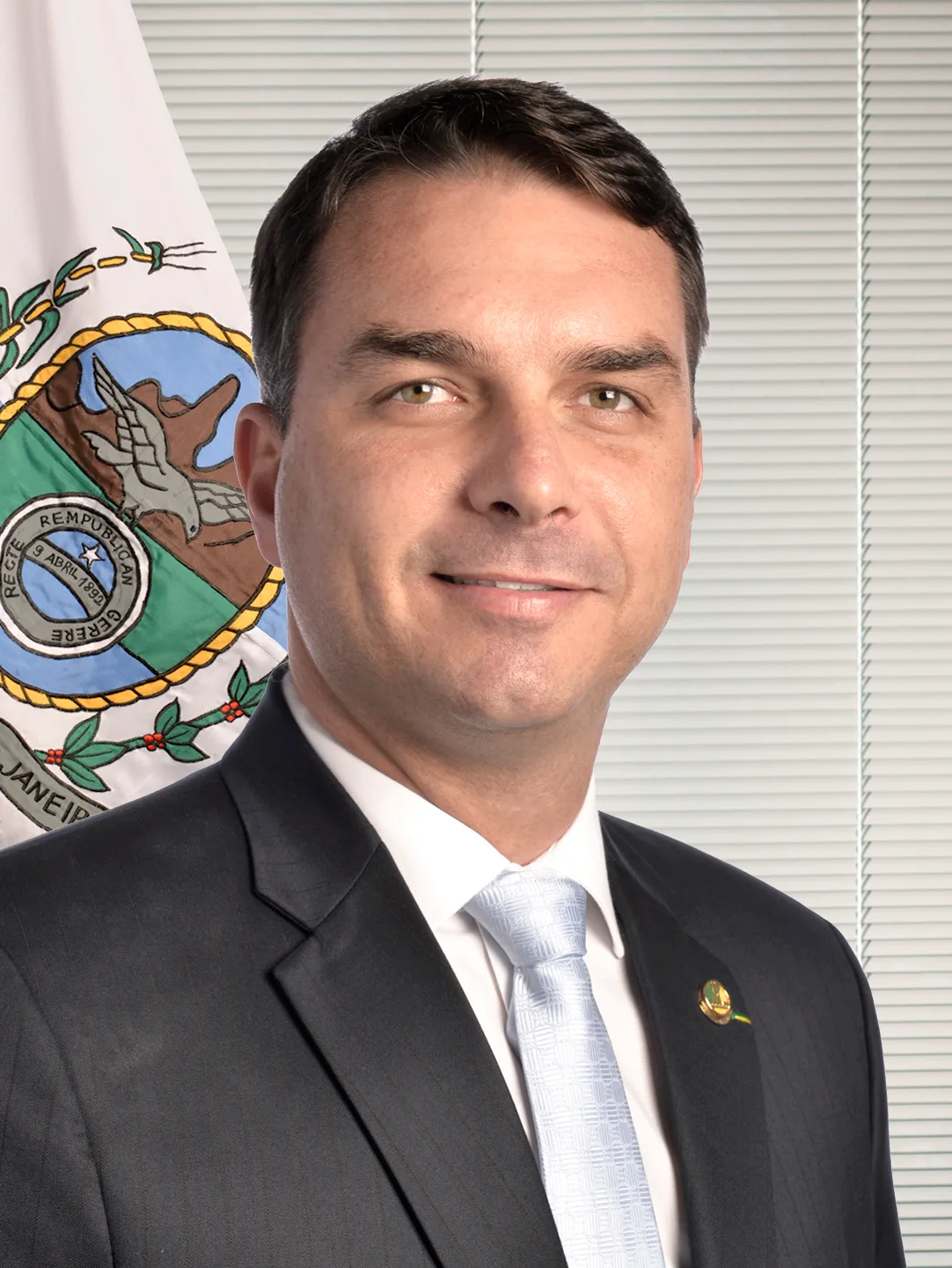 File photo
What happened
Key facts
- Luiz Inácio “Lula” da Silva was declared the winner of Brazil’s election (per buenosairesherald.com, DW, Reuters).
- The Supreme Electoral Court said Lula received 51.8% of the vote and Flávio Bolsonaro received 48.2%, a margin of 4.4 million votes (per buenosairesherald.com).
- Flávio Bolsonaro rejected the election result (per buenosairesherald.com, DW, Reuters).
- Flávio Bolsonaro said he planned to formally seek annulment of the election (per buenosairesherald.com).
The brief
Brazil’s Supreme Electoral Court declared Luiz Inácio “Lula” da Silva the winner of the runoff, with 51.8% of the vote, while Flávio Bolsonaro received 48.2%, according to the Buenos Aires Herald. The outlet put the margin at 4.4 million votes. Flávio Bolsonaro rejected the outcome and said he planned to formally ask for the election to be annulled.
The Buenos Aires Herald reported that Bolsonaro challenged a decision to extend voting by two hours. The order came minutes after the original 5 p.m. deadline, when some polling stations had already closed and preliminary results were being released. The report does not identify the official who issued the order in its account of the extension.
In a brief speech at the Liberal Party’s headquarters on Sunday night, after the count was complete, Bolsonaro said the result was impossible for him to accept. He also called what happened “not normal” and “unacceptable.” His stated objection centered on the change to voting hours and the timing of the order.
Bolsonaro said a Supreme Court justice signed the order at 5:01 p.m. at the request of a former business partner, and asserted that the rules had changed during the election. He identified the justice as Cristiano Zanin and described him as a former lawyer for Lula.
These points were Bolsonaro’s allegations, as reported by the Buenos Aires Herald; the outlet’s account does not independently establish them. The Supreme Court and electoral authorities agreed that polling stations that had already closed would not reopen, the Buenos Aires Herald reported.
The account also says the Liberal Party had requested an extension of voting hours, but describes the party’s reasons as different from Bolsonaro’s stated challenge. It does not specify those reasons. DW, Reuters and AP News headlines also characterize Bolsonaro as rejecting the result, while describing Lula as the election winner.
The CNN headline frames the election as a test of Lula’s political legacy against Bolsonaro’s movement; it does not state vote totals or describe an annulment request. The Buenos Aires Herald says Bolsonaro planned to file one, but does not report a court decision on that request.
Why it matters
- The dispute concerns the certified vote totals: the Supreme Electoral Court said Lula won 51.8% to Flávio Bolsonaro’s 48.2%, a 4.4 million-vote margin.
- Bolsonaro’s proposed annulment request would challenge the election result through the formal process he said he planned to pursue.
- The voting-hours dispute concerns a two-hour extension ordered after the original 5 p.m. deadline, when some polling stations had closed and preliminary results were being released.
What to watch next
- Whether Flávio Bolsonaro formally submits the annulment request he said he planned to make.
- Whether the Supreme Court or electoral authorities take any decision on a formal annulment request.
- Whether the Liberal Party’s separate request for an extension of voting hours is addressed further.
How it's being covered
Coverage analysisShow details5 source articles · 5 unique outletsOutlet political mix: Mostly Center· 1 Left · 4 CenterWhere the outlets are based: Global 40% · US/Canada 20% · Other 40%
- Coverage is currently concentrated among Center-rated outlets (4 of 5 rated sources); comparatively few Right-rated outlets have published on the event.
2 sources are from a wire service (AP, Reuters, AFP or Bloomberg), whose reporting other outlets often republish.
How outlets' accounts compare
Timeline
Developments from this story's sources, dated background we compiled and fact-checked, and our earlier coverage. Each row says which.- The TSE, which oversees federal elections, was created in 1932 under the Electoral Code issued during Getúlio Vargas’s government.Background · from our historical context
- Luiz Inácio Lula da Silva helped found Brazil’s Workers’ Party.Background · compiled and fact-checked by Updat3
- Brazil promulgated a constitution requiring a presidential runoff if no candidate wins more than half of valid votes; it set the criminal-responsibility age at 18.Background · compiled and fact-checked by Updat3
- Brazil held its first direct presidential election after the dictatorship in 1989, when Fernando Collor de Mello won the runoff against Lula.Background · from our historical context
- Electronic voting became part of Brazil’s election system in 1996, when the TSE introduced electronic ballot boxes in municipal elections.Background · from our historical context
- Federal Law No. 9,504, enacted September 30, 1997, established general rules for elections, including procedures for voting and counting.Background · from our historical context
- Jair Bolsonaro defeated Workers’ Party candidate Fernando Haddad in Brazil’s presidential runoff.Background · compiled and fact-checked by Updat3
- Luiz Inácio Lula da Silva defeated Jair Bolsonaro in Brazil’s presidential election.Background · compiled and fact-checked by Updat3
- On November 23, 2022, the TSE rejected the request, saying the party had not shown that the machines’ alleged defects affected the result; it also fined the party for bad-faith litigation.Background · from our historical context
- Flávio Bolsonaro led Lula in Brazil’s presidential first round, 47 percent to 45 percent.Background · compiled and fact-checked by Updat3
How we got here
Brazil’s closest recent precedent for a losing candidate challenging a presidential result came after the October 30, 2022 runoff, when Jair Bolsonaro’s Liberal Party asked the Superior Electoral Court (TSE) to invalidate votes cast on some electronic voting machines.
On November 23, 2022, the TSE rejected the request, saying the party had not shown that the machines’ alleged defects affected the result; it also fined the party for bad-faith litigation. Bolsonaro had not conceded defeat, and his challenge followed Lula da Silva’s narrow victory in that election.
Original sources
1 of 5 articles · US/Canada · Show allEvery story links to the reporting it was built from. How we choose sources
Spotted a factual error, a broken link or a misleading summary? Tell us.