
Georgieva flags inflation and rising debt costs at Bangkok IMF meetings
IMF chief Kristalina Georgieva said the annual meetings in Bangkok were marked by optimism and worry. She said debt repayments for low-income countries had risen from 8% to 14% of government revenue in recent years.
AI-assisted synthesis · Based on 5 outlets' reporting · Article text read from 1 of 5 outletsHow it's made
View timeline · 8 entries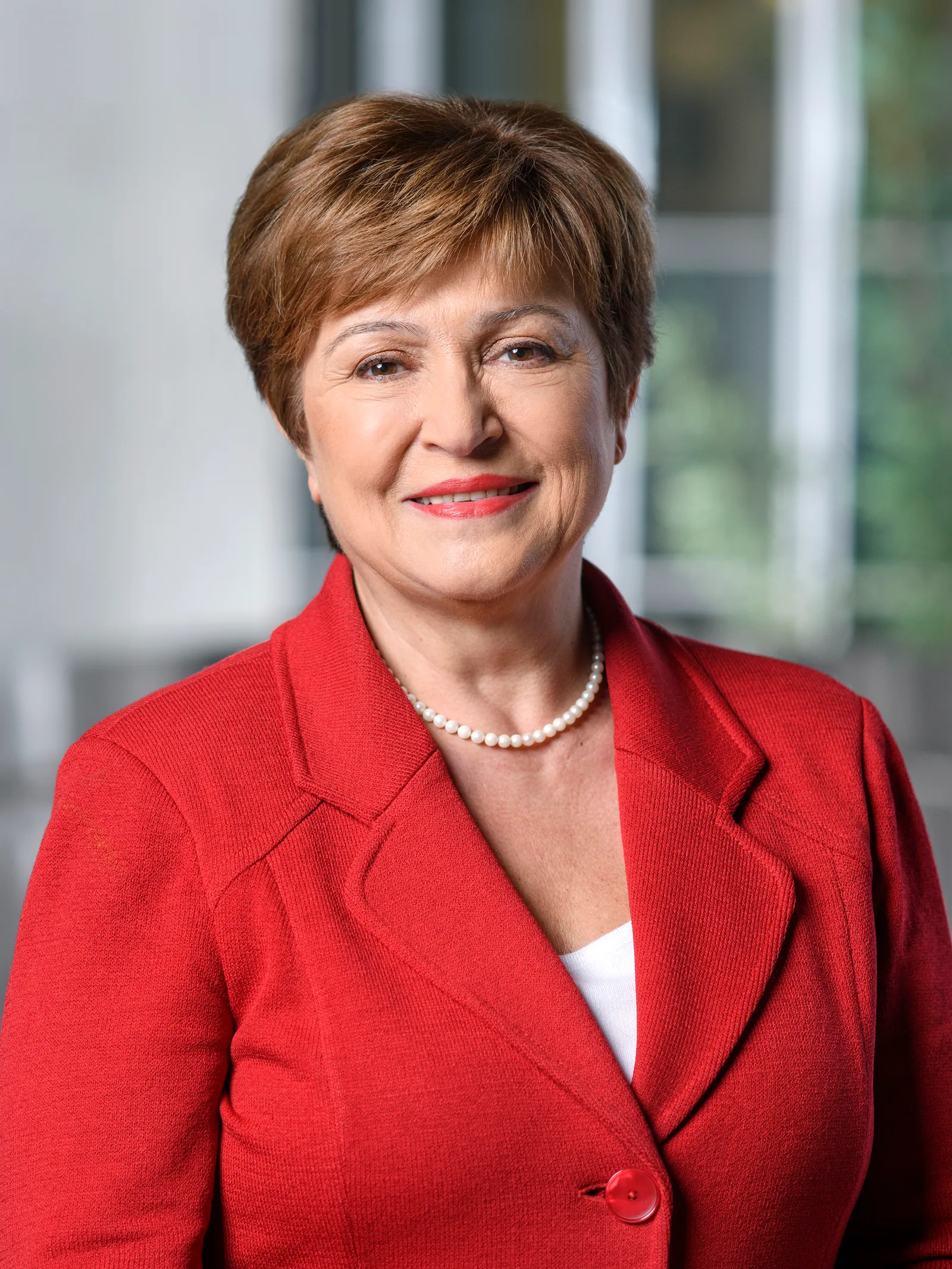 File photo
What happened
Key facts
- Georgieva said inflation acts like a tax on poorer households (per hurriyetdailynews.com).
- Georgieva said low-income countries’ debt repayments rose from 8% to 14% of government revenue in recent years (per hurriyetdailynews.com).
- The IMF said higher interest rates and bond yields were increasing debt repayment burdens for low-income countries (per hurriyetdailynews.com).
- Georgieva said the IMF should help countries restructure debt, mobilise domestic resources, attract international finance and support conditions for private investment (per hurriyetdailynews.com).
- The article said global energy prices had risen since the United States and Israel launched the war on Iran in late February, contributing to inflation across economies (per hurriyetdailynews.com).
- The Daily Star headline said the US Treasury chief would skip the IMF annual meetings in Bangkok (per thedailystar.net, hurriyetdailynews.com).
The brief
IMF chief Kristalina Georgieva said the annual meetings in Bangkok were marked by “optimism and worry,” with inflation and debt costs among the concerns she highlighted. In its account, Hurriyet Daily News reported that Georgieva spoke as the meetings were winding down and identified low-income countries’ repayment burdens as a particular pressure.
Georgieva said debt repayments had risen from 8% to 14% of government revenue for low-income countries in recent years. The IMF said higher interest rates and bond yields were increasing those burdens. The figures and assessment were presented in the outlet’s account of Georgieva’s remarks; it did not provide a separate breakdown by country.
Georgieva also described inflation as “like a tax on the poor.” Her remarks connected the cost-of-living concern to households with fewer resources, while the article characterized inflation as affecting economies more broadly. It did not give an inflation rate or identify individual countries’ household impacts.
On possible measures, Georgieva said the IMF should help countries restructure debt, mobilise domestic resources, attract international finance and support conditions for private investment. These were proposals she outlined; the article did not report decisions taken at the meetings on those measures.
Hurriyet Daily News also linked higher global energy prices to inflation, saying prices had risen since the United States and Israel launched the war on Iran in late February. The article did not quantify the price increase or specify how much it contributed to inflation. It presented the energy-price account as context alongside Georgieva’s concerns about debt and inflation.
Newswav, Kuwait Times and France 24 headlines each described Georgieva’s outlook using the paired terms “optimism” and “worry” and placed her remarks around the conclusion of the Bangkok meetings. Separately, The Daily Star headline said the US Treasury chief would skip the meetings; it did not give a reason.
The available account of Georgieva’s remarks did not say whether that absence affected the discussions.
Why it matters
- Low-income countries face a specific fiscal burden: debt repayments rose from 8% to 14% of government revenue in recent years, while the IMF said higher interest rates and bond yields were increasing repayment costs.
- Poorer households bear an inflation-related cost that Georgieva compared to a tax, according to her remarks reported by Hurriyet Daily News.
- The measures Georgieva identified include debt restructuring, domestic resource mobilisation, international finance and conditions supporting private investment; the account reports these as proposals, not adopted decisions.
What to watch next
- Whether the IMF takes up Georgieva’s proposed support for debt restructuring, domestic resource mobilisation, international finance or private investment conditions.
- Whether the rise in low-income countries’ debt repayments from 8% to 14% of government revenue continues, as the IMF identifies higher interest rates and bond yields as increasing the burden.
- Whether global energy prices continue to contribute to inflation, the connection described in the Hurriyet Daily News account.
How it's being covered
Coverage analysisShow details5 source articles · 5 unique outletsOutlet political mix: Center Only· 4 Center · 1 unratedWhere the outlets are based: Unknown 40% · US/Canada 20% · Other 40%
- Coverage is currently concentrated among Center-rated outlets (4 of 4 rated sources); comparatively few Left or Right-rated outlets have published on the event.
How outlets' accounts compare
Timeline
Developments from this story's sources, dated background we compiled and fact-checked, and our earlier coverage. Each row says which.- The IMF originated at the July 1944 Bretton Woods Conference, where delegates from 44 countries negotiated a postwar monetary order.Background · from our historical context
- The IMF’s Articles of Agreement entered into force.Background · compiled and fact-checked by Updat3
- The IMF began operations.Background · compiled and fact-checked by Updat3
- The IMF and World Bank launched the Heavily Indebted Poor Countries Initiative.Background · compiled and fact-checked by Updat3
- The IMF and World Bank expanded the Heavily Indebted Poor Countries Initiative.Background · compiled and fact-checked by Updat3
- The G20 launched the Debt Service Suspension Initiative, temporarily pausing eligible countries’ official bilateral debt payments.Background · compiled and fact-checked by Updat3
- In November 2020, the G20 and Paris Club introduced the Common Framework to coordinate debt treatments for eligible low-income countries; its implementation involved negotiations among official and private creditors.Background · from our historical context
- On February 28, 2026, the United States and Israel launched coordinated strikes on Iran, and global energy prices rose afterward, according to the reporting on the Bangkok meetings.Background · from our historical context
How we got here
The debt pressures discussed at the IMF’s 2026 Bangkok meetings had a direct precedent in the G20’s Debt Service Suspension Initiative, launched in April 2020, which temporarily paused eligible countries’ official bilateral debt payments during the COVID-19 crisis.
In November 2020, the G20 and Paris Club introduced the Common Framework to coordinate debt treatments for eligible low-income countries; its implementation involved negotiations among official and private creditors.
Original sources
1 of 5 articles · Europe · Show allEvery story links to the reporting it was built from. How we choose sources
Spotted a factual error, a broken link or a misleading summary? Tell us.