
Singapore-registered GFS Pride sank after striking a mine in the Strait of Hormuz; GFS Giselle damaged
A Singapore-registered container ship, GFS Pride, struck a mine in the Strait of Hormuz and sank, with all 21 crew rescued. A second Singapore-registered vessel, GFS Giselle, sustained hull damage in a separate strike the same day and departed under its own power with no injuries reported.
AI-assisted synthesis · Based on 5 outlets' reporting · Full text read from 2 of 5 outletsHow it's made
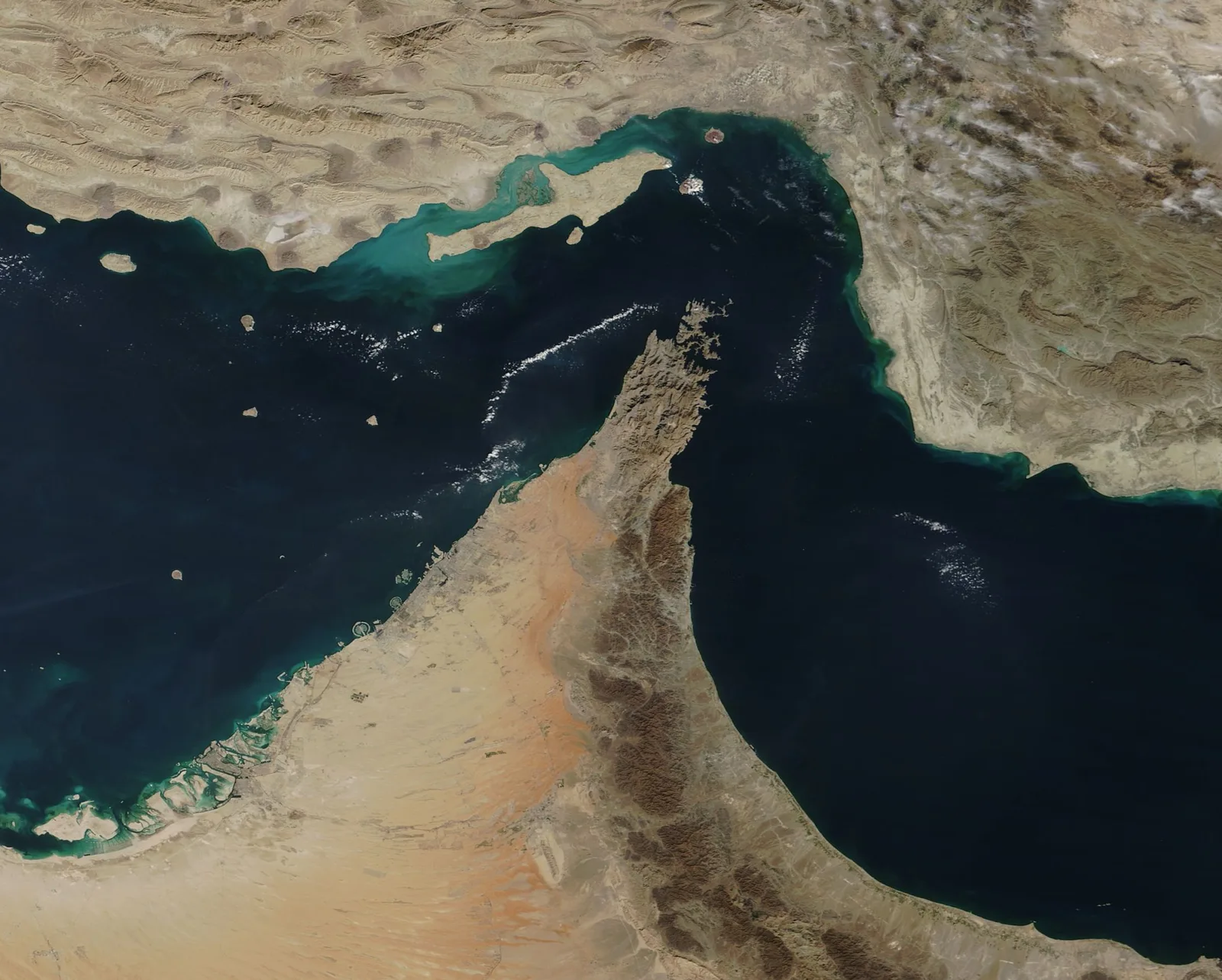 File photo
What happened
Key facts
- On October 14 the Singapore-registered container ship GFS Pride struck a mine in the Strait of Hormuz and later sank (per rt-english.com, businesstimes.com.sg).
- All 21 crew members of GFS Pride were rescued, according to the Maritime and Port Authority of Singapore (per rt-english.com, businesstimes.com.sg).
- A second Singapore-registered vessel, GFS Giselle, was struck the same day, suffered hull damage and left under its own power with no injuries reported (per rt-english.com).
- Iran’s Islamic Revolutionary Guard Corps (IRGC) Navy said GFS Pride sank while sailing along what it described as an 'unauthorized and dangerous route' and warned local vessels and fishermen to avoid floating containers (per rt-english.com).
- RT reported GFS Pride was carrying more than 2,500 containers when it sank (per rt-english.com).
- The Maritime and Port Authority of Singapore described the continued attacks on commercial ships in the Strait of Hormuz as 'unprovoked, unjustifiable and a breach of international law' (per businesstimes.com.sg, rt-english.com, thestar.com.my).
The brief
A Singapore-registered container ship, GFS Pride, struck a mine in the Strait of Hormuz and later sank, authorities reported. The Maritime and Port Authority of Singapore said all 21 crew members were rescued, while a second Singapore-registered vessel, GFS Giselle, was struck the same day, sustained hull damage and left under its own power with no injuries reported.
RT reported that GFS Pride was carrying more than 2,500 containers at the time it sank. Iran’s Islamic Revolutionary Guard Corps (IRGC) Navy issued a statement saying the GFS Pride had been sailing along an 'unauthorized and dangerous route' and warned local vessels and fishermen to watch for floating containers.
The MPA said it was 'deeply concerned' about continued attacks on commercial ships in the strait and characterised such attacks as 'unprovoked, unjustifiable and a breach of international law.' RT placed the incident within a wider pattern, saying more than 20 oil tankers and other vessels had been attacked in the region in the month before the incident.
The Business Times noted the strategic importance of the Strait of Hormuz for oil and liquefied natural gas trade and recorded that all crew on the two Singapore-registered vessels were safe and uninjured.
Reporting differs on explanatory detail: RT highlighted the IRGC Navy’s framing of the Pride’s route as 'unauthorized,' while the MPA framed the strikes as unlawful attacks on commercial shipping; the two accounts overlap on the core facts of the sinking, rescue and damage.
Open questions remain in the public record supplied: sources do not provide an independent investigation of who placed the mine or how it came to be in the shipping lane, nor do they report forensic findings about the weapon that struck the ships.
The supplied coverage also does not cite any international body or third-party maritime security investigation that has publicly assigned responsibility or given technical analysis of the mine or projectile.
For now, the documented record in these reports is confined to the sinking of GFS Pride after a mine strike, the safe rescue of its 21 crew, the damage to GFS Giselle, the IRGC Navy’s statement about the Pride’s route, and the MPA’s condemnation of attacks on commercial shipping in the strait.
Why it matters
- Crew safety and commercial shipping: 21 crew members on GFS Pride were rescued, showing immediate human risk to seafarers operating in the Strait of Hormuz and underscoring how maritime workers directly bear the costs when vessels are struck.
- Trade and cargo disruption: RT reported GFS Pride was carrying more than 2,500 containers, indicating a large volume of cargo at risk of loss and financial damage to shipowners, charterers and cargo interests tied to that vessel's manifest.
- Legal and navigational disputes: the IRGC Navy's claim that GFS Pride was on an 'unauthorized and dangerous route' and the MPA's characterization of the attacks as 'a breach of international law' signal conflicting legal narratives over safe passages and responsibility for hazards in the strait.
- Security burden on Singapore and maritime authorities: the Maritime and Port Authority of Singapore's evacuation and statements place Singaporean authorities in the role of crisis manager for their flagged vessels, with implications for insurance claims, salvage operations and future routing decisions for Singapore-registered ships.
What to watch next
- Whether the Maritime and Port Authority of Singapore or any named international maritime investigation body publishes a technical report attributing the mine or projectile to a specific actor or device.
- Whether Iran’s Islamic Revolutionary Guard Corps Navy issues further public details to support its claim that GFS Pride was on an 'unauthorized and dangerous route' or provides evidence about the origin of the floating hazard.
- Whether shipowners or insurers for GFS Pride or GFS Giselle lodge formal claims or public statements that disclose the cargo manifest, salvage status of the Pride’s containers, or the financial impact of the loss reported by RT.
How it's being covered
Coverage analysisShow details5 source articles · 5 unique outletsCoverage mix: Center Only· 4 CenterWhere the outlets are based: Asia 60% · Europe 20% · Other 20%
- Coverage is currently concentrated among Center-rated outlets (4 of 4 rated sources); comparatively few Left or Right-rated outlets have published on the event.
One source is from a wire service (AP, Reuters, AFP or Bloomberg), whose reporting other outlets often republish.
How outlets' accounts compare
4 framing differences · 4 uncorroborated claims · 4 information gaps- RT frames the incident alongside a broader wave of more than 20 vessel attacks in the preceding month and highlights the IRGC Navy's description of the Pride's route as 'unauthorized and dangerous.'
- The Maritime and Port Authority of Singapore (reported in The Business Times and in MPA statements) frames the event as an attack on commercial shipping and describes the strikes as 'unprovoked, unjustifiable and a breach of international law.'
- The IRGC Navy attributed the Pride's sinking to the ship sailing an 'unauthorized and dangerous route'.
- The Maritime and Port Authority of Singapore characterised the events as attacks on commercial ships and called them a breach of international law.
- RT links the incident to a wider series of attacks in the preceding month, but no source in the pack documents a direct causal chain showing who initiated that broader pattern or who placed the specific mine that sank GFS Pride.
- IRGC Navy described GFS Pride as sailing an 'unauthorized and dangerous route'.
- MPA described such attacks as 'unprovoked, unjustifiable and a breach of international law'.
- RT said GFS Pride was carrying more than 2,500 containers.
- No source in this bundle reports any independent investigation results identifying the origin, type or deployment method of the mine that struck GFS Pride.
- No source provides data on the salvage operation for GFS Pride’s cargo or how many containers (if any) were recovered.
- No source cites consultations or findings from an international maritime authority (for example, a joint investigation by flag, coastal and classification authorities) assigning responsibility or technical cause.
- No report Updat3 read provides independent forensic attribution of who laid the mine or who fired the projectile that struck GFS Giselle; responsibility for placing the mine remains unverified in the supplied texts.
How we got here
The immediate backdrop is a pattern of attacks on commercial shipping in and near the Strait of Hormuz that maritime authorities and governments publicly documented in the years before October 2026; for example, shipping-insurance firms and regional port authorities issued repeated navigational warnings in 2019 and 2021 after confirmed and suspected maritime incidents in the Gulf (2019–2021 navigational warnings).
The structural roots of current legal and operational practice include the 1982 United Nations Convention on the Law of the Sea (UNCLOS, adopted 1982), which governs innocent passage and maritime jurisdiction, and the International Maritime Organization’s (IMO) 2016 guidance on maritime security and reporting procedures (IMO circulars, 2016–ongoing).
Original sources
1 of 5 articles · Europe · Show allEvery story links to the reporting it was built from. How we choose sources
Spotted a factual error, a broken link or a misleading summary? Tell us.