
Greens split as senator backs military aid to Ukraine and leader opposed
Senator Sarah Hanson-Young publicly said she supports providing military aid to Kyiv, contradicting Greens leader David Shoebridge who opposes direct military assistance unless authorised by a UN Security Council resolution. Shoebridge has met and will meet with Ukrainian-Australian community leaders and the Ukrainian ambassador after the disagreement provoked criticism from .
AI-assisted synthesis · Based on 3 independent reports from 4 outletsHow it's made
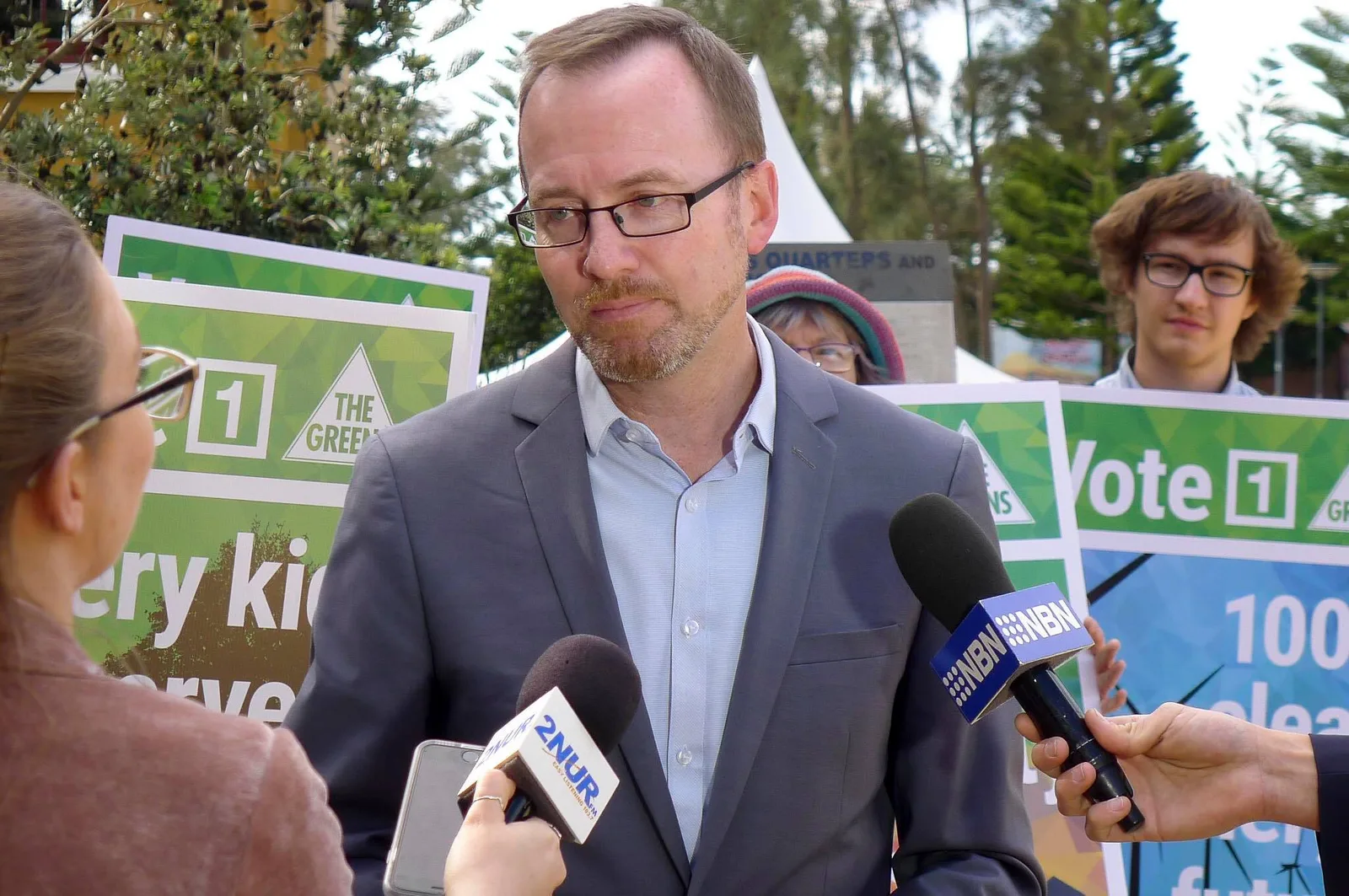 File photo
What happened
Key facts
- Senator Sarah Hanson-Young publicly said she supported giving Kyiv military aid if that was needed to defend against Russia's invasion (per aap.com.au, streamlinefeed.co.ke, The Sydney Morning Herald).
- Greens leader David Shoebridge said the Greens would not support direct military assistance to Ukraine unless it was authorised by a United Nations Security Council resolution (per The Sydney Morning Herald, aap.com.au, The Age).
- Shoebridge told Nine newspapers on October 3 that Australia should not give Ukraine direct military assistance unless it was under UN Security Council aegis (per aap.com.au, The Sydney Morning Herald).
- Senator Hanson-Young said she had discussed the matter with Shoebridge and suggested he might answer the question differently if asked again (per aap.com.au, The Sydney Morning Herald, streamlinefeed.co.ke).
- Australia has provided nearly $1.9 billion in support for Ukraine since Russia invaded in 2022, according to AAP (per aap.com.au).
- Community leaders told Shoebridge they valued their relationship with the Greens but argued advocating for military aid was essential given Russian bombardments of Ukraine (per The Sydney Morning Herald, aap.com.au, streamlinefeed.co.ke).
- Streamline reported that the split emerged when Senator Hanson-Young broke ranks with the Greens' policy directive and explicitly stated support for delivering military aid to Kyiv (per streamlinefeed.co.ke, aap.com.au, The Sydney Morning Herald).
The brief
Senator Sarah Hanson-Young publicly declared she would support providing military aid to Kyiv if that assistance was needed to defend against Russia's invasion, a stand that directly contradicts the position of Greens leader David Shoebridge.
Shoebridge has said the Greens oppose direct military assistance to Ukraine unless it is authorised by a United Nations Security Council resolution, a threshold critics note Russia would likely veto.
The dispute surfaced publicly after Shoebridge told Nine newspapers on October 3 that Australia should not give direct military assistance to Ukraine without a UN resolution, and Hanson-Young repeated on ABC's 7.30 program that she backed military aid when required for defence.
AAP reported that Hanson-Young told Shoebridge she had discussed the issue with him and suggested he might answer that question differently if asked again.
Reporting in The Sydney Morning Herald said Shoebridge faced a tense online meeting with leaders of the Ukrainian-Australian community who pressed him over the Greens' stance and that he planned to meet Ukrainian ambassador Vasyl Myroshnychenko to try to address the backlash.
AAP noted Australia has provided nearly $1.9 billion in support for Ukraine since Russia invaded in 2022, and The Sydney Morning Herald coverage cited recent Russian attacks on civilians in Ukraine as part of the context community leaders raised when pressing the Greens.
Streamline's account framed the episode as a policy rupture that began when Hanson-Young, who previously contested the Greens leadership, publicly backed arming Kyiv and thereby contradicted a party directive favouring humanitarian aid.
The outlets differ in emphasis: AAP and Streamline foreground Hanson-Young's break with the leader; The Sydney Morning Herald gives more space to the Ukrainian-Australian community's criticism and Shoebridge's outreach to the ambassador.
What is confirmed across the reporting is the public disagreement within the Greens between Hanson-Young's stated willingness to support military assistance and Shoebridge's insistence that the party only back such aid if a UN Security Council resolution authorised it.
What remains unreported in these sources is any formal change to Greens policy, whether other Greens senators share Hanson-Young's view, and whether the party room has debated or voted on the matter. The dispute has prompted Shoebridge to engage directly with .
This episode follows longstanding Australian support for Ukraine, which the reporting quantifies as nearly $1.9 billion in assistance since 2022, and it places a new fault line within the Greens between a leader advocating a UN-authorised threshold and a senator arguing for more direct military help in defence of Ukraine.
Why it matters
- The policy disagreement affects Canberra's decision-making mechanism: Shoebridge's insistence on a UN Security Council resolution would make direct military aid practically unattainable given Russia's veto, a procedural barrier that Hanson-Young's stance seeks to bypass politically within her party.
- The split could alter how Australia contributes resources to Ukraine, which AAP documents as nearly $1.9 billion of support since 2022; changes in party support for military aid would affect the political coalition available to future government decisions on supplying weapons versus humanitarian assistance.
What to watch next
- Whether David Shoebridge meets Ukrainian ambassador Vasyl Myroshnychenko, as reported by The Sydney Morning Herald.
- Whether the Greens' party room discusses or changes policy on direct military assistance to Ukraine following Senator Sarah Hanson-Young's public remarks.
- Whether Ukrainian-Australian community leaders who met Shoebridge issue further public statements or formal demands after their online meeting.
- Whether other Greens senators publicly align with Sarah Hanson-Young's position or with David Shoebridge's UN-resolution threshold.
How it's being covered
Coverage analysisShow details4 source articles · 4 unique outlets · 3 distinct reportsCoverage mix: Center Only· 3 CenterWhere the outlets are based: Asia 75% · Africa 25%
- Coverage is currently concentrated among Center-rated outlets (3 of 3 rated sources); comparatively few Left or Right-rated outlets have published on the event.
- Coverage is currently concentrated among outlets based in Asia (3 of 4 geographically-identified sources).
One source is from a wire service (AP, Reuters, AFP or Bloomberg), whose reporting other outlets often republish.
How outlets' accounts compare
2 framing differences · 6 uncorroborated claims · 4 information gaps- AAP and Streamline foreground Senator Sarah Hanson-Young's break with Greens leader David Shoebridge as the defining element; The Sydney Morning Herald frames the story around Shoebridge's engagement with Ukrainian-Australian community leaders and his outreach to the Ukrainian ambassador.
- Statements that community leaders pressed Shoebridge come from The Sydney Morning Herald's reporting and are described as based on sources familiar with the meeting.
- AAP reports Australia has provided nearly $1.9 billion in support for Ukraine since 2022; no other source in the pack gives a conflicting figure.
- The Sydney Morning Herald links Shoebridge's stance to backlash from the Ukrainian-Australian community, while AAP and Streamline focus on Hanson-Young's public statement as the trigger for the reported split; the precise sequence of private discussions versus public remarks is not fully established.
- The claim that Shoebridge told Nine newspapers on October 3 that Australia should not give direct military assistance without a UN Security Council resolution is attributed to Shoebridge and reported by AAP and The Sydney Morning Herald.
- Shoebridge told Nine newspapers on October 3 that Australia should not give Ukraine direct military assistance unless it was under UN Security Council aegis.
- Hanson-Young said on ABC's 7.30 that she supported giving Kyiv military aid if it was needed to defend against Russia's invasion.
- Shoebridge told community leaders not to 'burn your bridges' according to The Sydney Morning Herald's reporting of the meeting.
- No source reports whether the Greens party room has formally debated or voted on direct military assistance to Ukraine.
- No source provides names of other Greens federal MPs or senators who support either Hanson-Young or Shoebridge on this issue.
- No source details any specific military equipment or dollar amounts that Hanson-Young supports supplying beyond the general statement of 'military aid.'
- No source documents any formal changes to Greens policy following the dispute.
How we got here
Immediate backdrop: Greens leader David Shoebridge had told the Sydney Morning Herald and AAP that the party opposes providing military aid to Ukraine unless it is authorised by a United Nations Security Council resolution, and he held a confidential briefing with three Ukrainian‑Australian associations in which community leaders said they valued their relationship with the Greens while arguing advocacy for military aid was essential given ongoing Russian bombardments of Ukraine.
Senator Sarah Hanson‑Young had publicly stated disagreement with Shoebridge’s position prior to the current report. Structural roots: The United Nations Charter (signed 26 June 1945) and the authority of the UN Security Council have long been central legal touchstones for states debating the legality of interstate use of force and arms transfers.
Original sources
4 articles from 4 outletsEvery story links to the reporting it was built from. How we choose sources
Spotted a factual error, a broken link or a misleading summary? Tell us.