
Hegseth proposes a US-ASEAN defence framework without outlining its terms
Pete Hegseth proposed a US-ASEAN defence framework for the next few years and said Washington would support its commitment through practical cooperation. He made the proposal while seeking to reassure Southeast Asian counterparts of U.S. commitment to the Indo-Pacific, but the account gives no framework details.
AI-assisted synthesis · Based on 5 independent reports from 7 outlets · Article text read from 1 of 5 reportsHow it's made
View timeline · 7 entries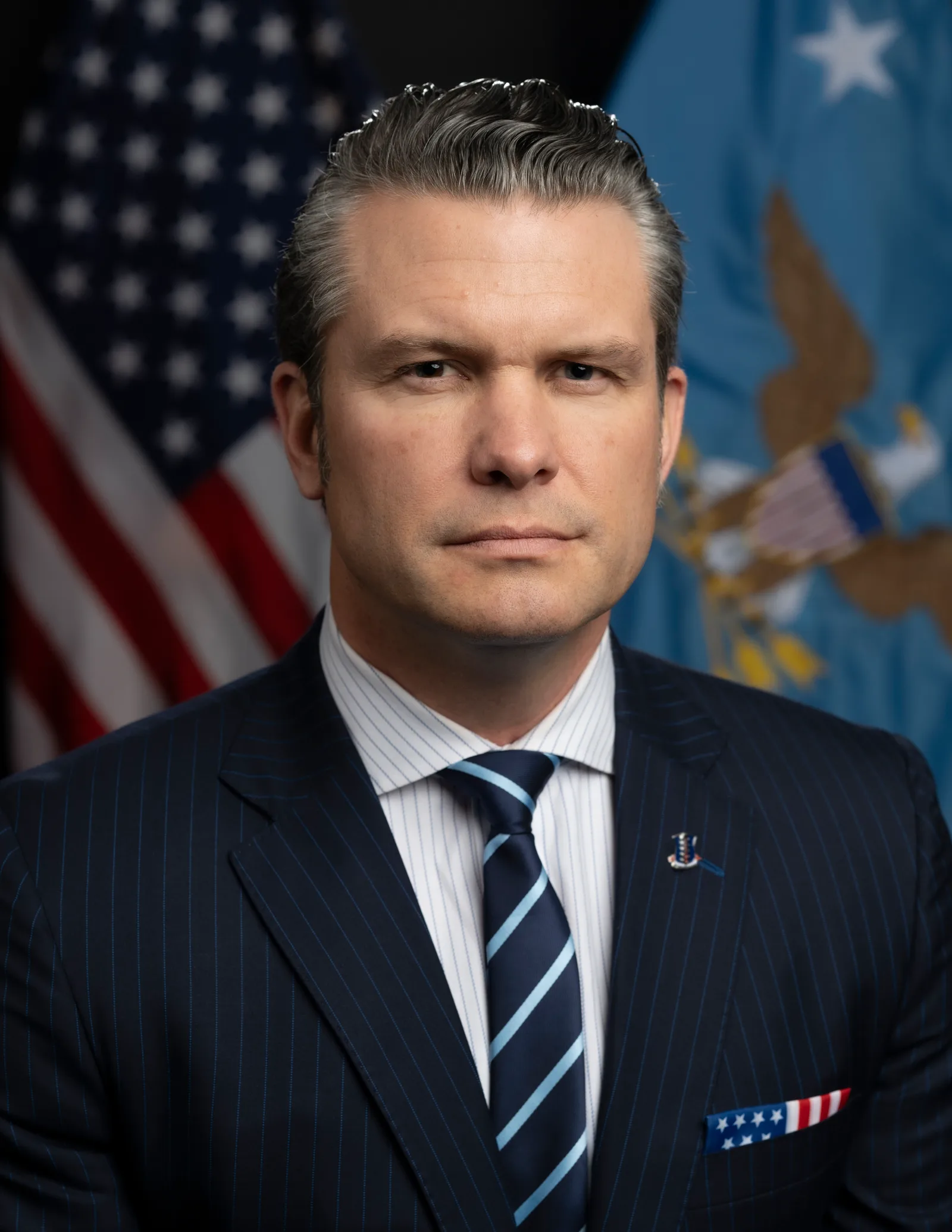 File photo
What happened
Key facts
- Hegseth proposed a US-ASEAN defence framework for the next few years (per The Straits Times).
- Hegseth said Washington would back its commitment with practical cooperation and described the measures as concrete demonstrations of serious partnership (per The Straits Times).
- Hegseth said the United States wanted “peace through strength.” (per The Straits Times).
- Hegseth said Washington would defend its interests and those of its allies and partners (per The Straits Times).
- ASEAN is due to mark 50 years of ties next year (per The Straits Times).
- The Squad, an informal grouping of the United States, Japan, Australia and the Philippines, was due to hold a meeting of its defence chiefs on Oct 28 (per The Straits Times).
- China’s defence ministry said on Oct 27 that China’s defence attaché in the Philippines would attend the meeting (per The Straits Times).
The brief
U.S. Defense Secretary Pete Hegseth proposed a US-ASEAN defence framework for the next few years, while pledging stronger military ties with the Philippines. The Straits Times reported that Hegseth made the proposal in Cebu, Philippines, on Oct 28, as he sought to reassure Southeast Asian counterparts about Washington’s commitment to the Indo-Pacific.
Hegseth said Washington would support its commitment through practical cooperation. He characterized the proposed measures as tangible demonstrations of partnership and said the United States wanted “peace through strength.” He also said Washington would defend its own interests and those of its allies and partners.
The proposal’s stated horizon is the next few years, but the account does not describe its terms or identify specific activities under the framework. Hegseth’s pledge of stronger military ties with the Philippines is also reported without a detailed description of what those ties would involve.
Hegseth connected the proposed US-ASEAN framework to the bloc’s approaching anniversary: ASEAN is due to mark 50 years of ties next year. The report does not specify how that milestone would shape the framework or what role ASEAN members would have in developing it.
The report also described a meeting of the Squad, an informal grouping comprising the United States, Japan, Australia and the Philippines. The grouping’s defence chiefs were set to meet on Oct 28. China’s defence ministry said on Oct 27 that China’s defence attaché in the Philippines would attend the meeting.
That planned meeting provides a specific setting for regional defence engagement, but the account does not say whether Hegseth presented the proposed US-ASEAN framework there or whether the meeting’s participants discussed it.
The announced proposal and the planned chiefs’ meeting are distinct details in the report; no decision or agreement arising from the meeting is described.
Why it matters
- The proposed framework would involve the United States and ASEAN, with practical cooperation identified by Hegseth as the means of supporting Washington’s commitment.
- The Philippines is specifically named in Hegseth’s pledge of stronger military ties, though the account does not describe the planned activities.
- ASEAN’s 50-year anniversary next year is the stated occasion linked to the framework proposal.
- The Squad’s defence chiefs were scheduled to meet on Oct 28, and China’s defence ministry said its defence attaché in the Philippines would attend.
What to watch next
- Whether Washington sets out the terms or activities of Hegseth’s proposed US-ASEAN defence framework for the next few years.
- Whether the United States provides details of the pledged stronger military ties with the Philippines.
- Whether ASEAN members connect the proposed framework to the bloc’s 50-year anniversary next year.
- Whether the Squad defence chiefs’ meeting on Oct 28 discusses the proposed framework.
How it's being covered
Coverage analysisShow details7 source articles · 7 unique outlets · 4 distinct reportsOutlet political mix: Mostly Center· 1 Left · 5 Center · 1 unratedWhere the outlets are based: Asia 57% · US/Canada 14% · Other 29%
- Coverage is currently concentrated among Center-rated outlets (5 of 6 rated sources); comparatively few Right-rated outlets have published on the event.
One source is from a wire service (AP, Reuters, AFP or Bloomberg), whose reporting other outlets often republish.
How outlets' accounts compare
Timeline
Developments from this story's sources, dated background we compiled and fact-checked, and our earlier coverage. Each row says which.- The regional grouping’s origins lie in ASEAN’s founding declaration, signed in Bangkok on Aug. 8, 1967, by Indonesia, Malaysia, the Philippines, Singapore and Thailand.Background · from our historical context
- ASEAN members signed the Treaty of Amity and Cooperation in Southeast Asia.Background · compiled and fact-checked by Updat3
- The United States’ dialogue relationship with ASEAN began the following year, in 1977.Background · from our historical context
- ASEAN inaugurated the ASEAN Defence Ministers’ Meeting-Plus in Hanoi.Background · compiled and fact-checked by Updat3
- In 2019, ASEAN and the United States held their first joint maritime exercise, a practical precedent for the cooperation Washington has pursued alongside diplomatic dialogue.Background · from our historical context
- On April 7, 2024, the United States, Japan, Australia and the Philippines held a joint maritime exercise in the South China Sea, illustrating a parallel, smaller-group approach to regional security.Background · from our historical context
- The Squad, an informal grouping of the United States, Japan, Australia and the Philippines, was due to hold a meeting of its defence chiefs on Oct 28.
How we got here
The closest precedent for a wider US-ASEAN defence framework was the ASEAN Defence Ministers’ Meeting-Plus, inaugurated in Hanoi on Oct. 12, 2010, which brought the United States and other outside partners into a regular forum with ASEAN defence ministers.
In 2019, ASEAN and the United States held their first joint maritime exercise, a practical precedent for the cooperation Washington has pursued alongside diplomatic dialogue. On April 7, 2024, the United States, Japan, Australia and the Philippines held a joint maritime exercise in the South China Sea, illustrating a parallel, smaller-group approach to regional security.
Original sources
7 articles from 7 outletsEvery story links to the reporting it was built from. How we choose sources
Spotted a factual error, a broken link or a misleading summary? Tell us.