
HSBC chief says Gulf pipelines may reduce Hormuz reliance within five years
HSBC Group Chief Executive Georges Elhedery said Gulf investment in alternative pipelines and logistics routes could make the Strait of Hormuz redundant within five years. He said the region could recover and keep growing through substantial investment, while an HSBC survey found business leaders and institutional investors still considered the Gulf attractive.
AI-assisted synthesis · Based on 5 outlets' reporting · Article text read from 2 of 5 outletsHow it's made
View timeline · 7 entries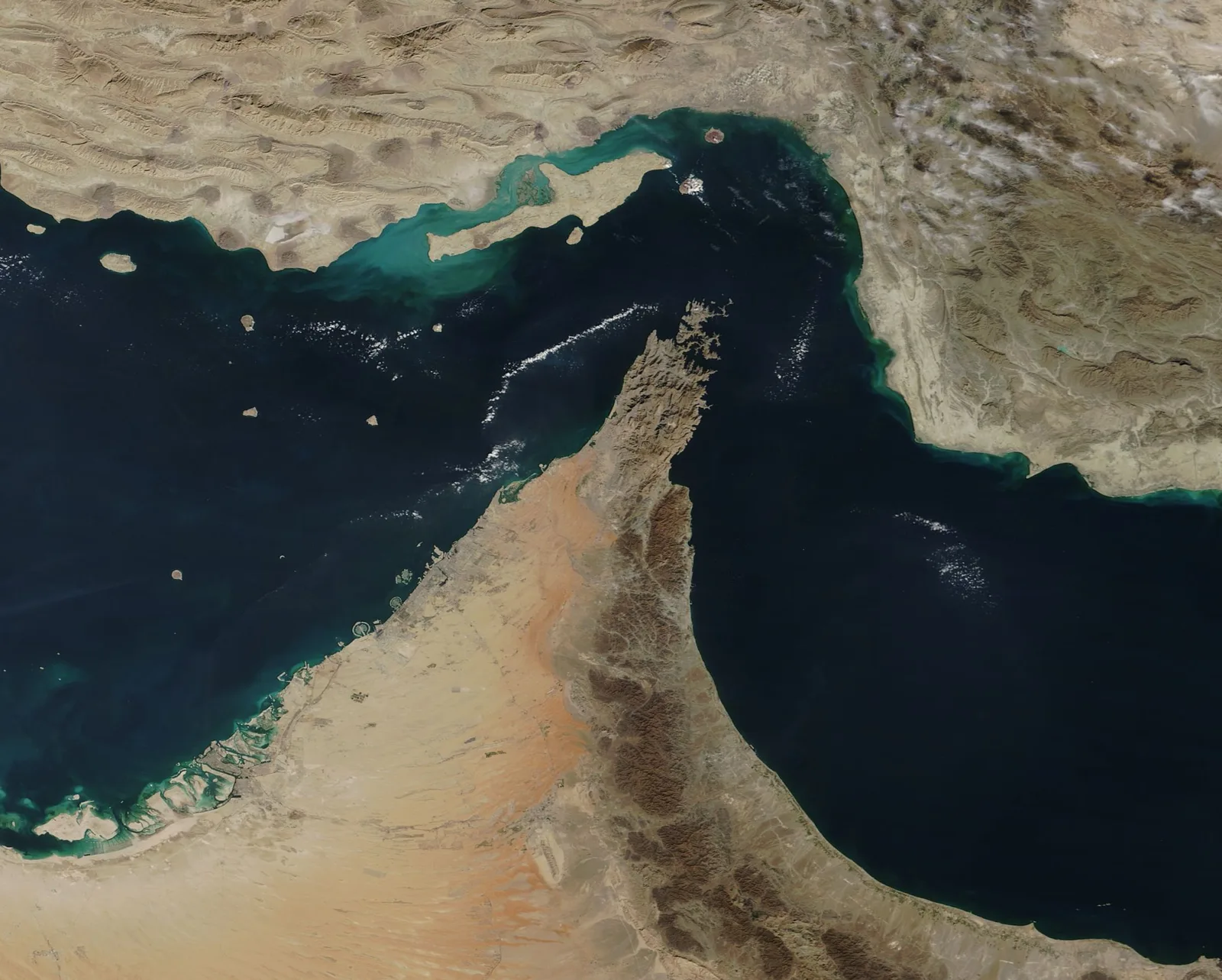 File photo
What happened
Key facts
- HSBC Group Chief Executive Georges Elhedery said investment in Gulf alternatives could make the Strait of Hormuz redundant within five years (per insurancejournal.com, businesstoday.in).
- Elhedery said Gulf nations were investing in energy pipelines to ports and other logistics routes as alternatives to the Strait of Hormuz (per insurancejournal.com, businesstoday.in).
- Elhedery said Gulf investment could help the region recover, continue growing and weather the Iran war’s economic effects (per insurancejournal.com, businesstoday.in).
- An HSBC survey of more than 1,600 business leaders and about 820 global institutional investors found respondents still viewed the Gulf as an attractive investment hub (per insurancejournal.com).
- The Middle East, North Africa and Turkey had $872 billion in individual project packages within a wider $1.4 trillion pipeline of planned, unawarded infrastructure projects (per insurancejournal.com, businesstoday.in).
The brief
HSBC Group Chief Executive Georges Elhedery said investment in Gulf pipelines and other logistics routes could make the Strait of Hormuz redundant within five years, presenting infrastructure as a way for the region to reduce reliance on the waterway during the Iran war. His statement describes a possible outcome, not a completed shift in trade routes.
Elhedery said Gulf governments were directing resources toward energy pipelines to ports and other alternatives. He said the region could recover and keep growing, but that doing so would require substantial investment. He also expressed hope for a resolution to the conflict, while maintaining that Hormuz might become redundant within five years.
The economic scale cited alongside the proposal is substantial: the Middle East, North Africa and Turkey have $872 billion in individual project packages within a broader $1.4 trillion pipeline of infrastructure projects that are planned but not yet awarded.
Those figures cover a wide region and a pipeline of prospective projects; they do not establish how much will be built, where each project will be located, or whether the projects will replace shipping through Hormuz. The route’s importance gives the proposal its immediate context.
BusinessToday says the Strait of Hormuz previously carried about one-fifth of global oil and liquefied natural gas trade. That makes alternative pipelines and logistics routes relevant to the region’s exposure to disruption, while the five-year horizon in Elhedery’s remarks signals a longer-term infrastructure possibility rather than an immediate substitute.
HSBC said a survey of more than 1,600 business leaders and about 820 global institutional investors found respondents continued to regard the Gulf as an attractive investment hub. That finding sits alongside Elhedery’s call for significant investment: investor sentiment, as described in the survey, is not a commitment to finance or build the proposed alternatives.
Elhedery made the remarks at an HSBC Future Forum event in Dubai. His central argument links the Gulf’s ability to keep growing with investment in routes and infrastructure that could lessen dependence on Hormuz. Whether the region can translate the project pipeline into operating alternatives remains the key practical question raised by his forecast.
Why it matters
- The Gulf’s proposed alternatives concern a route that BusinessToday says previously carried about one-fifth of global oil and liquefied natural gas trade; pipelines and logistics routes are the specific mechanisms Elhedery identified for reducing reliance.
- The Middle East, North Africa and Turkey’s $872 billion in project packages sit within a $1.4 trillion pipeline of planned, unawarded infrastructure, making project awards and construction relevant to whether alternatives materialize.
- More than 1,600 business leaders and about 820 institutional investors still viewed the Gulf as an attractive investment hub in HSBC’s survey, a sentiment relevant to the region’s ability to attract investment.
What to watch next
- Whether Gulf governments direct investment into energy pipelines to ports and other alternative logistics routes, as Elhedery described.
- Whether projects in the $872 billion package and $1.4 trillion planned, unawarded infrastructure pipeline are awarded and built.
- Whether the Gulf’s alternative routes develop enough to support Elhedery’s forecast of reduced reliance on Hormuz within five years.
- Whether the conflict reaches a resolution, which Elhedery said he hoped to see.
How it's being covered
Coverage analysisShow details5 source articles · 5 unique outletsOutlet political mix: Too few rated· 2 Center · 3 unratedWhere the outlets are based: Asia 40% · US/Canada 20% · Other 40%
How outlets' accounts compare
1 framing difference · 2 uncorroborated claims · 3 information gaps- Insurance Journal emphasizes Elhedery’s view that investment could help the region recover and continue growing, alongside HSBC survey findings on investor sentiment; BusinessToday foregrounds Hormuz’s prior role in oil and LNG trade and characterizes the conflict as exposing reliance on the strait.
- Elhedery presents investment in alternative routes as a way the Gulf could lessen dependence on Hormuz; the sources do not establish that this infrastructure would resolve the conflict or guarantee economic recovery.
- Elhedery said he hoped to see a resolution to the conflict and that Hormuz might become redundant in five years.
- The sources do not identify which Gulf governments will fund particular routes, their proposed locations or capacities, or the expected cost and construction schedule of individual alternatives.
- The sources give no figures for current or future trade volumes that alternative routes could carry.
- Elhedery’s five-year forecast is a possibility, not confirmation that Gulf alternatives will replace Hormuz or that the proposed infrastructure will be completed.
Timeline
Developments from this story's sources, dated background we compiled and fact-checked, and our earlier coverage. Each row says which.- Saudi Arabia’s East-West Pipeline, built during the Iran-Iraq War and completed in 1981, carries crude to Red Sea ports.Background · from our historical context
- In 1987, the United States began reflagging Kuwaiti tankers and escorting them through the Gulf under Operation Earnest Will.Background · from our historical context
- The United Arab Emirates began operating its Abu Dhabi Crude Oil Pipeline to Fujairah in 2012, connecting inland fields to a port outside the strait.Background · from our historical context
- The United States and Israel launched coordinated strikes across Iran.Background · compiled and fact-checked by Updat3
- Iran announced that vessels passing through the Strait of Hormuz would need prior authorization from the IRGC Navy.Background · compiled and fact-checked by Updat3
- The United States and Iran signed a memorandum of understanding concerning freedom of navigation in the Strait of Hormuz; implementation later stalled over security disagreements.Background · compiled and fact-checked by Updat3
- Iran presented a proposal to reopen the Strait of Hormuz after an interim ceasefire collapsed.Background · compiled and fact-checked by Updat3
How we got here
On February 28, 2026, the United States and Israel launched coordinated strikes on Iranian power plants, air defenses and military infrastructure; the war that followed made Gulf energy routes a matter of immediate economic and security concern.
The Strait of Hormuz had already been a strategic vulnerability during the 1980–88 Iran-Iraq War, when attacks on commercial shipping became known as the “Tanker War.” In 1987, the United States began reflagging Kuwaiti tankers and escorting them through the Gulf under Operation Earnest Will. Gulf states had developed routes that bypass the strait well before 2026.
Original sources
5 articles from 5 outletsEvery story links to the reporting it was built from. How we choose sources
Spotted a factual error, a broken link or a misleading summary? Tell us.