
Iranian leaders set conditions for US talks during Munir’s Tehran visit
Iranian leaders restated conditions for negotiations with Washington as Pakistan’s army chief Asim Munir left Tehran. Parliament Speaker Mohammad Bagher Ghalibaf said Iran had no new message for Washington and urged it to meet seven conditions presented in New York.
AI-assisted synthesis · Based on 4 outlets' reporting · Article text read from 2 of 4 outlets · 1 article captured only in partHow it's made
View timeline · 11 entries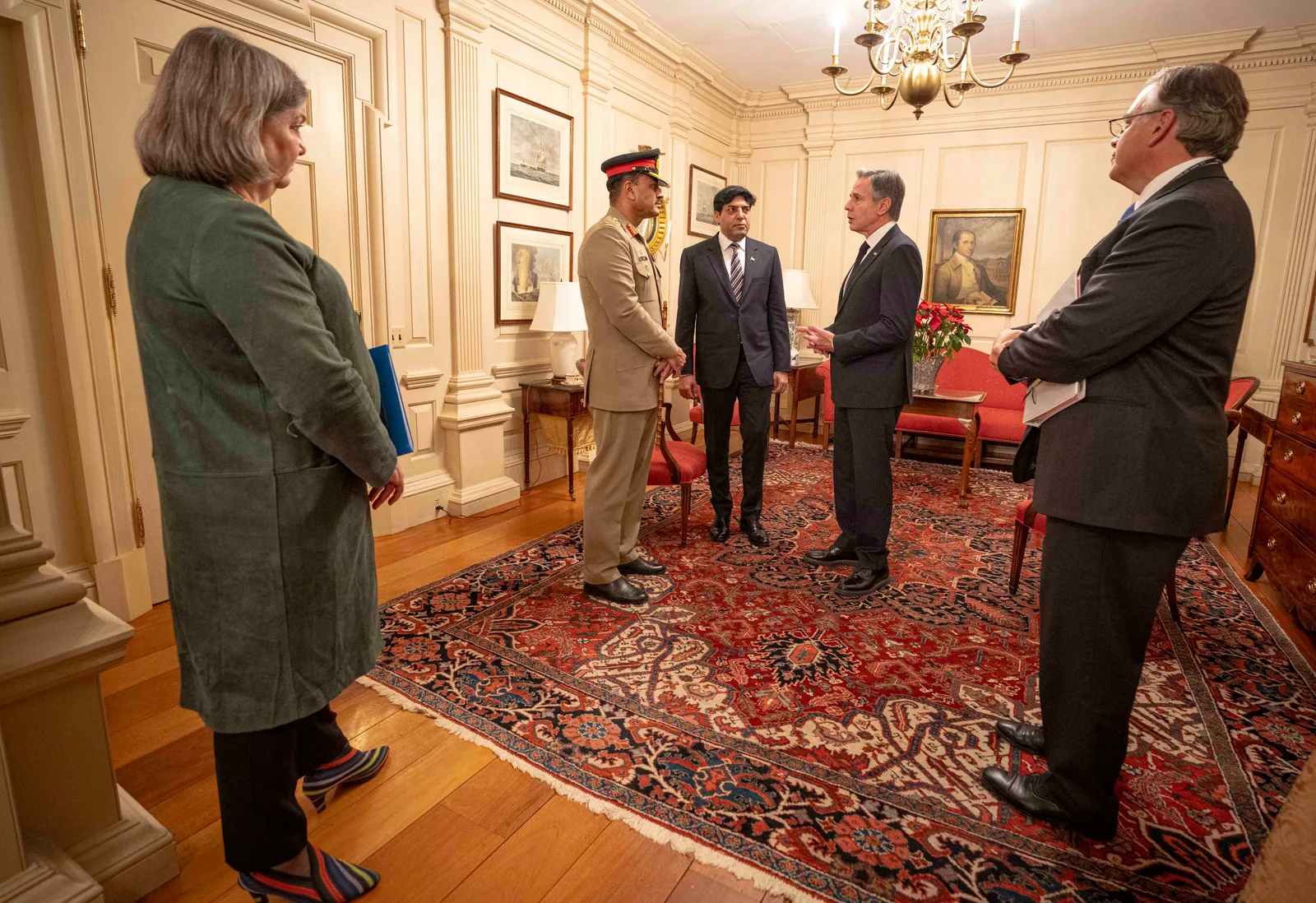 File photo
What happened
Key facts
- Tehran says the Non-Proliferation Treaty guarantees Iran’s right to uranium enrichment.
- Benjamin Netanyahu reiterated his pledge to topple the Iranian government, saying that was key to preventing it from developing nuclear weapons.
- Parliament Speaker Mohammad Bagher Ghalibaf said Iran had no new message for Washington and called on it to meet seven conditions presented in New York.
- Donald Trump has called for zero uranium enrichment.
- Qatar and Pakistan are mediating between the United States and Iran.
- A June memorandum of understanding between the United States and Iran focused on reopening the Strait of Hormuz and said Iran would not procure or develop nuclear weapons.
- Analysts said differing interpretations of the memorandum’s clauses caused it to fall apart.
- Pezeshkian said Iran did not trust the United States and referred to US attacks during earlier negotiations.
The brief
Iranian leaders reiterated their conditions for negotiations with Washington as Pakistan’s army chief Asim Munir left Tehran, keeping the dispute over uranium enrichment central to the diplomatic effort. Parliament Speaker Mohammad Bagher Ghalibaf said Iran had no new message for the United States and called on Washington to meet seven conditions presented in New York.
Ghalibaf accused the Trump administration of violating the Islamabad memorandum and said military threats would not change Iran’s decisions. That is his accusation, not an independently established finding in the reporting.
Iranian leaders also ruled out transferring enriched nuclear material abroad, a position that narrows the options under discussion for addressing the nuclear issue. The nuclear disagreement is expressed in competing terms. Tehran says the Non-Proliferation Treaty guarantees Iran a right to enrich uranium; Donald Trump has called for zero enrichment.
Those positions leave little common ground on the central nuclear question, even as Pakistan and Qatar continue mediation efforts. The current diplomatic effort follows a June memorandum of understanding between the United States and Iran. Pakistan and Qatar have mediated negotiations in recent months, and Munir helped broker talks that led to the memorandum.
The agreement focused on reopening the Strait of Hormuz and said Iran would not procure or develop nuclear weapons. The parties did not reach a comprehensive agreement, including on the nuclear issue, within the memorandum’s 60-day period. Iranian state media reported that a Qatari delegation visited Tehran after Munir’s departure.
The reporting places that visit after the Pakistani army chief’s exit, but does not describe its discussions. Qatar’s involvement is part of a mediation effort also involving Pakistan; the visit itself is reported by Iranian state media.
The immediate test for the talks is whether the seven conditions Ghalibaf says Iran presented in New York can be reconciled with Washington’s demand for zero enrichment and Tehran’s stated treaty-based right to enrich.
The sources do not specify the conditions’ contents, beyond Ghalibaf’s call for Washington to meet them, or document an agreement emerging from the Qatari delegation’s visit.
Why it matters
- Iran’s refusal to transfer enriched nuclear material abroad, alongside Washington’s zero-enrichment demand, leaves the nuclear issue as a direct obstacle to a comprehensive deal.
- The June memorandum linked the talks to reopening the Strait of Hormuz and stated that Iran would not procure or develop nuclear weapons; its 60-day period ended without a comprehensive nuclear agreement.
- Pakistan and Qatar have mediated the negotiations, and the reported Qatari delegation visit followed Munir’s departure from Tehran.
What to watch next
- Whether Washington addresses the seven conditions Ghalibaf said Iran presented in New York.
- Whether Iran and the United States can reconcile Tehran’s stated treaty-based right to enrichment with Donald Trump’s call for zero enrichment.
- Whether Qatar’s delegation and Pakistan continue mediation after Munir’s departure from Tehran.
How it's being covered
Coverage analysisShow details4 source articles · 4 unique outletsOutlet political mix: Mostly Right· 1 Center · 2 Right · 1 unratedWhere the outlets are based: Asia 50% · Unknown 50%
How outlets' accounts compare
2 framing differences · 2 uncorroborated claims · 3 information gaps- iranintl.com focuses on Munir’s departure, Ghalibaf’s account of Iran’s conditions, and Iran’s refusal to transfer enriched material abroad; dominicanrepublicpost.com foregrounds the opposing positions on enrichment and the failure to reach a comprehensive nuclear deal within the June memorandum’s 60-day period.
- Iranian state media reported the Qatari delegation’s visit; dominicanrepublicpost.com does not mention the visit.
- Ghalibaf said Iran had no new message for Washington and called on it to meet seven conditions presented in New York.
- Tehran says the Non-Proliferation Treaty guarantees Iran a right to uranium enrichment; Donald Trump has called for zero enrichment.
- The sources do not detail the seven conditions Ghalibaf said Iran presented in New York.
- The sources do not describe what the Qatari delegation discussed in Tehran.
- Ghalibaf accused the Trump administration of violating the Islamabad memorandum; the reporting does not independently establish that allegation.
Timeline
Developments from this story's sources, dated background we compiled and fact-checked, and our earlier coverage. Each row says which.- On August 19, 1953, a CIA- and MI6-backed coup overthrew Prime Minister Mohammad Mosaddegh and restored the Shah’s authority.Background · from our historical context
- The Treaty on the Non-Proliferation of Nuclear Weapons opened for signature.Background · compiled and fact-checked by Updat3
- The Iranian Revolution ended the monarchy of Shah Mohammad Reza Pahlavi.Background · compiled and fact-checked by Updat3
- Iran later developed regional partners, including Hezbollah, founded in Lebanon in 1982.Background · from our historical context
- Iran and six world powers agreed to the Joint Comprehensive Plan of Action, which limited Iran’s nuclear activities.Background · compiled and fact-checked by Updat3
- President Donald Trump announced that the United States was withdrawing from the nuclear agreement and reimposing sanctions.Background · compiled and fact-checked by Updat3
- Iran began exceeding some nuclear limits set by the agreement, saying its steps answered the US withdrawal.Background · compiled and fact-checked by Updat3
- Iran launched drones and missiles at Israel.Background · compiled and fact-checked by Updat3
- It followed the coordinated US-Israeli strikes on Iranian nuclear and military infrastructure that began on February 28, 2026.Background · from our historical context
- The United States and Israel launched coordinated strikes across Iran.Background · compiled and fact-checked by Updat3
- The June 2026 US–Iran memorandum of understanding, brokered with help from Pakistan’s army chief Asim Munir, focused on reopening the Strait of Hormuz and stated that Iran would not procure or develop nuclear weapons.Background · from our historical context
How we got here
The June 2026 US–Iran memorandum of understanding, brokered with help from Pakistan’s army chief Asim Munir, focused on reopening the Strait of Hormuz and stated that Iran would not procure or develop nuclear weapons. It followed the coordinated US-Israeli strikes on Iranian nuclear and military infrastructure that began on February 28, 2026.
In the negotiations that followed, the United States and Iran faced a longstanding dispute over whether Iran could enrich uranium. The Treaty on the Non-Proliferation of Nuclear Weapons (NPT), opened for signature on July 1, 1968, and in force from March 5, 1970, recognizes a right to peaceful nuclear energy under safeguards; Iran signed in 1968 and ratified in 1970.
Original sources
4 articles from 4 outletsEvery story links to the reporting it was built from. How we choose sources
Spotted a factual error, a broken link or a misleading summary? Tell us.