
IRGC Navy says mines struck two supertankers carrying over 4.5 million barrels near Hormuz
Iran warned that it would not allow US military vessels to enter the Persian Gulf, while the IRGC Navy claimed two supertankers struck naval mines near the Strait of Hormuz. The tankers were carrying more than 4.5 million barrels of crude oil combined, according to the IRGC Navy.
AI-assisted synthesis · Based on 4 independent reports from 6 outlets · Article text read from 1 of 4 reportsHow it's made
View timeline · 11 entries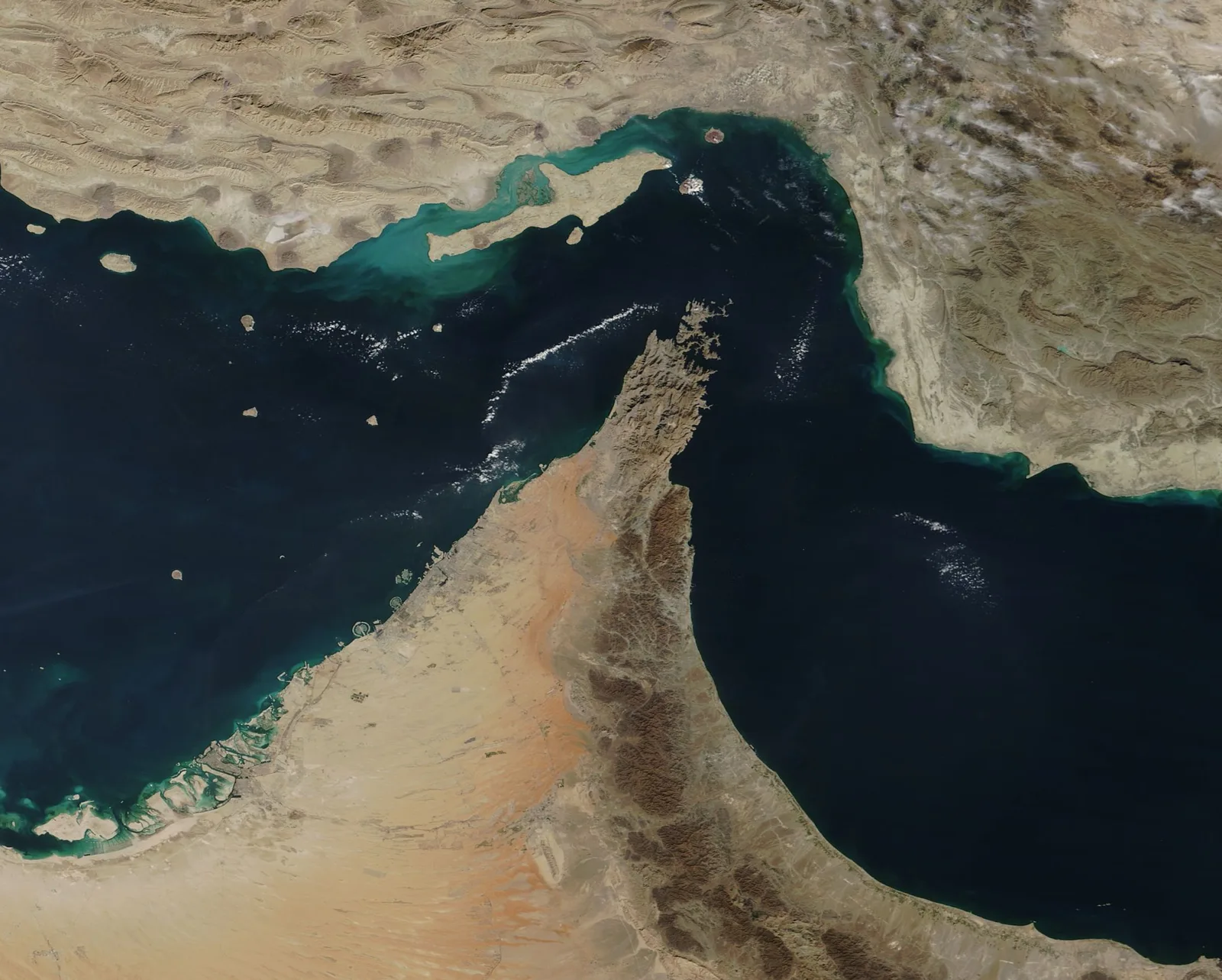 File photo
What happened
The brief
Iran warned that it would not allow US military vessels to enter the Persian Gulf, while the Islamic Revolutionary Guard Corps Navy claimed that two supertankers had struck naval mines near the Strait of Hormuz. The warning and the reported mine strikes are the central developments in the account published by DNA India.
The IRGC Navy said the two tankers were carrying more than 4.5 million barrels of crude oil between them. That figure describes the combined cargo, not the amount carried by either vessel individually. The account does not identify the tankers or report whether they were damaged.
DNA India places the warning amid escalating tensions between Tehran and Washington, but does not describe a specific preceding action as its trigger. It attributes the mine-strike claim to the IRGC Navy; it does not present the strikes as independently confirmed. The warning is attributed to Iran, rather than quoted from a named official.
The headlines from Iraq Sun and The Tribune also describe Iran warning the United States against Persian Gulf entry and the IRGC claiming that two supertankers hit mines near the Strait. Livemint’s headline adds that Iran claimed control of the Strait of Hormuz.
The Economic Times headline likewise says Iran claimed control and warned US warships against entering the Persian Gulf; it also refers to a “fresh strike.” Those headline descriptions do not establish further details about control or the strike. The reported mine incidents are located near the Strait of Hormuz, while Iran’s warning concerns entry into the Persian Gulf.
The account gives no further detail about how Iran would enforce the warning. It also does not specify the vessels’ operators or flags, the exact location of the alleged mine strikes, or any subsequent movement by US vessels. The account leaves the tankers’ condition and any consequences of the alleged mine strikes unreported.
Its concrete detail about the cargo is the IRGC Navy’s combined estimate of more than 4.5 million barrels; it does not break that amount down by vessel. The principal immediate point is therefore the pairing of Iran’s warning with the IRGC Navy’s claim of two mine strikes, rather than a confirmed account of damage or disruption.
Why it matters
- The IRGC Navy’s claim concerns two supertankers carrying more than 4.5 million barrels of crude oil combined, making the cargo the clearest quantified stake in the account.
- Iran’s warning specifically concerns US military vessels entering the Persian Gulf; the stated mechanism at issue is their entry into the gulf.
- The alleged mine strikes are placed near the Strait of Hormuz, but the account does not state that the tankers were damaged or that their cargo was disrupted.
What to watch next
- Whether Iran takes any action to enforce its warning against US military vessels entering the Persian Gulf.
- Whether the IRGC Navy’s claim about the two supertankers and naval mines is independently confirmed.
- Whether the condition of the tankers or their cargo is reported.
How it's being covered
Coverage analysisShow details6 source articles · 6 unique outlets · 4 distinct reportsOutlet political mix: Center Only· 5 Center · 1 unratedWhere the outlets are based: Asia 50% · Unknown 33% · Other 17%
- Coverage is currently concentrated among Center-rated outlets (5 of 5 rated sources); comparatively few Left or Right-rated outlets have published on the event.
How outlets' accounts compare
Timeline
Developments from this story's sources, dated background we compiled and fact-checked, and our earlier coverage. Each row says which.- The Iranian Revolution ended the rule of Shah Mohammad Reza Pahlavi.Background · compiled and fact-checked by Updat3
- From 1984, Iran and Iraq attacked vessels and oil facilities in what became known as the Tanker War.Background · from our historical context
- In 1987, after Kuwait asked for protection for its tankers, the United States began Operation Earnest Will, escorting reflagged Kuwaiti vessels through the Gulf.Background · from our historical context
- On April 14, 1988, the USS Samuel B. Roberts struck an Iranian mine in international waters.Background · from our historical context
- The U.S. Navy launched Operation Praying Mantis, striking Iranian naval forces and installations after a U.S. ship hit an Iranian mine.Background · compiled and fact-checked by Updat3
- Two tankers were damaged in the Gulf of Oman; the United States blamed Iran, which denied involvement.Background · compiled and fact-checked by Updat3
- Iran seized the South Korean-flagged tanker Hankuk Chemi in the Persian Gulf.Background · compiled and fact-checked by Updat3
- The United States and Israel launched coordinated strikes across Iran.Background · compiled and fact-checked by Updat3
- Iran announced that vessels passing through the Strait of Hormuz would need prior authorization from the IRGC Navy.Background · compiled and fact-checked by Updat3
- The United States and Iran signed a memorandum of understanding concerning freedom of navigation in the Strait of Hormuz; implementation later stalled over security disagreements.Background · compiled and fact-checked by Updat3
- Maritime security sources recorded at least 10 vessels targeted, including oil and liquefied natural gas tankers off Fujairah and Sohar.Background · compiled and fact-checked by Updat3
How we got here
On February 28, 2026, the United States and Israel began coordinated strikes on Iranian power plants, air defenses and military infrastructure; the conflict was ongoing by October 24, 2026. That military confrontation forms the immediate backdrop to the Persian Gulf’s earlier history as a route where Iran, the United States and other states have contested shipping security.
The Strait of Hormuz connects the Persian Gulf to the Gulf of Oman and the Arabian Sea. The 1982 United Nations Convention on the Law of the Sea established a right of transit passage through international straits; Iran signed the convention but did not ratify it.
Original sources
6 articles from 6 outletsEvery story links to the reporting it was built from. How we choose sources
Spotted a factual error, a broken link or a misleading summary? Tell us.