
Iranian state media says tanker caught fire after striking a mine in Hormuz
Euronews reported that Iran’s Revolutionary Guard Corps said a tanker carrying more than two million barrels of oil struck a sea mine in the Strait of Hormuz on Saturday. The IRGC said the vessel caught fire after taking an “unauthorised route” through the strait.
AI-assisted synthesis · Based on 4 independent reports from 5 outlets · Article text read from 1 of 4 reportsHow it's made
View timeline · 9 entries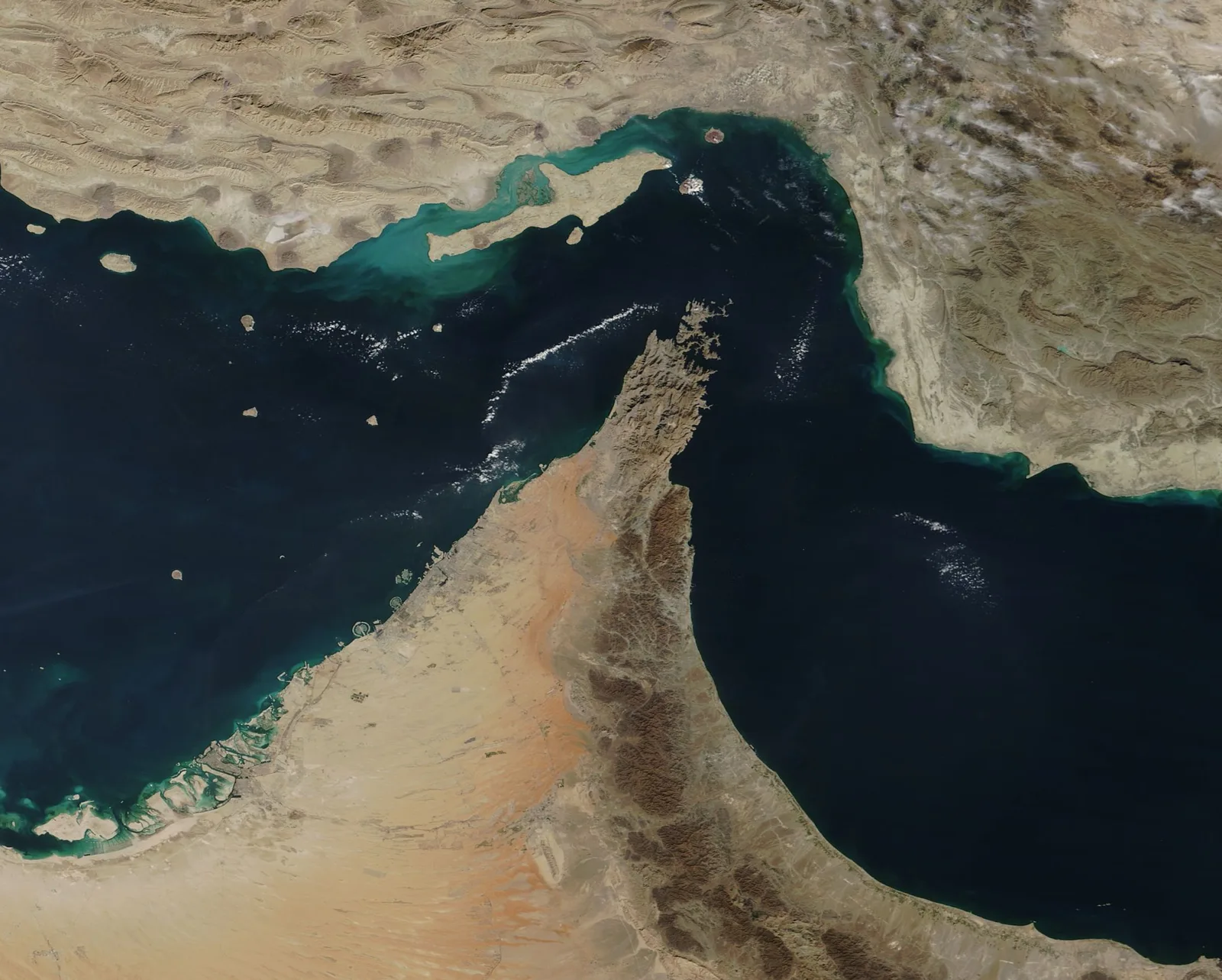 File photo
What happened
Key facts
- Iran’s Revolutionary Guard Corps said on Saturday that a tanker caught fire after striking a sea mine in the Strait of Hormuz (per Euronews).
- The IRGC said the tanker was carrying more than two million barrels of oil (per Euronews).
- The IRGC said the tanker was attempting to pass through what it called an unauthorised route in the Strait of Hormuz (per Euronews).
- Iranian television aired video said to show a tanker explosion in the Strait of Hormuz (per modernghana.com, Al Jazeera, Euronews).
- Yahoo’s headline said an oil tanker exploded in the Strait of Hormuz and that Iran vowed the waterway would remain closed (per Yahoo, Euronews, trtworld.com).
- TRT World’s headline said Iran reported that an oil tanker caught fire after hitting a mine in the Strait of Hormuz (per trtworld.com, Euronews).
The brief
Iran’s Revolutionary Guard Corps said a tanker carrying more than two million barrels of oil caught fire after striking a sea mine in the Strait of Hormuz. Euronews reported that the IRGC navy described the vessel as trying to travel through a route it considered unauthorised.
The account came through a statement shared by Iranian state media; the reported cause and the IRGC’s description of the route are therefore claims by the Iranian military, rather than independently confirmed findings in the account. The report placed the incident in the Strait of Hormuz and identified the vessel only as a tanker.
It said the IRGC described a major explosion and a fierce fire. The report did not provide the vessel’s name, the number of people aboard, any casualty figures or details about damage to the ship or its cargo. It also did not say whether the mine’s origin or placement had been established.
Iranian television aired footage described as showing a tanker explosion in the strait, according to the headlines from Modern Ghana and Al Jazeera. Those headlines do not establish the footage’s provenance or independently verify that it depicts the reported tanker. Yahoo’s headline described an oil tanker explosion and said Iran vowed that the waterway would remain closed.
TRT World’s headline likewise attributed to Iran the claim that an oil tanker caught fire after hitting a mine. Euronews said passage through the strait had been cut off following U.S. and Israeli strikes on Iran, and that the United States had imposed a naval blockade on Iranian ports.
The article did not specify when the passage restriction or blockade began, or provide details about how either was being enforced. Those broader developments form the context in the report, but it did not say that they caused the tanker incident. The IRGC’s account linked the fire to the vessel’s route and its reported contact with a mine.
The available description does not establish whether another party confirmed that account, identify who laid the mine, or provide a separate explanation of the explosion. The video headlines establish that Iranian television aired footage said to depict an explosion, not that the footage verifies the reported cause.
Euronews also said the strait usually carries around 25% of the world’s seaborne oil trade. It reported that Admiral Brad Cooper, commander of U.S. Central Command, said on Friday that U.S. forces were working with regional allies and shipping-industry partners to help protect vessels navigating the strait. The report did not connect that effort directly to the tanker fire.
The central reported facts remain the IRGC’s account of a mine strike, fire and cargo volume, alongside the claim that the tanker used a route the IRGC considered unauthorised.
Why it matters
- The tanker’s reported cargo—more than two million barrels of oil—makes the reported fire directly relevant to the vessel and its cargo.
- Euronews said the Strait of Hormuz usually carries around 25% of the world’s seaborne oil trade, linking the reported incident to a key oil-shipping route.
- Euronews reported that U.S. forces were working with regional allies and shipping-industry partners to help protect vessels navigating the strait.
What to watch next
- Whether the IRGC or Iranian state media provides further details about the tanker, its crew, or the reported fire.
- Whether the footage aired by Iranian television is identified or independently verified as showing the reported tanker incident.
- Whether the IRGC’s claim about a sea mine and an unauthorised route is confirmed or addressed by another named party.
- Whether U.S. forces, regional allies, or shipping-industry partners provide further details about their stated work to protect vessels in the strait.
How it's being covered
Coverage analysisShow details5 source articles · 5 unique outlets · 4 distinct reportsOutlet political mix: Too few rated· 2 Center · 3 unratedWhere the outlets are based: Middle East 40% · US/Canada 20% · Other 40%
How outlets' accounts compare
Timeline
Developments from this story's sources, dated background we compiled and fact-checked, and our earlier coverage. Each row says which.- The United Nations adopted the Convention on the Law of the Sea, which sets rules for passage through international straits.Background · compiled and fact-checked by Updat3
- From 1984, Iraq and Iran attacked commercial shipping in the Persian Gulf during the conflict’s so-called Tanker War.Background · from our historical context
- In 1987, the United States began Operation Earnest Will, escorting reflagged Kuwaiti tankers through the Gulf.Background · from our historical context
- On April 14, 1988, the US frigate USS Samuel B. Roberts struck an Iranian mine in international waters; four days later, US forces launched Operation Praying Mantis against Iranian naval targets.Background · from our historical context
- The U.S. Navy launched Operation Praying Mantis, striking Iranian naval forces and installations after a U.S. ship hit an Iranian mine.Background · compiled and fact-checked by Updat3
- Iran’s parliament adopted a law asserting conditions on passage through its territorial waters.Background · compiled and fact-checked by Updat3
- Two tankers were damaged in the Gulf of Oman; the United States blamed Iran, which denied involvement.Background · compiled and fact-checked by Updat3
- The United States and Israel launched coordinated strikes across Iran.Background · compiled and fact-checked by Updat3
- Iran announced that vessels passing through the Strait of Hormuz would need prior authorization from the IRGC Navy.Background · compiled and fact-checked by Updat3
How we got here
The immediate backdrop to the current security crisis in the Strait of Hormuz is the war that began on February 28, 2026, when the United States and Israel launched coordinated strikes on Iranian power plants, air defenses and military infrastructure.
The legal framework for passage through the strait includes the United Nations Convention on the Law of the Sea (UNCLOS), adopted on December 10, 1982, and in force since November 16, 1994. Iran signed the convention in 1982 but has not ratified it; in 1993, Iran’s parliament adopted a law asserting conditions on passage through its territorial waters.
Original sources
1 of 5 articles · Europe · Show allEvery story links to the reporting it was built from. How we choose sources
Spotted a factual error, a broken link or a misleading summary? Tell us.