
Lagarde’s early ECB departure opens three senior appointments
The European Central Bank said Christine Lagarde will leave its presidency on Feb. 7, before her eight-year term ends. Her departure opens the selection of a successor and appointments to two other senior ECB posts whose terms end next year.
AI-assisted synthesis · Based on 5 outlets' reporting · Article text read from 3 of 5 outletsHow it's made
View timeline · 9 entries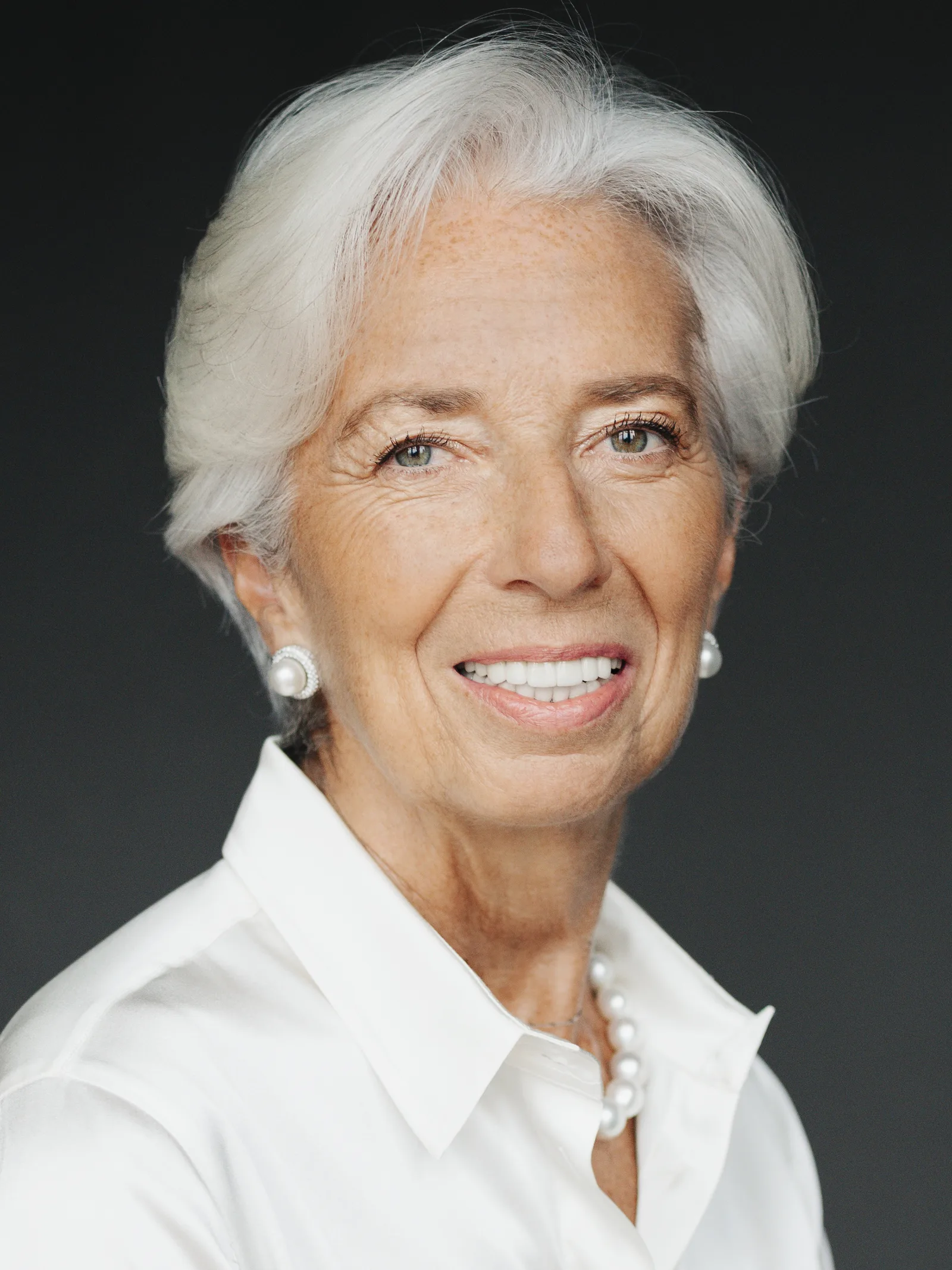 File photo
What happened
Key facts
- European Central Bank President Christine Lagarde said she would leave the post early to speak out on matters beyond monetary policy.
- Lagarde is due to depart on Feb. 7.
- The ECB said Christine Lagarde will leave on Feb. 7; her eight-year term was scheduled to end Oct. 31, 2027.
- Lagarde’s departure opens appointments for her successor and two other top officials who are leaving next year.
- The announcement was expected amid speculation that an early departure would let EU leaders choose a successor while Emmanuel Macron remains France’s president.
- Her term was scheduled to expire in October 2027.
- The article says polls favor far-right candidate Marine Le Pen in the French presidential election.
- European Council President Antonio Costa said the selection process would begin that day and proceed without delay.
The brief
The European Central Bank said Christine Lagarde will leave its presidency on Feb. 7, bringing forward the choice of its next president and opening two other senior appointments. Her eight-year term was scheduled to end Oct. 31, 2027, so the departure moves the succession well ahead of its original endpoint. The vacancies extend beyond the presidency.
The term of ECB chief economist Philip Lane is due to end May 31, while executive board member Isabel Schnabel is leaving Jan. 3 to join the International Monetary Fund. Lagarde’s departure therefore puts three senior posts into play for European Union leaders. European Council President Antonio Costa said the process to select Lagarde’s successor would begin immediately.
The Japan Times described Lagarde as announcing her resignation; the ECB announcement reported by ABC News and CNA said she would leave the presidency. All three accounts give Feb. 7 as the departure date. The political calendar is one explanation offered for the timing, but it remains speculation rather than a stated reason from Lagarde or the ECB.
ABC News and CNA report that the early exit could allow EU leaders to make the choice while Emmanuel Macron is still France’s president, before the French presidential election.
ABC News attributes that concern to Holger Schmieding, chief economist at Berenberg bank, who wrote that leaders were seeking some protection against the possibility that Marine Le Pen could win and influence the appointment. Schmieding said EU leaders would likely try to reach agreement on all three posts before a summit scheduled for Dec. 17-18.
He named former Netherlands central bank head Klaas Knot and Bank for International Settlements general manager Pablo Hernandez de Cos as leading candidates for Lagarde’s job. Those are Schmieding’s assessments, not confirmed nominations or decisions by EU leaders.
The Japan Times also places the appointment against economic pressures facing the ECB, citing inflation risks from an Iran-driven oil shock and rising bond yields, particularly in France, as threats to growth.
That account connects the succession to the economic environment in which the incoming president would serve; it does not identify those pressures as the reason for Lagarde’s departure. The immediate next steps are the selection process Costa said would start right away and negotiations among EU leaders over the three posts.
The possible pre-summit agreement and the candidates identified by Schmieding remain projections, while the dates for the departures of Lagarde, Lane and Schnabel define the appointments at stake.
Why it matters
- EU leaders must fill three senior ECB posts: the presidency, chief economist Philip Lane’s role and executive board member Isabel Schnabel’s seat.
- The timing places the presidential selection ahead of the French election, with the possibility that Marine Le Pen could influence the appointment cited as a concern by Holger Schmieding.
- The incoming ECB president will take office amid the inflation risks from an Iran-driven oil shock and rising bond yields, particularly in France, identified by The Japan Times as threats to growth.
What to watch next
- Whether the selection process for Lagarde’s successor begins immediately, as European Council President Antonio Costa said.
- Whether EU leaders reach agreement on the three posts before the Dec. 17-18 summit, as Holger Schmieding predicts.
- Whether EU leaders consider Klaas Knot or Pablo Hernandez de Cos for the ECB presidency; Schmieding identified both as leading candidates.
How it's being covered
Coverage analysisShow details6 source articles · 5 unique outletsOutlet political mix: Mostly Center· 1 Left · 4 CenterWhere the outlets are based: US/Canada 60% · Asia 40%
- Coverage is currently concentrated among Center-rated outlets (4 of 5 rated sources); comparatively few Right-rated outlets have published on the event.
2 sources are from a wire service (AP, Reuters, AFP or Bloomberg), whose reporting other outlets often republish.
How outlets' accounts compare
2 framing differences · 2 uncorroborated claims · 2 information gaps- The Japan Times presents Lagarde’s departure as a resignation and emphasizes economic volatility, including an Iran-driven oil shock and rising bond yields; ABC News and CNA emphasize the ECB’s announcement and the three senior appointments.
- The possibility that Marine Le Pen could influence the appointment is presented as speculation, with ABC News attributing the concern to Holger Schmieding; it is not stated as a confirmed motive by Lagarde or the ECB.
- Antonio Costa said the process to name a successor begins right away.
- Holger Schmieding said leaders were seeking to guard against the risk that Marine Le Pen could win the French presidential election and influence the choice.
- The sources do not provide details of the formal appointment procedures or the voting rules for the three posts.
- The sources do not establish that the French election speculation explains Lagarde’s decision; they report it as a possible reason for the timing.
Timeline
Developments from this story's sources, dated background we compiled and fact-checked, and our earlier coverage. Each row says which.- European leaders signed the Maastricht Treaty, setting out the path to economic and monetary union.Background · compiled and fact-checked by Updat3
- The European Central Bank was formally established.Background · compiled and fact-checked by Updat3
- Mario Draghi took office as president of the European Central Bank.Background · compiled and fact-checked by Updat3
- Luis de Guindos became European Central Bank vice-president for an eight-year term.Background · compiled and fact-checked by Updat3
- In July 2019, leaders nominated Ursula von der Leyen for European Commission president, Charles Michel for European Council president, Josep Borrell for EU foreign-policy chief and Lagarde for the ECB presidency.Background · from our historical context
- The European Council appointed Christine Lagarde as European Central Bank president.Background · compiled and fact-checked by Updat3
- Christine Lagarde took office as European Central Bank president.Background · compiled and fact-checked by Updat3
- Marine Le Pen lost the French presidential election runoff to Emmanuel Macron.Background · compiled and fact-checked by Updat3
- The National Rally won the largest share of votes in France’s European Parliament election, and Emmanuel Macron called a snap parliamentary election.Background · compiled and fact-checked by Updat3
How we got here
Christine Lagarde’s appointment in 2019 established the timetable against which later changes to the European Central Bank’s leadership were assessed: EU leaders selected her on Oct. 18, 2019, and she took office on Nov. 1, succeeding Mario Draghi.
Her eight-year term followed the ECB’s standard rule that members of its Executive Board serve non-renewable terms of up to eight years.
Original sources
6 articles from 5 outletsEvery story links to the reporting it was built from. How we choose sources
Spotted a factual error, a broken link or a misleading summary? Tell us.