
Lula accuses Bolsonaro of backing Trump tariffs in Brazil debate
In Brazil’s final televised debate before the runoff, President Luiz Inácio Lula da Silva accused Senator Flávio Bolsonaro of supporting U.S. President Donald Trump’s tariffs on Brazilian imports, an allegation Bolsonaro has repeatedly denied. Lula said Brazil could sell to other markets, while the candidates faced a runoff after neither secured a first-round majority.
AI-assisted synthesis · Based on 6 outlets' reporting · Article text read from 2 of 6 outletsHow it's made
View timeline · 9 entries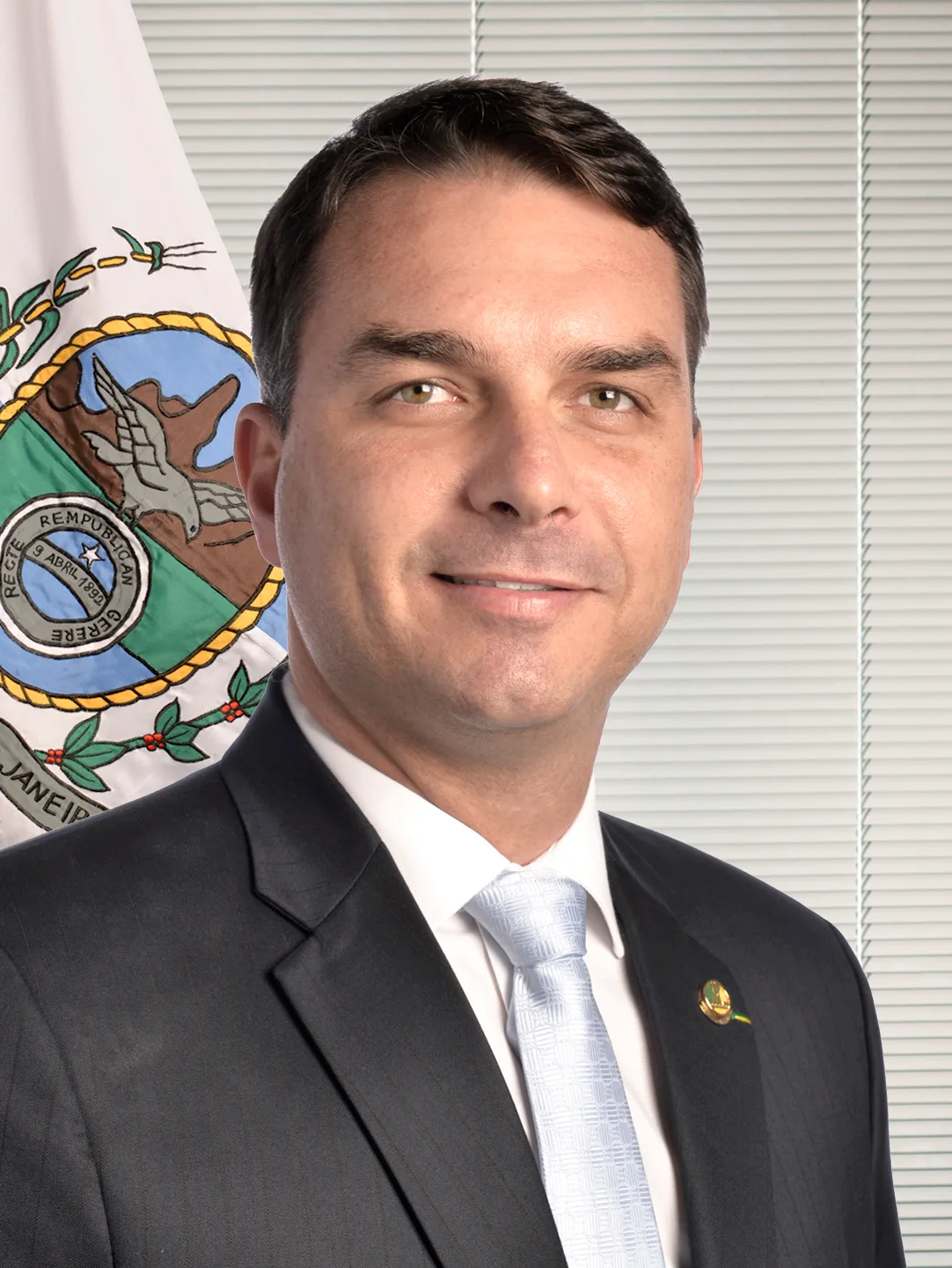 File photo
What happened
Key facts
- Lula accused Flávio Bolsonaro of supporting Donald Trump’s decision to impose tariffs on Brazilian imports, and Bolsonaro has repeatedly denied the accusation (per mercopress.com, abcnews.com).
- Lula said Brazil could sell to other markets if Trump did not want to buy Brazilian goods, and said Brazil had never exported as much as it did during his term (per mercopress.com, abcnews.com).
- Flávio Bolsonaro won the first round but did not secure an outright majority, setting up a runoff against Lula (per mercopress.com, abcnews.com, Reuters).
- Lula has warned the United States not to interfere in Brazil’s election and has made national sovereignty a campaign issue (per abcnews.com, mercopress.com).
- Voters have raised concerns about crime and the cost of living, while Lula’s approval rating had fallen as low as 24% during his term (per abcnews.com).
The brief
President Luiz Inácio Lula da Silva accused Senator Flávio Bolsonaro of backing U.S. President Donald Trump’s tariffs on Brazilian imports during the final televised debate before Brazil’s presidential runoff. Bolsonaro has repeatedly denied Lula’s allegation.
The exchange placed the tariff dispute and the question of U.S. influence in Brazil’s election alongside the candidates’ contest for the presidency. Lula said he was not worried about Trump’s tariffs and argued that Brazil could sell its goods elsewhere if the United States did not want to buy them. He also said Brazil had exported more during his term than ever before.
Those statements were Lula’s defence of his trade record; the reporting does not independently establish the scale or effect of the tariffs. The candidates entered the runoff after Flávio Bolsonaro led the first round without winning an outright majority. Mercopress reported that he received 47.03% of the vote, against Lula’s 45.16%.
It also cited a Datafolha poll putting both candidates at 50% of valid votes. ABC News likewise described the first round as inconclusive and said it set up Sunday’s runoff, while reporting that Bolsonaro had won by more than 2.2 million votes. The two accounts emphasize different pressures surrounding Lula’s campaign.
ABC News said voters had raised concerns about crime and the cost of living, and reported that Lula’s approval rating had fallen as low as 24% during his term. It also described Lula as making Brazil’s sovereignty a central campaign issue and said he had warned the United States against interference in the election.
Mercopress focused on the debate’s tariff accusation, Lula’s export argument and the candidates’ vote shares. The broader election context is a choice between Lula, the incumbent seeking another term, and Flávio Bolsonaro, whom ABC News described as an ally of Trump. ABC News reported that Lula had served as president from 2003 to 2010 and again since 2023.
It also noted that Brazil held first-round voting for state and federal lawmakers on Oct. 4; candidates who exceeded 50% of valid votes were confirmed. The immediate next step is the presidential runoff, which will determine whether Lula remains in office or Flávio Bolsonaro takes the presidency.
The debate record offers sharply different campaign claims: Lula links Bolsonaro to the U.S. tariff decision, while Bolsonaro rejects that charge. Lula’s stated alternative is to seek other markets, while the election also turns on voter concerns about crime and living costs and on the sovereignty issue he has raised.
Why it matters
- Brazilian voters face a runoff between Lula and Flávio Bolsonaro after first-round results of 47.03% and 45.16%, respectively, left neither with a majority.
- Brazilian exporters are the population directly implicated in Lula’s account of U.S. tariffs; he said Brazil could redirect sales to other markets, but the sources provide no tariff rate or trade-loss figure.
- Voters concerned about crime and the cost of living are among the constituencies shaping the campaign, while ABC News reported Lula’s approval had fallen as low as 24%.
- The candidates’ competing interests are electoral: Lula has made sovereignty and resistance to U.S. interference campaign issues, while Flávio Bolsonaro is seeking the presidency and is described by ABC News as a Trump ally.
What to watch next
- Whether Lula or Flávio Bolsonaro wins the presidential runoff described as taking place Sunday.
- Whether Flávio Bolsonaro maintains a lead over Lula after the first-round margin of 47.03% to 45.16%.
- Whether the candidates continue to address Lula’s tariff accusation and Bolsonaro’s denial in the runoff campaign.
- Whether Lula’s promise to seek other markets remains part of his trade argument during the runoff.
How it's being covered
Coverage analysisShow details6 source articles · 6 unique outletsOutlet political mix: Mixed· 3 Center · 2 Right · 1 unratedWhere the outlets are based: Unknown 50% · US/Canada 17% · Other 33%
One source is from a wire service (AP, Reuters, AFP or Bloomberg), whose reporting other outlets often republish.
How outlets' accounts compare
2 framing differences · 2 uncorroborated claims · 3 information gaps- Mercopress centers its account on Lula’s claim that Bolsonaro backed Trump’s tariffs, Bolsonaro’s denial, and Lula’s answer that Brazil could sell elsewhere; ABC News emphasizes sovereignty, U.S. election interference, crime, living costs and Lula’s approval rating.
- Lula accused Flávio Bolsonaro of being behind Trump’s tariffs; Bolsonaro denied the accusation.
- Lula attributed Trump’s tariff decision to Flávio Bolsonaro, while Bolsonaro has repeatedly denied the accusation; the sources do not independently establish that connection.
- Lula said he was not worried about the tariffs and could sell elsewhere if Trump did not want to buy from Brazil.
- The sources do not quantify the tariffs, identify affected Brazilian exports, or provide a measured economic impact.
- The sources do not provide a field date or margin of error for the Datafolha poll.
- Lula alleged that Flávio Bolsonaro was behind Trump’s tariff decision; Bolsonaro has repeatedly denied the allegation.
Timeline
Developments from this story's sources, dated background we compiled and fact-checked, and our earlier coverage. Each row says which.- Brazil’s Workers’ Party was founded.Background · compiled and fact-checked by Updat3
- Brazil promulgated a constitution requiring a presidential runoff if no candidate wins more than half of valid votes; it set the criminal-responsibility age at 18.Background · compiled and fact-checked by Updat3
- Luiz Inácio Lula da Silva won Brazil’s presidential runoff against José Serra.Background · compiled and fact-checked by Updat3
- Flávio Bolsonaro, a senator for Rio de Janeiro, entered the national political picture as part of his father’s political family; he won his Senate seat in 2018.Background · from our historical context
- Flávio Bolsonaro took office as a senator for Rio de Janeiro.Background · compiled and fact-checked by Updat3
- Brazil’s Supreme Federal Court annulled Lula’s corruption convictions, ruling that the Curitiba court lacked jurisdiction.Background · compiled and fact-checked by Updat3
- Luiz Inácio Lula da Silva defeated Jair Bolsonaro in Brazil’s presidential election.Background · compiled and fact-checked by Updat3
- Luiz Inácio Lula da Silva took office as Brazil’s president for a third, nonconsecutive term.Background · compiled and fact-checked by Updat3
- Flávio Bolsonaro led Lula in Brazil’s presidential first round, 47 percent to 45 percent.Background · compiled and fact-checked by Updat3
How we got here
The immediate electoral backdrop was Brazil’s first-round presidential vote, in which Flávio Bolsonaro received 47.03% and Luiz Inácio Lula da Silva 45.16%, leaving the contest to a runoff.
The tariff dispute had already become part of their political argument: President Donald Trump’s tariffs on Brazilian imports predated the final debate, while Flávio Bolsonaro had denied responsibility for them.
Original sources
6 articles from 6 outletsEvery story links to the reporting it was built from. How we choose sources
Spotted a factual error, a broken link or a misleading summary? Tell us.