
Lula challenges Flávio Bolsonaro over 250-billion-real spending cuts
At a televised debate in São Paulo, Brazilian President Luiz Inácio Lula da Silva asked Senator Flávio Bolsonaro whether he would cut 250 billion reais in public spending using an approach associated with Argentine President Javier Milei. The debate took place one week before Brazil’s presidential runoff, and the candidates were scheduled to meet again on TV Globo on Friday 23.
AI-assisted synthesis · Based on 4 outlets' reporting · Article text read from 2 of 4 outlets · 1 article captured only in partHow it's made
View timeline · 10 entries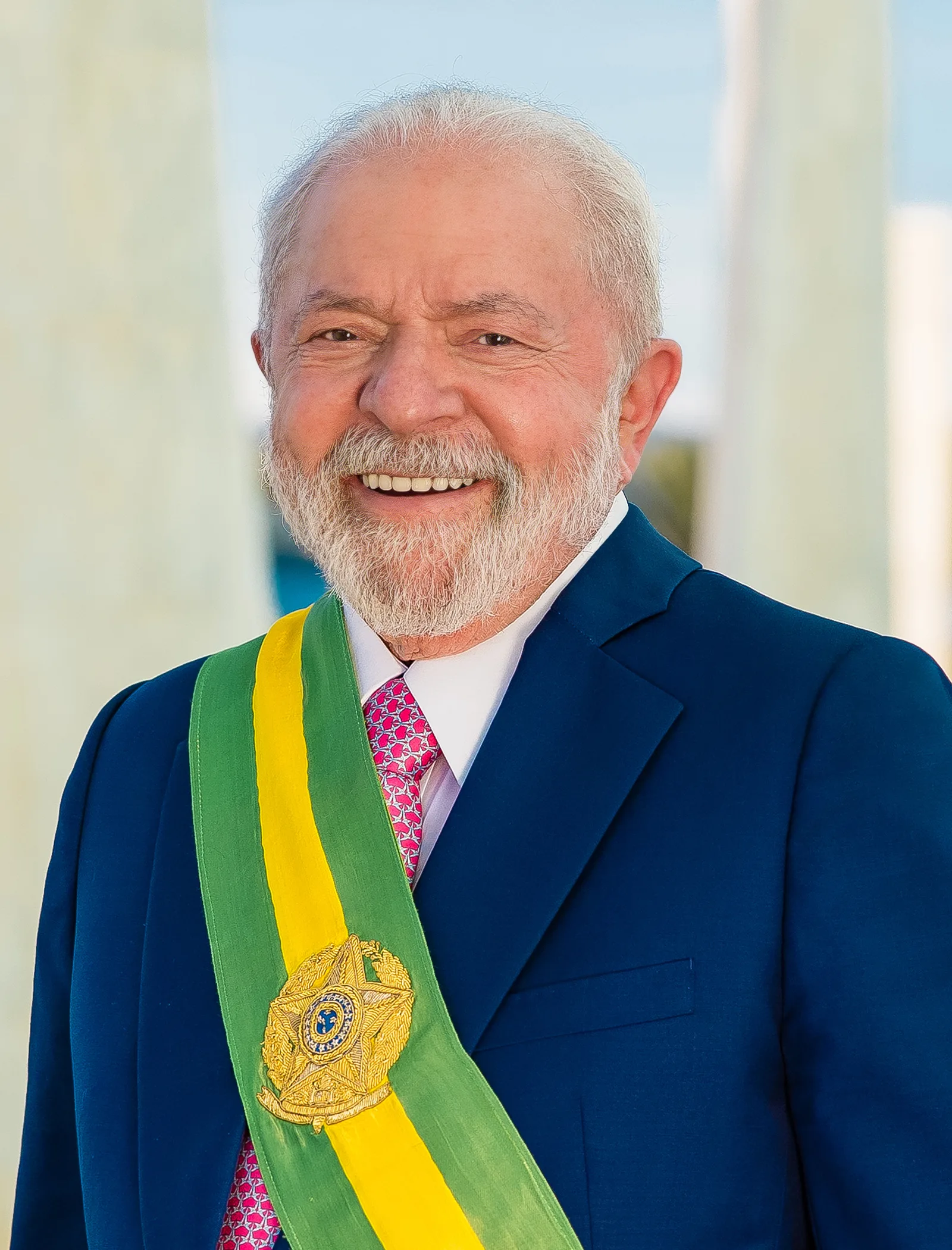 File photo
What happened
Key facts
- At a televised debate in São Paulo, Brazilian President Luiz Inácio Lula da Silva asked Senator Flávio Bolsonaro whether he would use Argentine President Javier Milei’s “chainsaw” approach to cut 250 billion reais in public spending (per mercopress.com).
- Lula also asked Bolsonaro whether he would transfer Brazil’s natural resources to the United States and accused him of planning to privatise Petrobras (per mercopress.com, news4jax.com).
- Lula called Bolsonaro and his family “subservient” while raising the question of transferring natural resources to the United States (per mercopress.com, news4jax.com).
- en.mercopress.com reported that polls showed a statistical tie, with a slight edge for Bolsonaro, who received 47.03% in the first round to Lula’s 45.16% (per mercopress.com).
The brief
Brazilian President Luiz Inácio Lula da Silva challenged Senator Flávio Bolsonaro at a televised debate in São Paulo over whether Bolsonaro would cut 250 billion reais in public spending using an approach associated with Argentine President Javier Milei.
The exchange put the proposed spending reduction at the centre of a campaign debate held one week before Brazil’s presidential runoff. Lula asked Bolsonaro whether he intended to apply Milei’s “chainsaw” to government spending.
The question connected Bolsonaro’s spending position to the Argentine president’s widely named approach, but the exchange as reported does not give Bolsonaro’s answer to that specific question or explain how the proposed cuts would be made.
Lula also asked whether Bolsonaro would transfer Brazil’s natural resources to the United States, called Bolsonaro and his family “subservient,” and accused him of planning to privatise Petrobras, the state oil company. Those were Lula’s accusations during the debate; the reporting does not provide a response from Bolsonaro to those claims.
Bolsonaro focused much of his debate time on security, according to Mercopress. The account also describes mutual accusations of corruption but does not set out their details. The two candidates’ differing emphases were therefore apparent: Lula raised spending, natural resources and Petrobras, while Bolsonaro devoted much of his time to security.
The debate was identified as the candidates’ first. Mercopress reported that neither had attended the first-round debates, while News4Jax also described the televised encounter as their first debate. The runoff was one week away, placing the dispute over the proposed 250-billion-real reduction in public spending before voters close to the election.
The campaign context included a close first-round result. Mercopress reported that Bolsonaro received 47.03% of the vote and Lula 45.16%, and characterized polling as a statistical tie with a slight edge for Bolsonaro. The figures and polling characterization are reported by that outlet.
The candidates were scheduled to meet again on TV Globo on Friday 23, two days before the vote. That debate was the next stated campaign encounter between them before the runoff.
Why it matters
- Brazilian voters face a concrete campaign choice over a proposed 250-billion-real reduction in public spending, which Lula directly pressed Bolsonaro to explain.
- The spending proposal concerns public expenditure in Brazil; the debate reporting does not spell out which services, groups or budget lines would bear any reductions.
- Lula’s questions about transferring natural resources to the United States and privatizing Petrobras put control of national resources and the state oil company into the campaign discussion.
- The first-round figures reported by Mercopress—47.03% for Bolsonaro and 45.16% for Lula—show the candidates entered the runoff after a closely divided vote.
What to watch next
- Whether Flávio Bolsonaro gives a specific account of the 250-billion-real spending cuts Lula asked about.
- Whether either candidate addresses Lula’s questions about Brazil’s natural resources and Petrobras at the scheduled TV Globo debate.
- The TV Globo debate scheduled for Friday 23, two days before the runoff vote.
- Whether the reported first-round margin of 47.03% to 45.16% is reflected in the runoff result.
How it's being covered
Coverage analysisShow details4 source articles · 4 unique outletsOutlet political mix: Mixed· 1 Left · 2 Center · 1 RightWhere the outlets are based: Latin America 50% · US/Canada 25% · Other 25%
How outlets' accounts compare
1 framing difference · 4 uncorroborated claims · 1 information gap- Mercopress emphasizes Lula’s questions about the 250-billion-real spending cuts, natural resources and Petrobras, and says Bolsonaro focused much of his time on security. News4Jax identifies the candidates and the debate’s timing but does not describe the exchanges or their respective emphases.
- Mercopress attributes the natural-resources and Petrobras allegations to Lula; no account supplies Bolsonaro’s reply to those claims.
- Mercopress reports Lula’s accusations about Bolsonaro’s plans for natural resources and Petrobras, but the supplied account gives no Bolsonaro response to those allegations.
- Lula asked whether Bolsonaro would use Javier Milei’s “chainsaw” to cut 250 billion reais in public spending.
- Mercopress reports that polling showed a statistical tie with a slight edge for Bolsonaro.
- The sources do not describe which budget items or public services would be affected by the proposed 250-billion-real spending cuts.
Timeline
Developments from this story's sources, dated background we compiled and fact-checked, and our earlier coverage. Each row says which.- President Getúlio Vargas established Petrobras in 1953 as a state-controlled oil company, making it a central institution in debates over national resource policy.Background · from our historical context
- Brazil promulgated a constitution requiring a presidential runoff if no candidate wins more than half of valid votes; it set the criminal-responsibility age at 18.Background · compiled and fact-checked by Updat3
- Brazil enacted a law opening oil exploration to private and foreign companies while retaining Petrobras’s state-controlled status.Background · compiled and fact-checked by Updat3
- Brazil enacted the Fiscal Responsibility Law, setting rules for public-finance management.Background · compiled and fact-checked by Updat3
- Brazil adopted Constitutional Amendment 95, limiting annual growth in federal primary spending to inflation.Background · compiled and fact-checked by Updat3
- Flávio Bolsonaro took office as a senator for Rio de Janeiro.Background · compiled and fact-checked by Updat3
- Lula defeated Bolsonaro in Brazil’s presidential runoff.Background · compiled and fact-checked by Updat3
- Brazil enacted a new fiscal framework through Complementary Law 200, replacing the spending ceiling.Background · compiled and fact-checked by Updat3
- Javier Milei won Argentina’s presidential runoff.Background · compiled and fact-checked by Updat3
- Flávio Bolsonaro led Lula in Brazil’s presidential first round, 47 percent to 45 percent.Background · compiled and fact-checked by Updat3
How we got here
The immediate electoral backdrop was Brazil’s first-round presidential vote in 2026, in which Luiz Inácio Lula da Silva received 45.16% and Flávio Bolsonaro 47.03%, according to the figures reported before the runoff. The contest followed the 2022 election, when Lula defeated then-president Jair Bolsonaro in a second round by 50.9% to 49.1%.
Flávio Bolsonaro, a senator and son of the former president, entered the 2026 race drawing on a political movement built during his father’s presidency, from 2019 to 2022. The 1988 Constitution set out extensive state responsibilities, including social services, while the Fiscal Responsibility Law of 2000 established requirements for managing public finances.
Original sources
1 of 4 articles · US/Canada · Show allEvery story links to the reporting it was built from. How we choose sources
Spotted a factual error, a broken link or a misleading summary? Tell us.