
Machado questions oil deal transparency after praising Trump’s role
María Corina Machado praised Donald Trump and his administration at a press conference in Caracas, crediting their January 3 actions with opening what she called a path to freedom. She also questioned the transparency of a U.S.-Venezuela oil agreement that CNA says would transfer 20 per cent of Venezuela’s oil reserves to the United States.
AI-assisted synthesis · Based on 4 independent reports from 5 outlets · Article text read from 2 of 4 reportsHow it's made
View timeline · 9 entries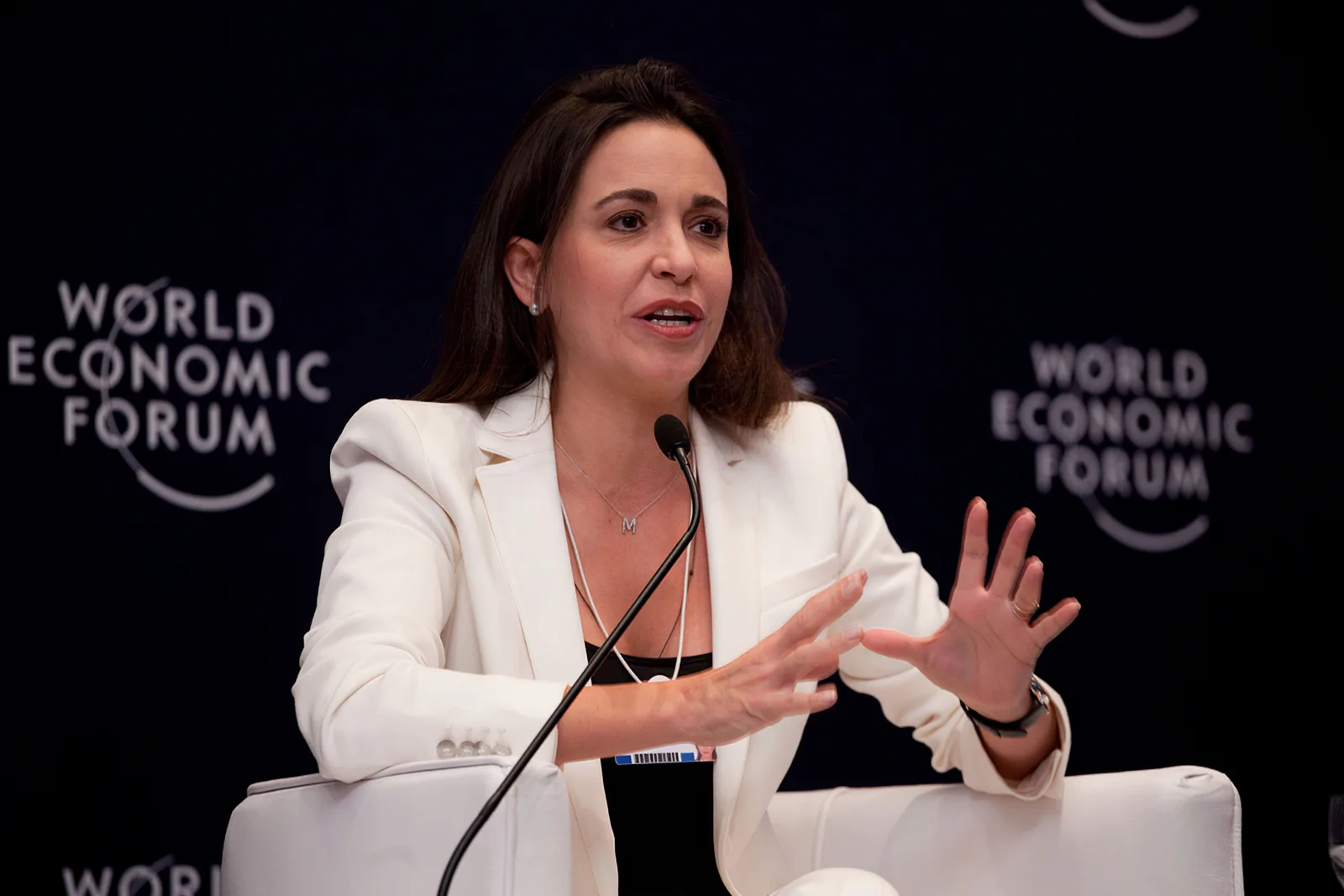 File photo
What happened
Key facts
- Venezuelan opposition leader María Corina Machado returned to Venezuela after months abroad and praised Donald Trump (per CNA, cubaheadlines.com, newsmax.com).
- Machado thanked Trump, his administration and U.S. Secretary of State Marco Rubio, saying their actions on January 3 had opened a “floodgate to freedom.” (per CNA, cubaheadlines.com).
- Machado said an oil agreement between Washington and Caracas did not meet the transparency Venezuelan society wanted (per CNA, cubaheadlines.com).
- Machado said she had returned to mobilise society ahead of future presidential elections (per CNA).
- Machado said Rubio had outlined a sequence of events toward a democratic transition that included presidential elections in 2027 (per CNA, cubaheadlines.com).
The brief
María Corina Machado praised Donald Trump and his administration at a press conference in Caracas, while questioning the transparency of an oil agreement between Washington and Caracas. CNA reported that Machado said the agreement did not reflect the transparency Venezuelan society wanted; CNA also said the deal would transfer 20 per cent of Venezuela’s oil reserves to the United States. Machado spoke on Thursday, October 29, after returning to Venezuela following months abroad. She thanked Trump, his administration and U.S. Secretary of State Marco Rubio, crediting their actions on January 3 with opening what she called a “floodgate to freedom.” The account in cubaheadlines.com likewise reported her thanks to Trump and Rubio, but described her praise in broader terms, saying she characterized Venezuela’s shift toward democracy as “unstoppable.”
The accounts emphasize different parts of her remarks. CNA foregrounded Machado’s concern about the oil agreement’s transparency and described the proposed transfer of oil reserves. cubaheadlines.com focused on her praise for U.S. involvement and her characterization of the democratic shift. The reports do not give competing figures for the proposed transfer; only CNA specifies the 20 per cent share. CNA reported that Machado said she had returned to mobilise society ahead of future presidential elections. Both CNA and cubaheadlines.com said she linked Rubio’s role to a sequence of events aimed at a democratic transition that included elections in 2027. Her comments therefore paired support for the U.S. administration’s involvement with a public call for transparency around the oil arrangement. CNA also reported that U.S. forces seized Nicolás Maduro in a raid on his compound in Venezuela in January and took him and his wife to New York to face drug-trafficking and other charges. Machado referred to the January 3 actions in her praise of Trump’s administration. The reports do not specify the terms governing the proposed oil transfer or describe how it would be implemented. The central issue in Machado’s remarks is how the proposed transfer of Venezuelan oil reserves relates to the political transition she described. Her criticism raises a question about public transparency, while her stated aim of mobilising society and her reference to elections in 2027 place the agreement within a discussion of Venezuela’s political future. Neither account gives additional details about the agreement’s implementation.
Why it matters
- The proposed transfer described by CNA would involve 20 per cent of Venezuela’s oil reserves, making the agreement’s terms a concrete stake for Venezuela and the U.S.
- Machado said the agreement falls short of the transparency Venezuelan society wants, putting public scrutiny of the oil arrangement alongside her call to mobilise society.
- Machado linked Rubio’s stated sequence toward a democratic transition to presidential elections in 2027, connecting the oil agreement debate to Venezuela’s political process.
What to watch next
- Whether Washington and Caracas provide details about the proposed transfer of 20 per cent of Venezuela’s oil reserves.
- Whether the agreement’s terms address the transparency concern Machado raised.
- Whether Machado continues the mobilisation she said she had returned to pursue.
- Whether the sequence Machado attributed to Rubio leads to the presidential elections she said were planned for 2027.
How it's being covered
Coverage analysisShow details5 source articles · 5 unique outlets · 4 distinct reportsOutlet political mix: Mostly Center· 3 Center · 1 Right · 1 unratedWhere the outlets are based: Europe 40% · US/Canada 20% · Other 40%
- Coverage is currently concentrated among Center-rated outlets (3 of 4 rated sources); comparatively few Left-rated outlets have published on the event.
How outlets' accounts compare
2 framing differences · 4 uncorroborated claims · 2 information gaps- CNA foregrounds Machado’s criticism of the oil agreement’s transparency and reports the proposed 20 per cent transfer; cubaheadlines.com emphasizes her praise of Trump and Rubio and calls the democratic shift “unstoppable.”
- CNA describes Machado’s January 3 praise as crediting actions that opened a “floodgate to freedom”; cubaheadlines.com presents her comments as praise for Washington’s role in political developments.
- CNA reports Machado’s criticism of the oil agreement’s transparency and specifies the proposed transfer; cubaheadlines.com does not discuss the agreement.
- CNA says the agreement would transfer 20 per cent of Venezuela’s oil reserves, while cubaheadlines.com does not address the agreement or its terms.
- CNA quotes Machado describing the January 3 actions as opening a “floodgate to freedom.”
- cubaheadlines.com reports Machado’s claim that Venezuela’s shift to democracy is “unstoppable.”
- The reports do not state the agreement’s full terms, how a transfer would be carried out, or what oversight arrangements would apply.
- The reports do not provide public opinion data on the agreement or details of any response from the Venezuelan government.
Timeline
Developments from this story's sources, dated background we compiled and fact-checked, and our earlier coverage. Each row says which.- Oil’s central place in Venezuelan politics dates to the nationalization of the industry on January 1, 1976, when the government created PDVSA.Background · from our historical context
- In August 2017, the first Trump administration restricted Venezuela’s access to U.S. financial markets.Background · from our historical context
- The United States also recognized opposition legislator Juan Guaidó as interim president in January 2019, a position it maintained for several years.Background · from our historical context
- On January 28, 2019, it imposed sanctions on state oil company Petróleos de Venezuela, S.A. (PDVSA), sharply restricting its U.S. oil business.Background · from our historical context
- The U.S. Treasury Department issued General License 41, allowing Chevron to resume limited oil production in Venezuela through its joint ventures.Background · compiled and fact-checked by Updat3
- María Corina Machado won the Venezuelan opposition’s presidential primary.Background · compiled and fact-checked by Updat3
- Venezuela’s Supreme Court upheld a ban on Machado’s candidacy.Background · compiled and fact-checked by Updat3
- On April 17, 2024, the United States let broad sanctions relief expire, citing the Venezuelan government’s failure to meet commitments on electoral conditions, while retaining some specific authorizations.Background · from our historical context
- Venezuela held a presidential election; the National Electoral Council declared Nicolás Maduro the winner, while Edmundo González and the opposition disputed the result.Background · compiled and fact-checked by Updat3
How we got here
On July 28, 2024, Venezuela held a presidential election in which the National Electoral Council declared Nicolás Maduro the winner, while opposition candidate Edmundo González and the opposition’s tally disputed that result.
María Corina Machado had won the opposition’s October 22, 2023 primary, but Venezuela’s Supreme Court upheld a ban on her candidacy on January 26, 2024; González subsequently stood in her place. On October 17, 2023, the Maduro government and opposition representatives signed the Barbados Agreement, which included commitments concerning the 2024 election.
Original sources
1 of 5 articles · Unknown · Show allEvery story links to the reporting it was built from. How we choose sources
Spotted a factual error, a broken link or a misleading summary? Tell us.