
Marles urges regional security coordination as China’s buildup creates pressure
Australian Defence Minister Richard Marles said China’s military buildup was creating a “condition of pressure” in Southeast Asia and called for closer cooperation among Australia’s friends and neighbours. He also said Australia, Japan, the United States and the Philippines had committed to greater defence policy coordination through the informal “Squad” group.
AI-assisted synthesis · Based on 5 independent reports from 6 outlets · Article text read from 2 of 5 reportsHow it's made
View timeline · 9 entries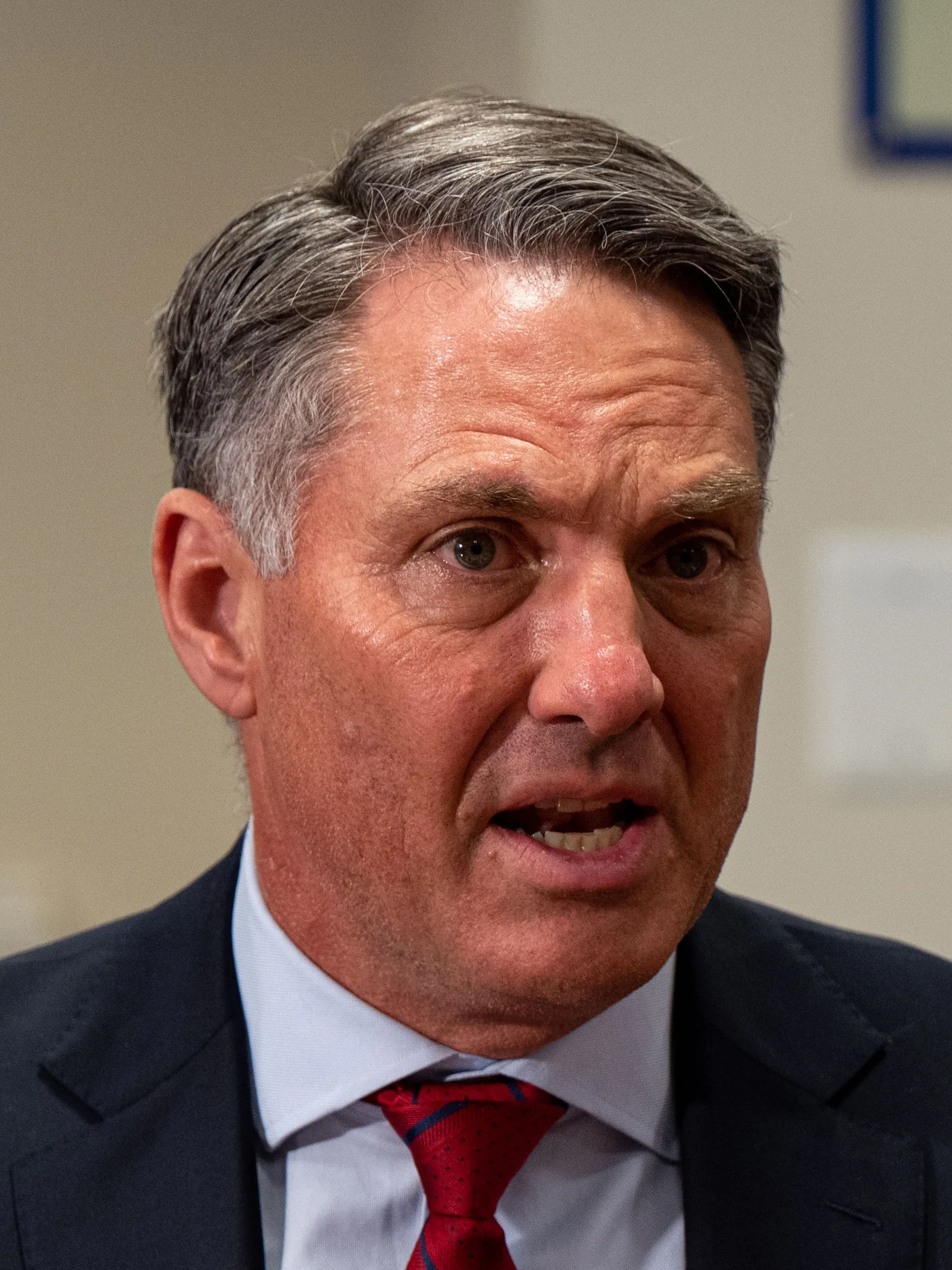 File photo
What happened
Key facts
- Australian Defence Minister Richard Marles said China’s military buildup was creating pressure in Southeast Asia (per CNA, The Japan Times, inshorts.com).
- Marles said China had not explained its military buildup (per CNA, The Japan Times, inshorts.com).
- Marles urged Australia’s friends and neighbours to work more closely together on collective security (per CNA, The Japan Times).
- Marles said Australia, Japan, the United States and the Philippines had committed to greater defence policy coordination through the informal “Squad” group (per CNA, The Japan Times).
- The reports say an international ruling found that China’s position on the South China Sea had no legal basis (per CNA, The Japan Times).
- Australia protested China’s test of a nuclear-capable missile in the South Pacific in July and called the launch “destabilising.” (per CNA, The Japan Times).
The brief
Australian Defence Minister Richard Marles said China’s military buildup was creating a “condition of pressure” in Southeast Asia, and called for closer cooperation among Australia’s friends and neighbours on collective security. He made the remarks while attending a meeting of Southeast Asian defence ministers in the Philippines.
His comments place regional coordination at the centre of Australia’s stated security concern, while the coverage also records a concrete coordination commitment among four countries. Marles described China’s conventional military buildup as the largest the world has seen since the end of the Second World War.
He said China had not explained why it was undertaking the buildup and linked that lack of explanation, together with the scale of the military expansion, to the pressure he described. Those are Marles’s assessments; the accounts do not provide a Chinese government explanation or a separate measurement of the buildup.
The reports describe China deploying hundreds of coast guard, navy and other vessels in disputed parts of the South China Sea. They say China claims almost the entire sea. They also refer to an international ruling that found China’s position had no legal basis.
That legal finding and Marles’s comments on military pressure are separate elements of the coverage: the former concerns the maritime dispute, while the latter is his characterization of the wider security environment. Marles said he met with the “Squad,” an informal defence and security group comprising Australia, Japan, the United States and the Philippines.
He said the four countries committed to greater defence policy coordination. The commitment gives practical form to his call for closer ties, although the accounts do not describe particular measures or a timetable for putting the coordination into effect. The coverage shares the central account of Marles’s remarks and the four-country commitment.
CNA additionally reports that Australia protested China’s test of a nuclear-capable missile in the South Pacific in July and described the launch as “destabilising.” That earlier dispute adds a specific example of Australia publicly objecting to a Chinese military action, but the reports do not present it as the cause of the coordination commitment.
The immediate focus is therefore the security coordination Marles says the four governments agreed to pursue, alongside his call for broader cooperation among Australia’s regional partners. The reports establish the commitment and the concerns Marles expressed; they do not specify the group’s next steps or establish how the coordination will change military or policy activity.
Why it matters
- Australia, Japan, the United States and the Philippines have committed to greater defence policy coordination through the informal “Squad,” providing a named mechanism for the cooperation Marles advocated.
- Southeast Asian security is the stated stake: Marles says China’s buildup is creating pressure in the region, and the reports describe hundreds of Chinese coast guard, navy and other vessels operating in disputed South China Sea areas.
- The South China Sea dispute has a legal dimension as well as a security one: the reports say an international ruling found China’s position had no legal basis, while also noting China’s claim to almost the entire sea.
- CNA reports that Australia protested China’s July test of a nuclear-capable missile in the South Pacific, illustrating a separate, documented point of contention between the two governments.
What to watch next
- Whether Australia, Japan, the United States and the Philippines take specific steps to carry out the greater defence policy coordination Marles says they committed to.
- Whether Marles or the four “Squad” members identify practical measures for the group’s coordination.
- Whether China offers an explanation for the military buildup Marles described.
- Whether Australia makes further statements about China’s military activity, following its protest over the South Pacific missile test in July.
How it's being covered
Coverage analysisShow details6 source articles · 6 unique outlets · 5 distinct reportsOutlet political mix: Center Only· 6 CenterWhere the outlets are based: Asia 50% · Unknown 33% · Other 17%
- Coverage is currently concentrated among Center-rated outlets (6 of 6 rated sources); comparatively few Left or Right-rated outlets have published on the event.
One source is from a wire service (AP, Reuters, AFP or Bloomberg), whose reporting other outlets often republish.
How outlets' accounts compare
2 framing differences · 2 uncorroborated claims · 3 information gaps- CNA includes Australia’s protest over China’s July South Pacific missile test and its description of the launch as “destabilising”; The Japan Times does not include that episode.
- CNA and The Japan Times both report the South China Sea vessel deployments and the international ruling, while their shared account centers on Marles’s pressure warning and the “Squad” coordination commitment.
- Marles called the situation a “condition of pressure” and said China’s buildup was the largest conventional military buildup since the end of the Second World War.
- CNA reports that Australia called China’s July South Pacific missile launch “destabilising.”
- The reports do not describe the specific measures, implementation schedule or operational effects of the four-country coordination commitment.
- The reports do not provide civilian-impact figures related to the military buildup or South China Sea activity.
- Marles said China had not explained the buildup; the reports provide no Chinese government account of its reasons.
Timeline
Developments from this story's sources, dated background we compiled and fact-checked, and our earlier coverage. Each row says which.- The South China Sea’s legal framework rests on the United Nations Convention on the Law of the Sea (UNCLOS), adopted on December 10, 1982.Background · from our historical context
- China occupied Mischief Reef, which the Philippines also claimed.Background · compiled and fact-checked by Updat3
- On November 4, 2002, China and the Association of Southeast Asian Nations (ASEAN) signed the Declaration on the Conduct of Parties in the South China Sea, committing to peaceful settlement and restraint.Background · from our historical context
- On January 22, 2013, the Philippines initiated arbitration under UNCLOS over maritime claims and activities in the sea.Background · from our historical context
- On July 12, 2016, the arbitral tribunal ruled that China’s claims to historic rights within the “nine-dash line” had no legal basis under UNCLOS where they exceeded the rights provided by the convention.Background · from our historical context
- The United States and the Philippines said their mutual defense treaty commitments covered an armed attack on either country’s forces or public vessels in the South China Sea.Background · compiled and fact-checked by Updat3
- In April 2024, Australia, Japan, the United States and the Philippines held their first joint maritime cooperative activity in the South China Sea, an early practical example of the four countries’ security coordination.Background · from our historical context
- In September 2024, their defence ministers agreed to deepen cooperation, including through the informal grouping known as the “Squad.”Background · from our historical context
- On September 25, 2024, China launched an intercontinental ballistic missile into the Pacific Ocean; Australia condemned the launch as destabilising.Background · from our historical context
How we got here
In April 2024, Australia, Japan, the United States and the Philippines held their first joint maritime cooperative activity in the South China Sea, an early practical example of the four countries’ security coordination.
In September 2024, their defence ministers agreed to deepen cooperation, including through the informal grouping known as the “Squad.” On September 25, 2024, China launched an intercontinental ballistic missile into the Pacific Ocean; Australia condemned the launch as destabilising.
Original sources
3 of 6 articles · Asia · Show allEvery story links to the reporting it was built from. How we choose sources
Spotted a factual error, a broken link or a misleading summary? Tell us.